We began and ended our journey to Toledo in the same place, at the base of the towering hill on which the center of the city gracefully sits. We ascended the steep hillside without even breaking a sweat. This was, unfortunately, no thanks to our extreme athleticism but to the four sets of escalators (Escaleras Mecanicas de la Granja) burrowing through the rock, where we traveled temporarily hidden, only to emerge and make our grand entrance.
We soon realized that the morning’s commute was just an introduction to the pattern of our day. While we were allowed the indulgence of the wide-open space upon our emergence from the escalator adventure, we were immediately closed off once again, funneled into the miniature life that is Toledo. The streets were so narrow, that one car and one human could barely pass by one another without causing an unfortunate kind of conflict. The buildings themselves were so precariously close that I looked up and imagined two people reaching out their window to touch hands.
Each narrow street meandered with no clear purpose, and as we moved through both Mezquita Cristo de la Luz and Monasterio San Juan de los Reyes, we once again followed this pattern of moving from narrow street to narrow spaces. The monastery only emphasized the miniature with doors so small, that me at 5 feet, felt like a giant. We were granted a time to stretch ourselves out when we came to the Cathedral, the grandiose punctuation to our tiny sized day.
Even the landscape reflected the city’s atmosphere: when we moved down to the river valley, we were surrounded on all sides by steep bluffs filled with birds of all sorts and brave plant life clinging to the sides.
The day’s unplanned confinement was not the threatening or cramped sort but rather the curious and comforting. It was the kind of intimacy that made us aware of everything around us and our own selves simultaneously. In the narrow streets, we came face to face with every external detail from the building textures, to the sounds of various chatter and smells of baked pastry. Our discovery was reflected when the cadence of our steps on the cobblestone streets echoed back to us. I became aware of my own breath, how my arms swing farther when walking downhill, and how all of us pedestrians instinctively moved around one another without a word, in a sort of unplanned and unspoken choreography. The day was filled with these moments of comfortable awareness, where it felt like the city of Toledo was giving us a hug and telling us, “Just enjoy who you are in this very moment”.
Ultimately, the compaction allowed for the bigger views to become that much bigger. When we would surreptitiously wind our way through the maze to a spot with a view, our appreciation for the grand views of the city below became that much greater. So it was when we returned to the bus at the end of our adventure: enjoying one final view from the top of the bluff, before descending back down the burrow of escalators to reality, making us wonder if the day was all just a miniature dream.
-Lauren Arndt
Toledo!
Our bus-ride from Madrid to Toledo is quiet.
Long escalators take us up. No one is around. The residue of night layers the city; the sun hasn’t risen high enough yet to break the building lines. It’s another morning sun-patch hopping because our clothes are light in anticipation of a sunny afternoon. Early-rising tourists spatter the plaza. Neon yellow agente uniforms. We walk.
The Mosque of Cristo de la Luz (built in 999) is an important reminder of Toledo’s Moorish past and Spain’s Mudejar style of architecture. We pass through the entrance building and think we know the smell: chlorine and cigarettes. The monastery is small and simple and lovely; the white plaster of restoration, the yellow glare of electric lighting, and the soot of centuries mix. There’s a simple garden and a view over Toledo. Released from the tight city, my eyes relax as they wander over miles. Neon yellow motor helmet. Neon yellow running shoes. When we return to the street, we find the city has changed.
Guides speak to tourist masses via microphones that refract from the tight city spaces. We walk and other tourists and us play with cars for street space.
We arrive at the Monasterio de San Juan de los Reyes. Soft music is playing in the courtyard and we pause to draw. I use pen to sketch an orange tree and the tracery in the windows. Another tour guide with a booming voice cracks the air. A tourist stands next to me and looks over my shoulder. Tourist: LAUGH. LAUGH. LAUGH. Sì! Sì! Me: side. eye. smile? sketch. sketch.
We move back to the streets where we dodge and sidestep cars and tourists. Neon yellow uniforms push street cleaners as tourists dance out of the way. We are at Santa Iglesia Catedral Primada de Toledo, a premier high gothic cathedral of Spain. Our necks ache from looking up. Our eyes want to set on everything all at once.
After lunch, we walk down to the Tagus River and amble along the bank for a while and talk, and draw, and take pictures, and don’t want to leave. The sun is warm and we watch birds and grasses and water flow. Remnants of buildings stand and we wonder who chooses what is destroyed, what is restored, and what stands but in pieces? There is a bridge built by the Romans. Through the remnants, we see the complexity of a city that has been controlled by many different people and religions.
The afternoon passes and we head back towards the bus. Neon yellow restaurant menus. (Besides neon yellow, what can break through the centuries of history, the multitude of identities, and the volume of tourists?)
The tourists, now back on the bus for Madrid, can only watch from afar as the road runs under. The communities play and have space: children learn to roller-skate in bright helmets, young adults play ball on the tennis courts, people walk their dogs, rabbits run.
What is identity after tourism?
-Erin Schregardus
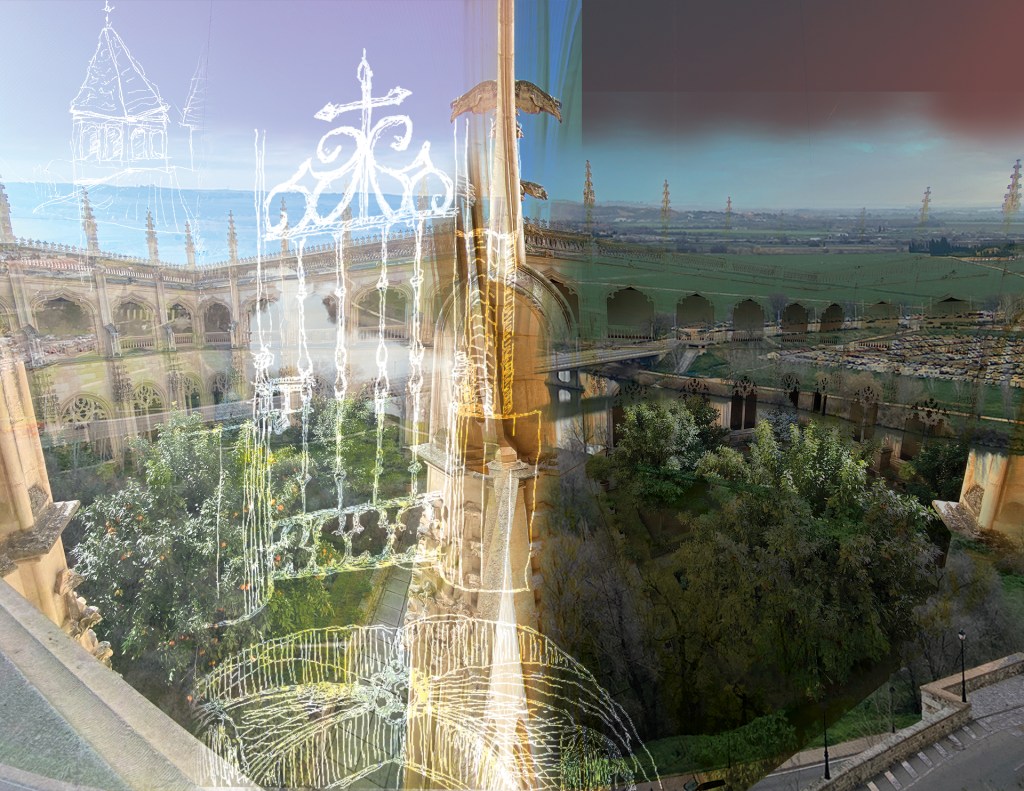
overlook+cloister+sketches – Jordan Hedlund 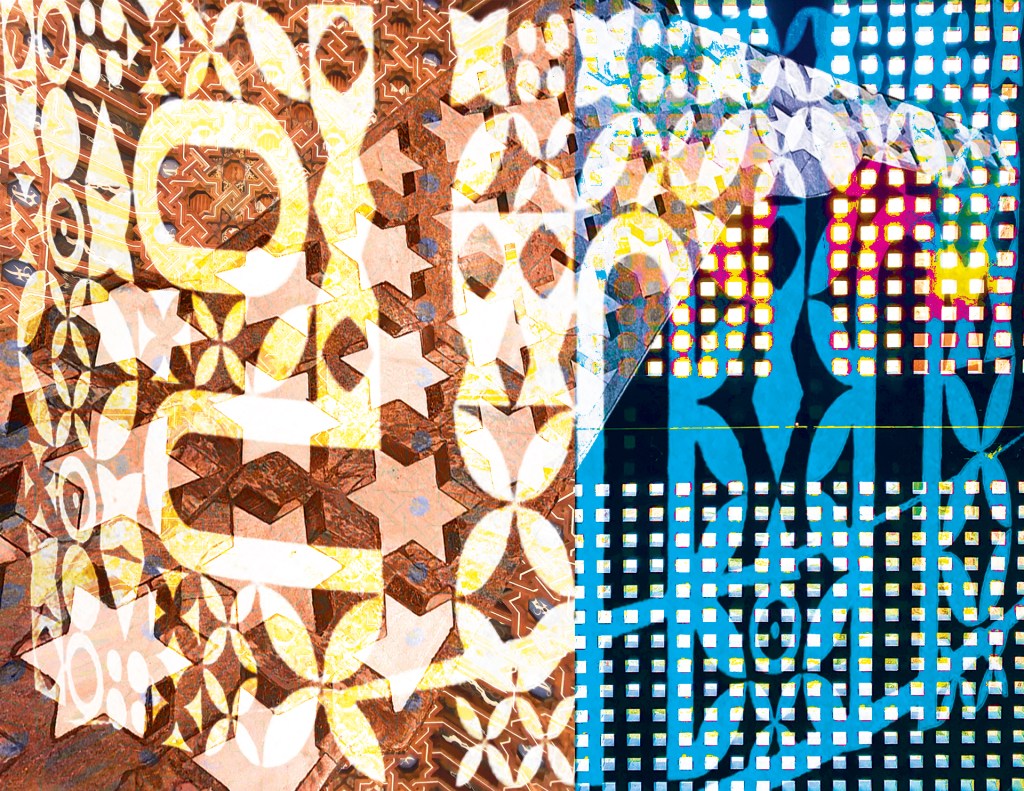
textures at monastery+santa ilglesia+cristo de la luz – Jordan Hedlund 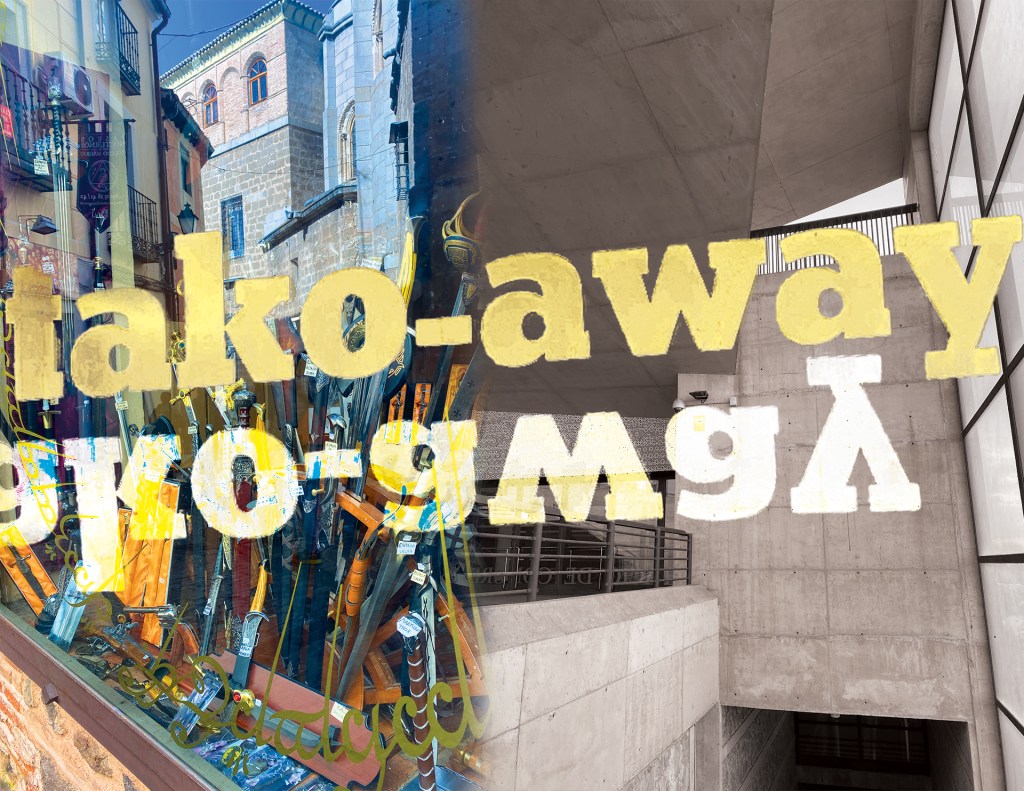
taken to the city of knives + swords – Jordan Hedlund 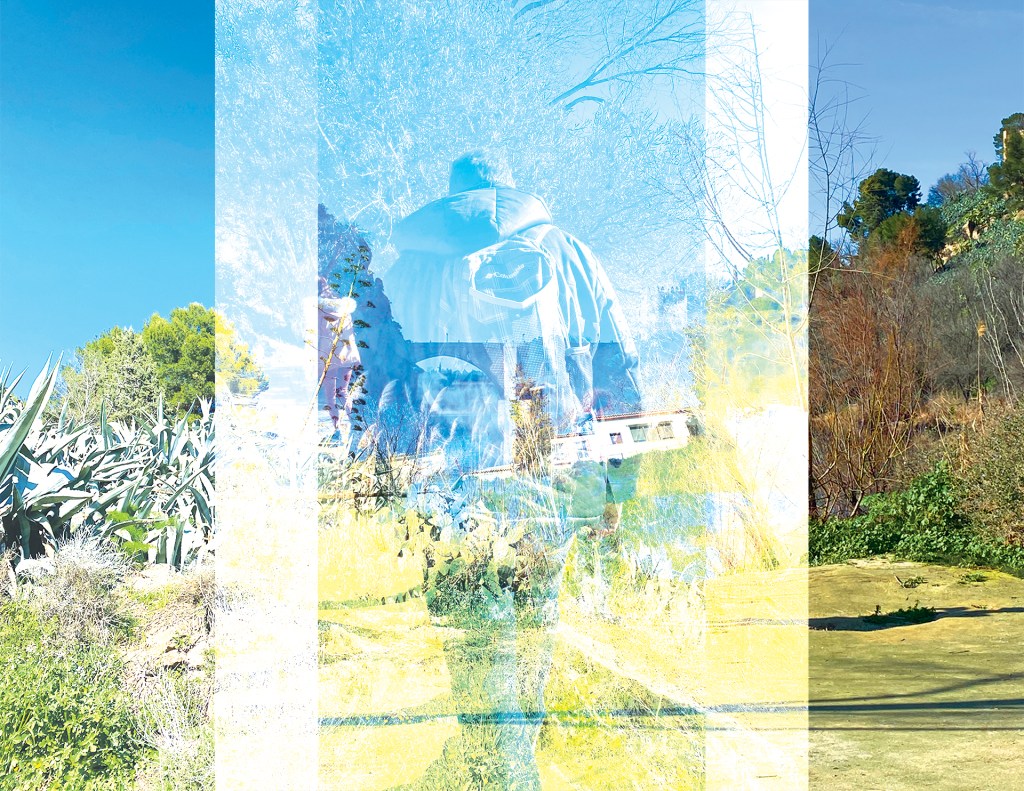
nature is always downhill – Jordan Hedlund
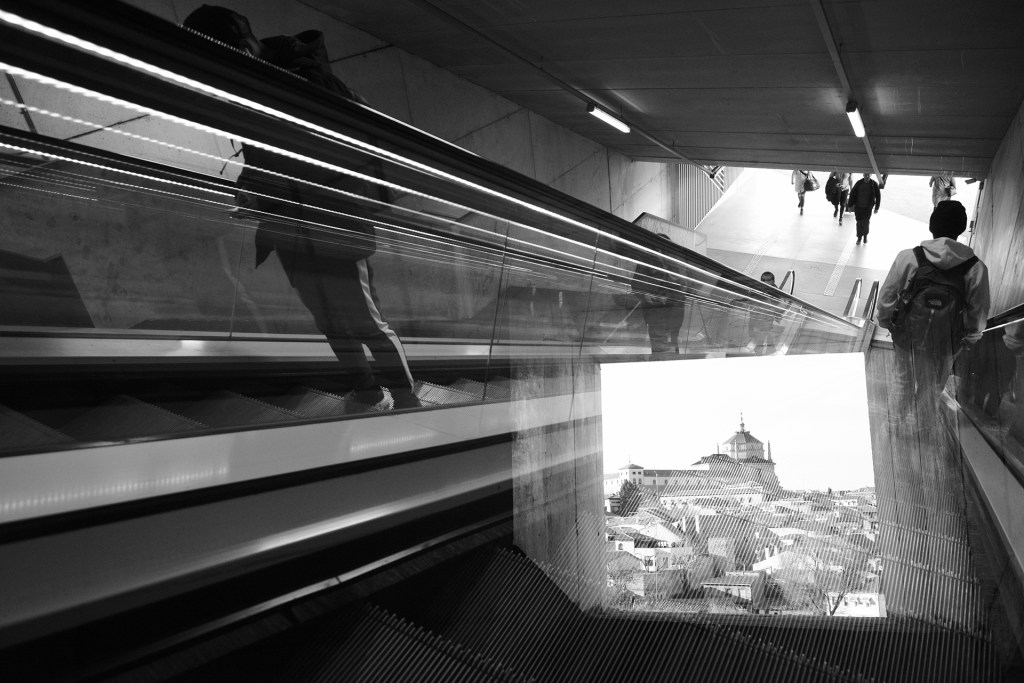
Double exposure of the long escalator ride and the view at the top. – David Hedding 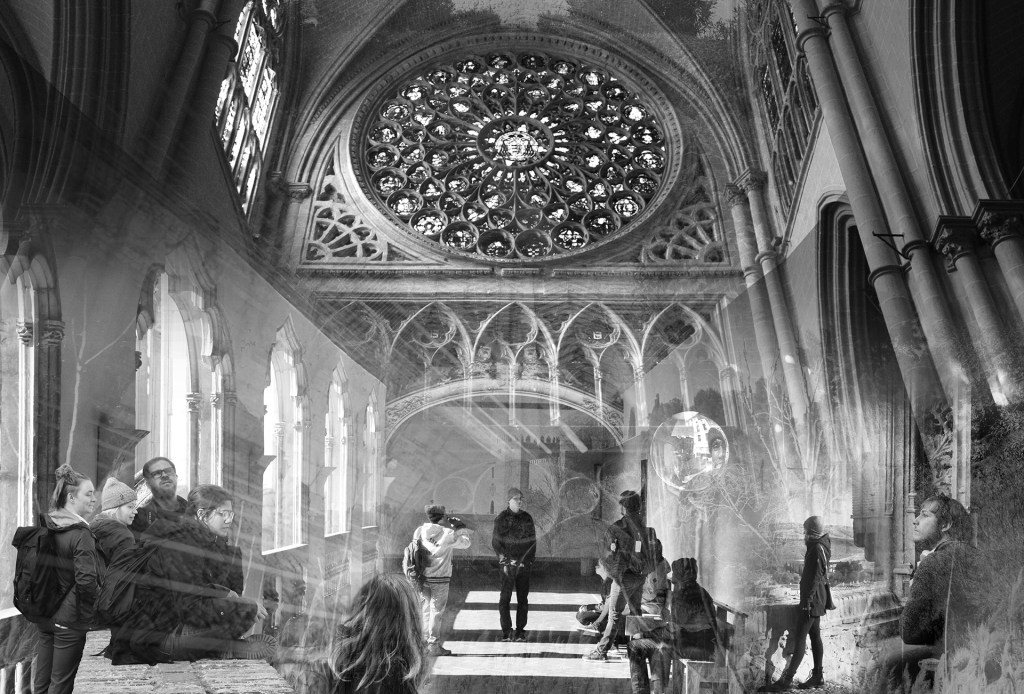
Photo collage of the group enthralled with the historic architecture of Toledo. – David Hedding 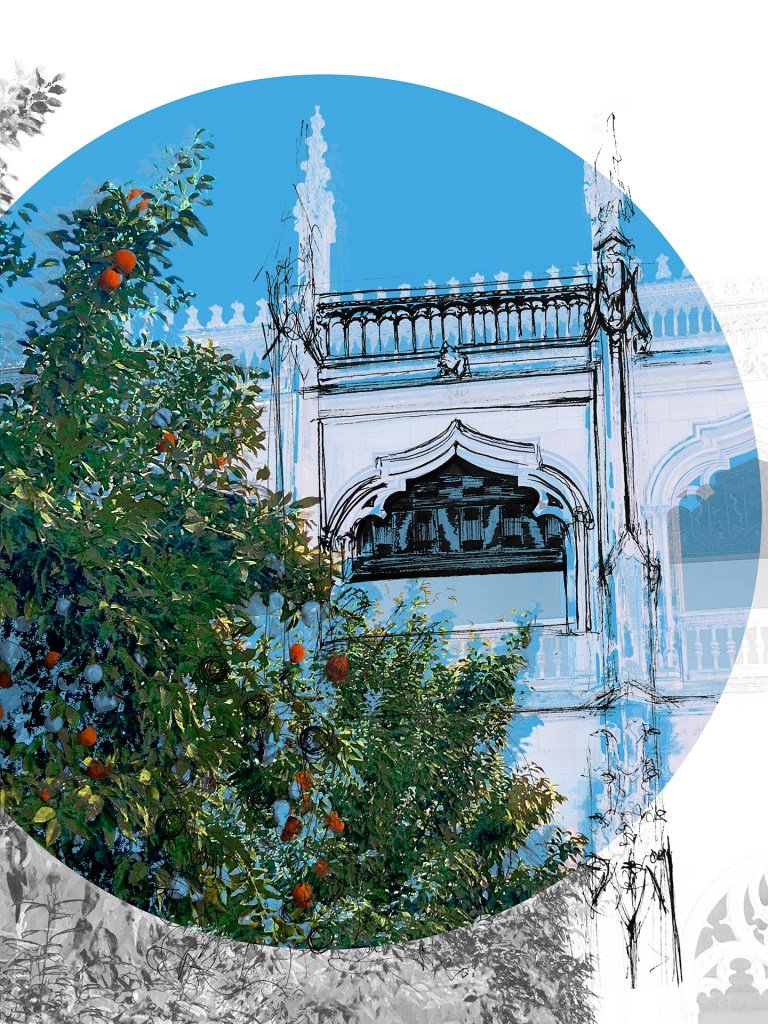
Hand drawing and photo collage of the courtyard at Monasterio de San Juan de los Reyes. – David Hedding 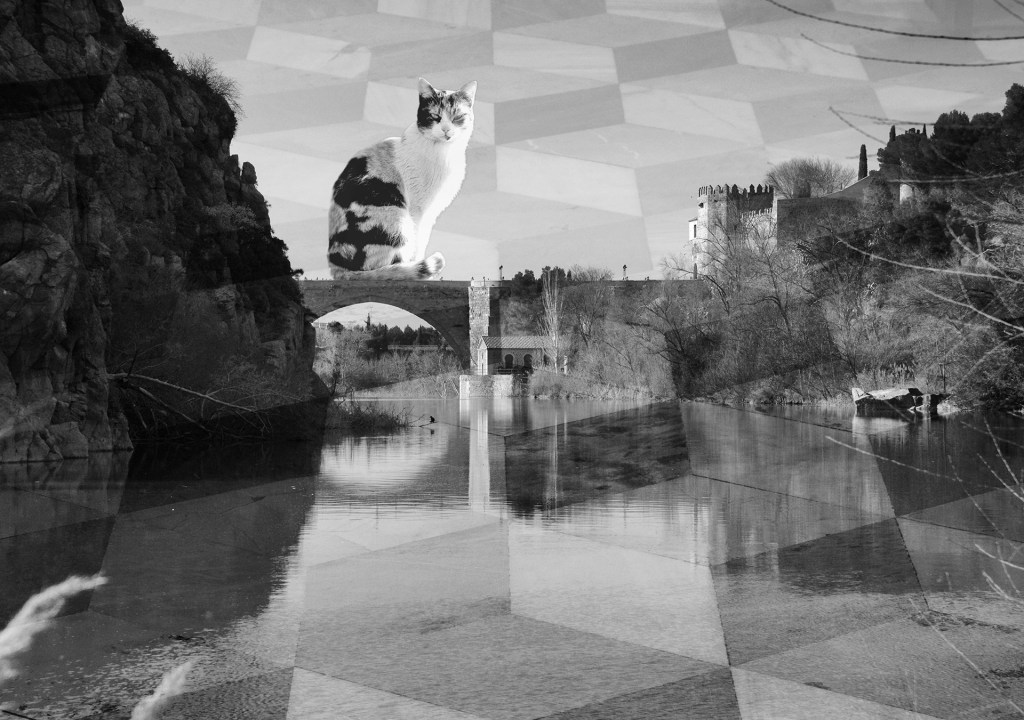
El gato guarding the Puente de la Cava. – David Hedding
 2020 Cities on Water