In a city of 6.5 million people, how does one find his or her place? A space to feel appreciated, celebrated, and welcome? It is all too easy to get lost in the sea of urbanism and lose individuality – but the neighborhood of Lavapiez pushes back. Lavapiez is an area that not only (appears) to greet all races, genders, cultures, religions, and sexualities, but encourages interaction and community among all as well.
While we were only observers for a few hours in this space, and I am unsure of how the neighborhood actually functions – though, I am hopeful. I am used to midwest cities where there are homogenous areas of the middle class, mostly white populations, surrounded by segregated neighborhoods of other ethnicities with little integration between the two. Graffiti art and tagging – an art form originally used to express identity – is seen as vandalism and quickly cleaned up or painted over (usually in a slightly different gray than the original concrete) to maintain the sterile and uniform city.
Whereas on any given street in Lavapiez, one may see an African hair salon located adjacent to a combined Latino, Asian, and Arab market, or a piece of street art that integrates multiple identities. Graffiti is everywhere, demonstrating a range of political and social views. Or, there might just be a wall full of neon pink monsters, and that is celebrated too. It is refreshing to see a space that not only recognizes all people, but allows free expression of all as well – a space that seems perfectly content letting people be whoever they are.
In a city of 6.5 million people, Lavapiez is a neighborhood that allows anyone and everyone to find his or her place.
-Rachel Peterson
While I’m often confused anyways – it seems that our walking tour of the Lavapies neighborhood, south of central Madrid, did not begin until about 45 minutes into the tour. We started outside of the neighborhood and bounced to a few establishments that started to paint a picture of its edge. Learning this spine, we began to build an understanding of how Lavapies came to form its identity. We crossed open plazas meant for tourists and grand presentations of bank-funded art and green-walls. The plaza outside Reina Sofia is tame, quiet, murmurs – people feed pigeons, a balloon waddles in the wind on the ground.
We ponder neighborhood as a response to cultural venues.
Politically, one might crave a sharper transition from official to unofficial as we leave central Madrid. “Official” and “Unofficial” come to mean myriad things on this walk, at times it’s publicly funded vs privately or communally owned, it’s newer vs older (nostalgia), it’s top-down vs grassroots. In all contexts, this transitional space is tense and rattled. A sign printed on a coffee shop in multiple languages says “We (all) are people” and written in between the lines, in sharpee: “LAVAPIES IS NOT A PLACE FOR TOURISM”. Even as art and activism define Lavapies, they define its gentrification. A familiar urban feeling. Galleries, movie theaters, ceramics studios, vegan and gluten free cafes pepper the narrow streets. A community garden is gated to keep homeless from sleeping in it anymore. A makeshift place for kids and a service for residents. Tourists and homeless: keep out.
Brand new art spaces are being built in a palpable tension. You can smell fresh drywall and skinny pants. A sign says “PELIGRO ARTISTAS SUELTOS”, danger artists loose. A street with smelly water and cigarettes in municipal ashtrays. A mural reads: “When parliament becomes a theater, theater must become a parliament”.
Bank sponsored alternative art and environmental studies exists here too – same economic partnership, different aesthetic. If you make it look unofficial, does it make it unofficial?
The heart of the neighborhood brings us into the aspect of the urban gradient that feels more in line with the lore of the place. We walk through streets where immigrants from Latin America, South Asia, and West Africa have settled. Streets offer hair care and foods that make sense to immigrants here. Some people ride city pay-by-the-hour bikes in a playground like it’s a skatepark. Some people here look like me. This area is described as “exotic”.
Joyful anti-fascism permeates cultural institutions in this heart. A comedy venue called the Paticano plays on the spanish word for duck, “pato”, and the Vatican “vaticano”. A truly unofficial theater, Teatro del barrio, is the birthplace of the modern leftist political movement known as “Podemos”. Municipal self-contained markets host trendy new bars and cafes with truly public art where residents write in crayons in a hazy messy rainbow. Grocery stores are making a comeback – it’s a social time spiral of sorts that I can maybe best describe as a hipster phenomenon here, but I can’t quite gauge the spirit. A described “avant-garde” mural reigns over a delightfully fancy “avant-garde” movie theater. I’m wondering if it’s okay to stop calling it “avant-garde” now.
The old tobacco factory hosts great strange art. We get yelled at for trying to sit on a couch in an exhibit. You can only sit on a different couch. I think I can smell the tobacco but Pablo says I can’t.
A mural outside depicts a hanging of a Chilean official responsible for pain in his country. I hear a tourist behind me ask her friend if it’s Franco. But we walk away before I can hear any answer.
-Sonali Devarajan
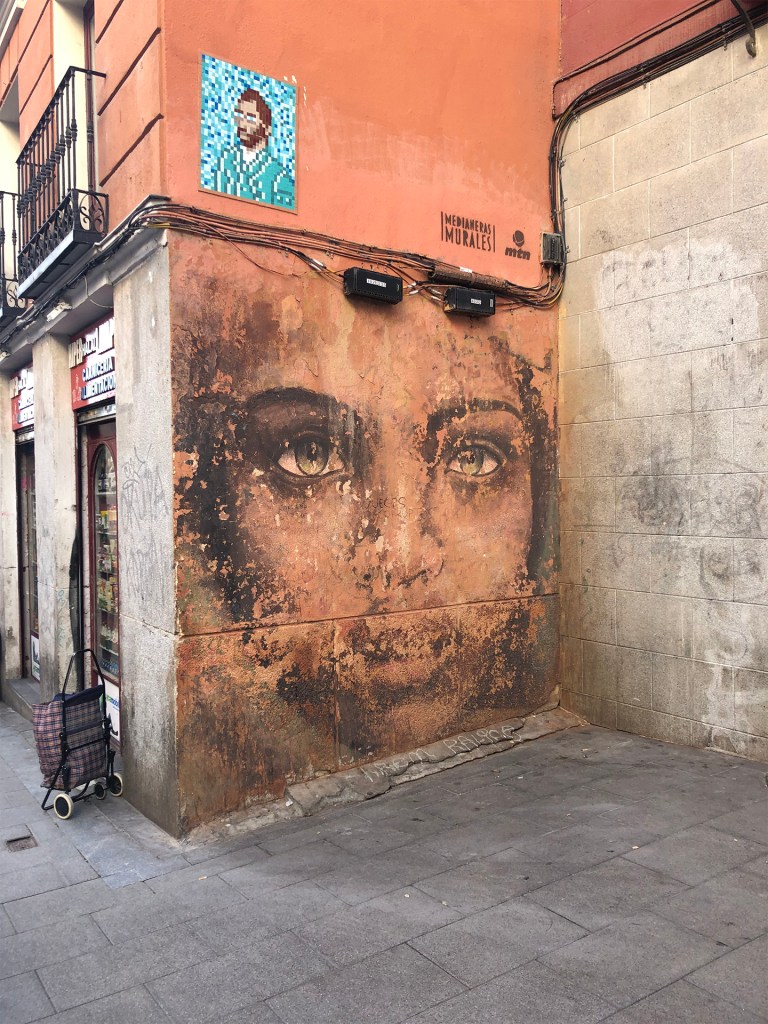
Embajadores, Eyes on the Street – Collin Wenberg 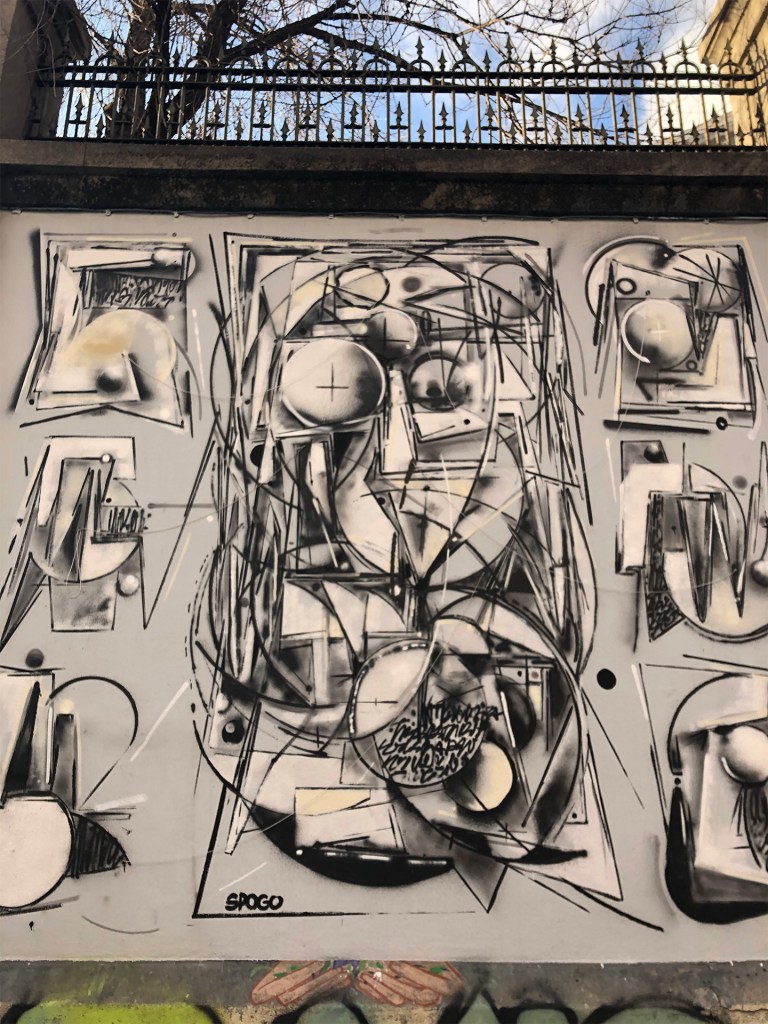
Embajadores, Public Identity as Canvas – Collin Wenberg 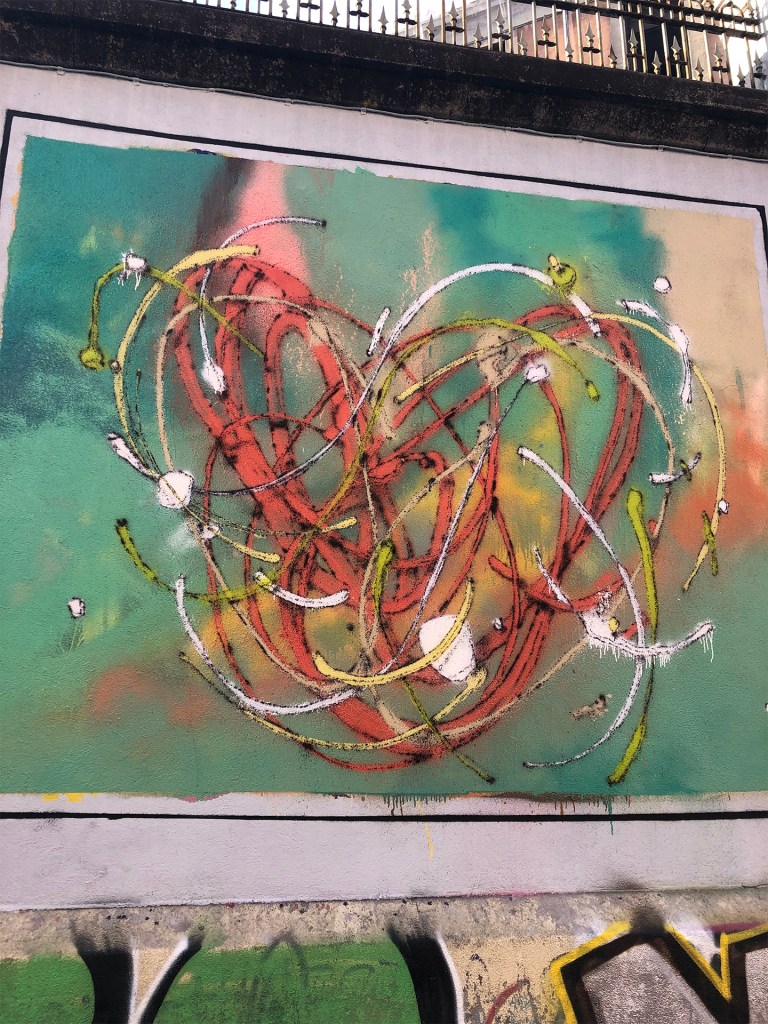
Embajadores, On Public Art and Platform – Collin Wenberg 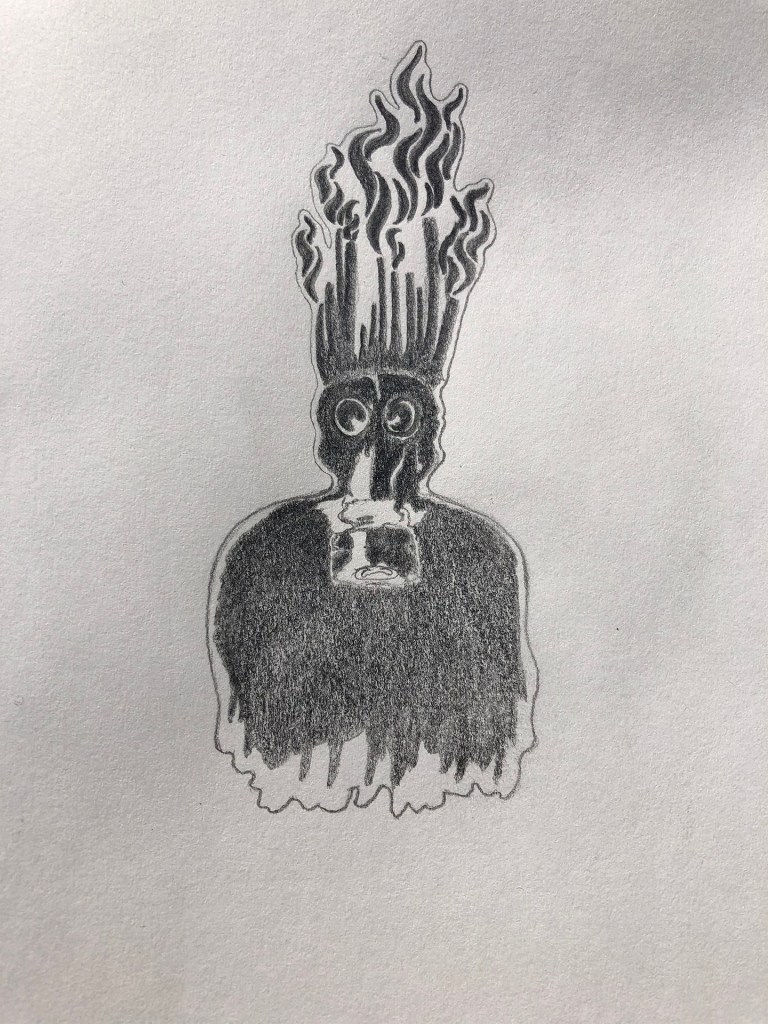
Embajadores, Of Streets and Activism – Collin Wenberg
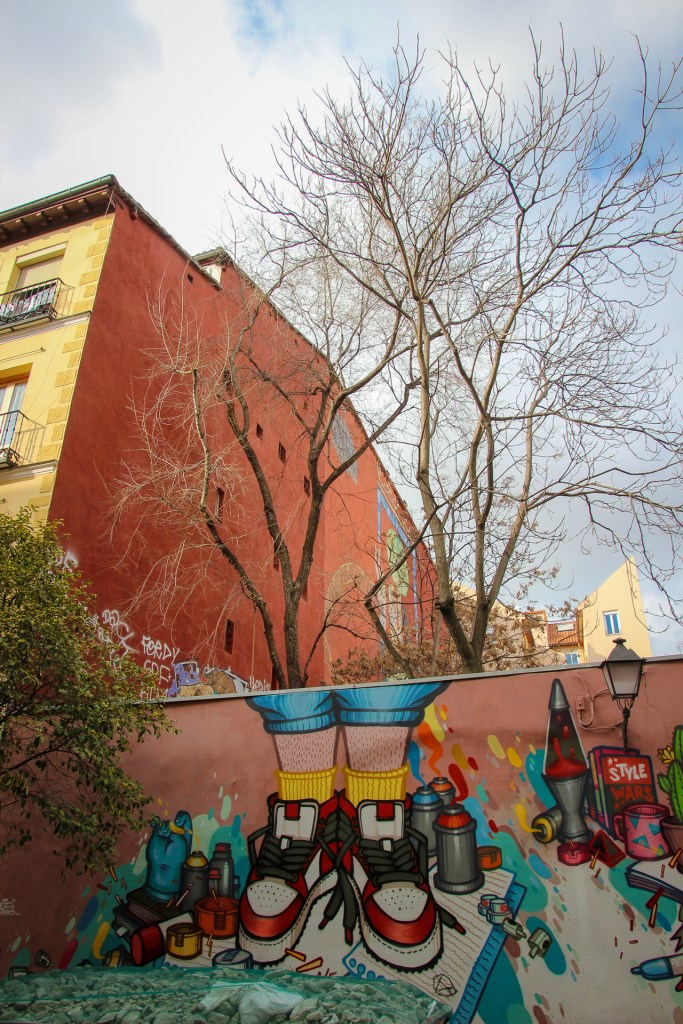
Wall art of Lavapies. – Brett Stolpestad 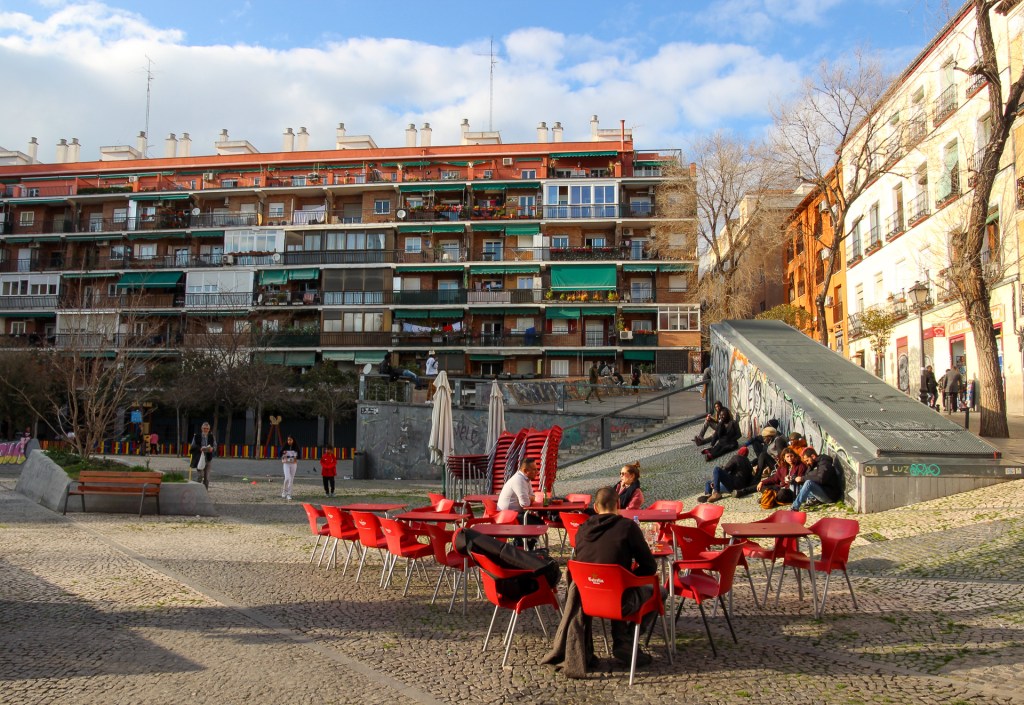
People gathered in a quite Lavapies courtyard, Plaza de Agustín Lara. – Brett Stolpestad 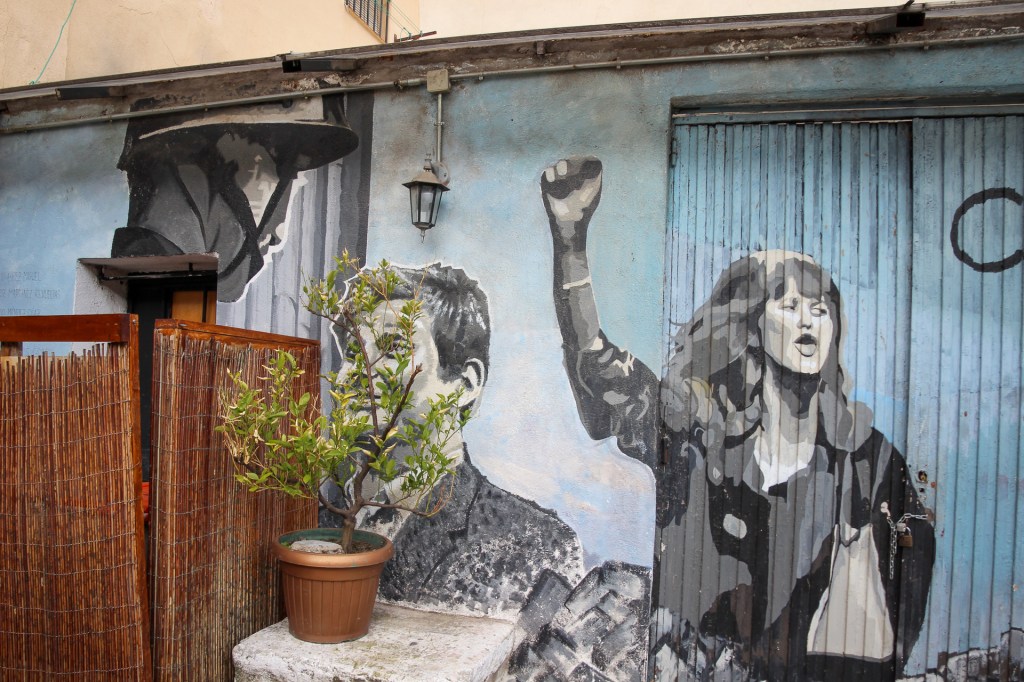
Wall art inside the Sala Mirador performing arts center. -Brett Stolpestad 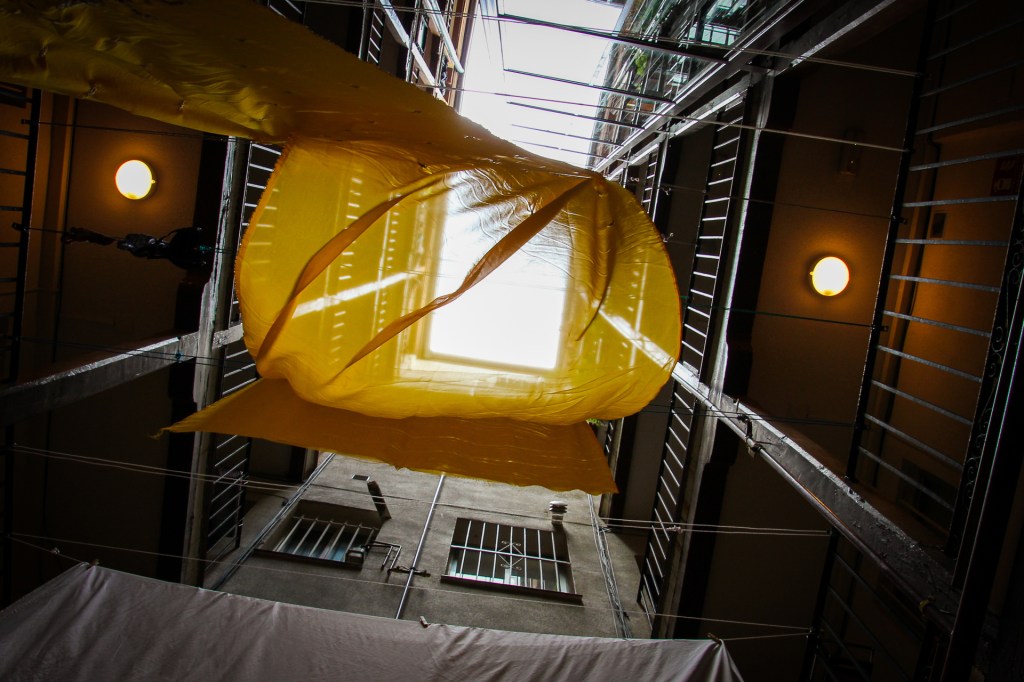
Entryway to the Sala Mirador performing arts center. – Brett Stolpestad 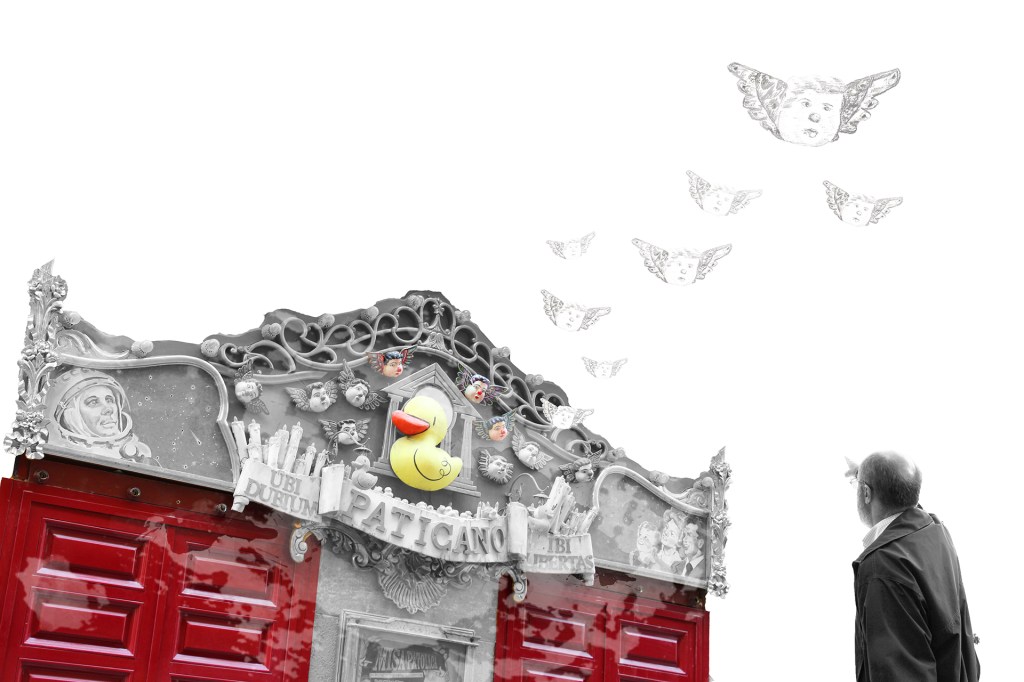
The eccentric “Iglesia Patolica” satirizes the Vatican/the Catholic Church on a narrow Lavapies street. – Brett Stolpestad 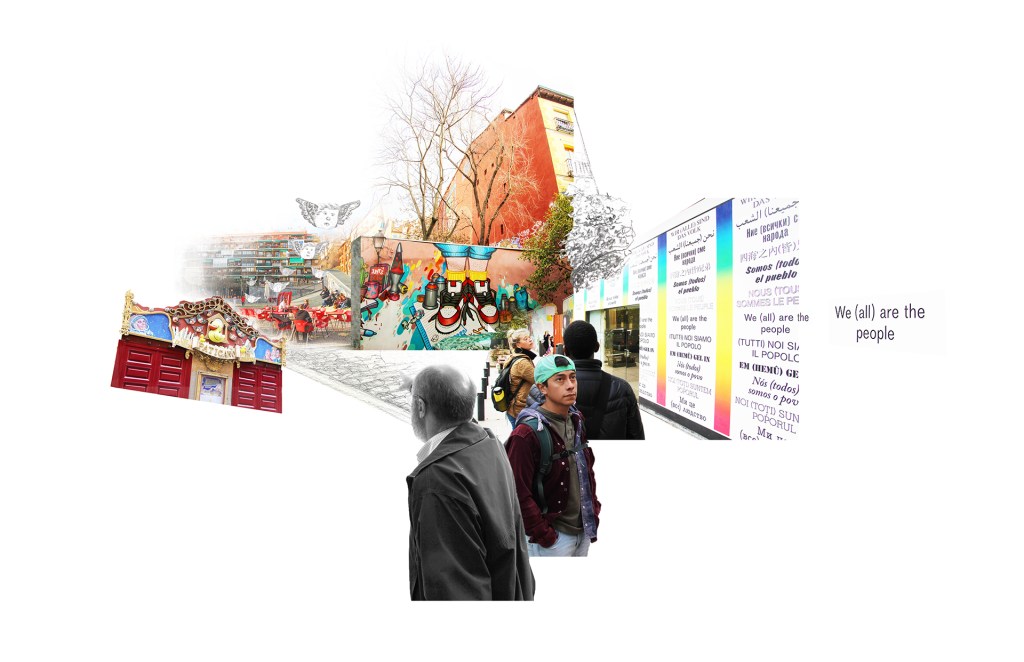
Lavapies wall art – “We (all) are the people.” – Brett Stolpestad

