This week our history professor led a tour of Gran Via, and along the way we observed several interesting plazas. A recurring theme I noticed while we walked was that of the transition and repurposing of old spaces and facades. We started out in Plaza de Cibeles, which is an iconic plaza located at the junction of four neighborhoods and three districts (Centro, Retiro, and Salamanca). The plaza houses a fountain which is named after the great goddess of fertility from Roman mythology, the mother of the gods, Cybele. She is depicted riding a chariot drawn by lions, and is positioned at the center of the plaza, and as such, she has symbolized for Madrid qualities of nature and power. Real Madrid fans utilize the space, and the symbolism of the fountain, for the celebration of their team’s victories at the present, whereas in the past the space used to divide the urban parts of the city, and the palaces of the monarchs. Now the space may be considered a central spine and crucial intersection point within Madrid, bringing unity and identity into the communities it connects.
Another plaza we visited was the “Plaza Pedro de Zerolo,” located just north of Calle Gran Via by means of Calle Clavel. We talked briefly about the transition of the space from what it had been to what it was currently. The plaza used to be the site of a convent, the Capuchinos de la Paciencia, but in the 1860’s the space was occupied by trees and called the Plaza de Bilbao. Then the plaza, from the civil war of the mid 1930’s until the 1990’s, went through a process of renaming. First to the Plaza de Manuel Ruiz Zorrilla, after a republican politician, then back to the Plaza de Bilbao, and then to plaza de Vázquez de Mella, after a Carlist Ideologist following the war. The space became a parking lot in the 1950’s, and then it was demolished and reconstructed in 1999. The name was finally changed to Plaza Pedro de Zerolo, at the end of Franco’s regime, after the LGBT activist Pedro Zerolo, and has remained as such since 2015.
The plazas we encountered throughout our journey of the Gran Via, seemed to signify a transition from an era divided by the civil war, followed by the peace and unity of the post-Franco Madrid landscape.
-Collin Wenberg
Learning about the architecture of the Gran Vía on a walk with Pablo is somewhat akin to appreciating the Gardens of Versailles from a high-speed train or understanding global history by listening to “We Didn’t Start the Fire.” A veritable barrage of rapid-fire stream of consciousness facts – ranging from mundane axial urban form to soberly indignant claims about the “unforgivable aggression of Francoist urbanism,” – one can easily get lost amidst the never-ending list of facts, dates, names, relevant asides, and sometimes less relevant tangents…but if you can keep up for the full three hours, you’ll be rewarded with a greater grasp on how the Gran Vía came to be.
Now recognized as one of Madrid’s most famous streets, the Gran Vía, or the “Great Way,” hasn’t always been so. Similar to Haussmann’s Parisian renovation, the Gran Vía arrived as a post-hoc solution to connect two main areas of the city more directly. Construction, beginning in 1910 and concluding in 1929, demolished a labyrinth of old streets to create a thoroughfare connecting the Calle de Alcalá with the Plaza de España.
Over the course of this perambulatory history lesson, our attention is periodically redirected towards particular places of note. Among some of the more memorable names dropped by Pablo are: Atonio Palacios, architect of the Palacio de Cibeles (Madrid’s eclecticist former post office, now City Hall); Torre de Valencia, the much criticized ruination of the beloved view of Puerta de Alcalá (byproduct of the aforementioned unforgivably aggressive urban development of Franco); Edificio Telefónica, the tallest skyscraper in Europe at the time of construction (and the most heavily bombed during the Spanish Civil war thanks to its strategic location and communication power); and the Edificio España, another historic skyscraper with a storied past (including unscrupulous urban speculation and a banned documentary).
If you aren’t exhausted after hours one of the busiest streets in Madrid, there are a multitude of high-end shopping venues, cafes, and cinemas to further occupy your time. An old luxury jewelry store-cum-McDonalds, twelve different theaters, and a famous cocktail lounge once visited by Audrey Hepburn are among the options that provide respite away from the smog of the busy city center – so take your pick!
-Marla Brown
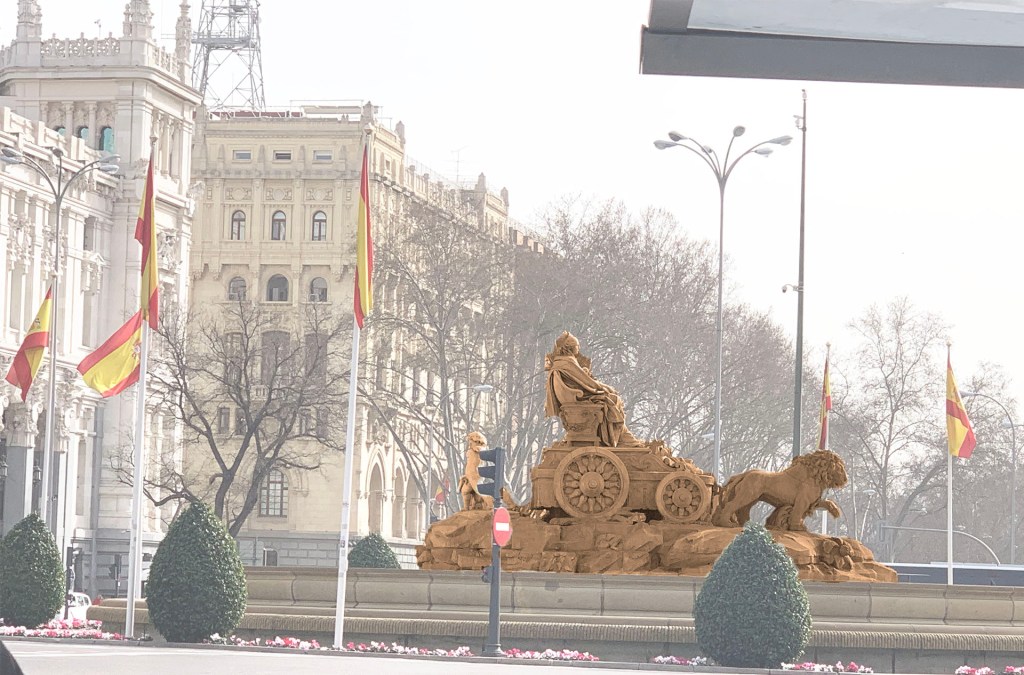
Fountain of Cybele in Plaza de Cibeles (Named after the goddess from Roman methodology which a goddess of fertility and nature). It now symbolizes power. -Chris Ototo 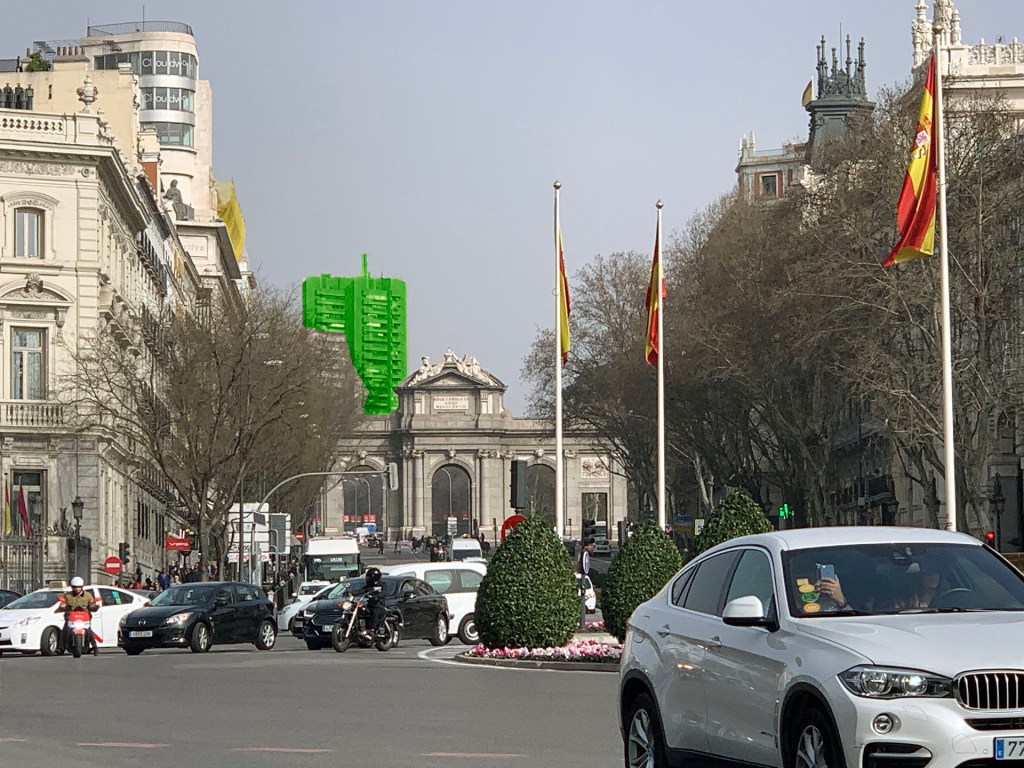
Puerta de Alcalá- Neo-classical monument in the Plaza de la Independencia in Madrid, Spain. A treasured view was messed up by a building behind the monument. – Chris Ototo 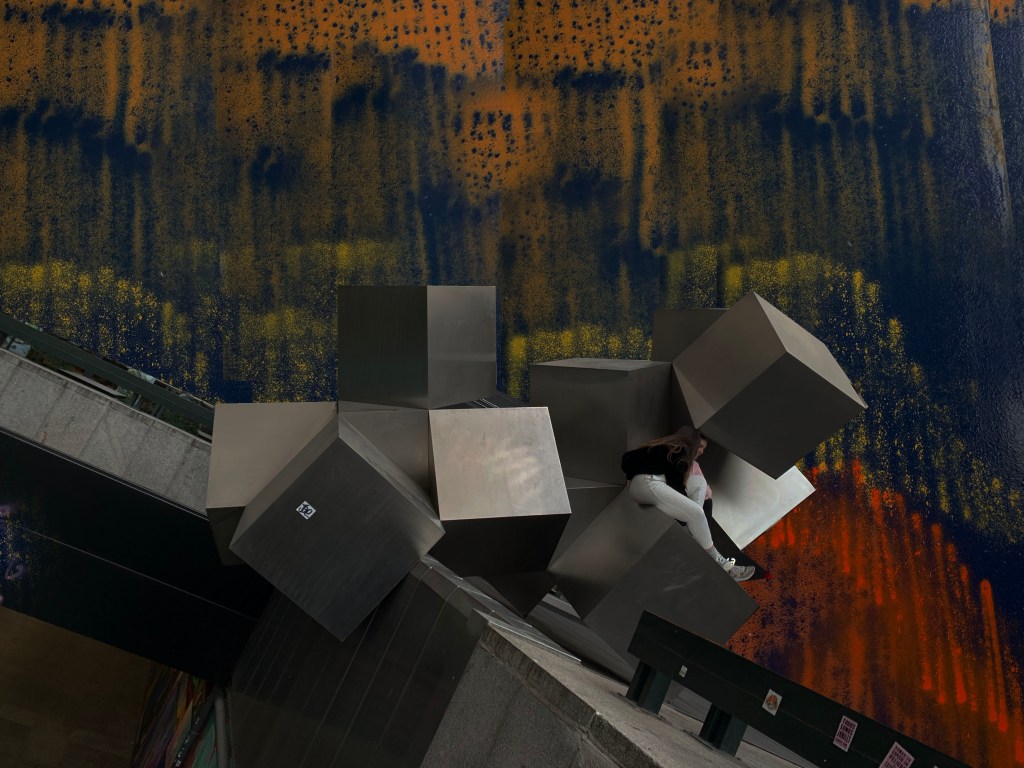
A plaza that does not have a name but known by the square cube adjacent to Renoir Princesa. – Chris Ototo 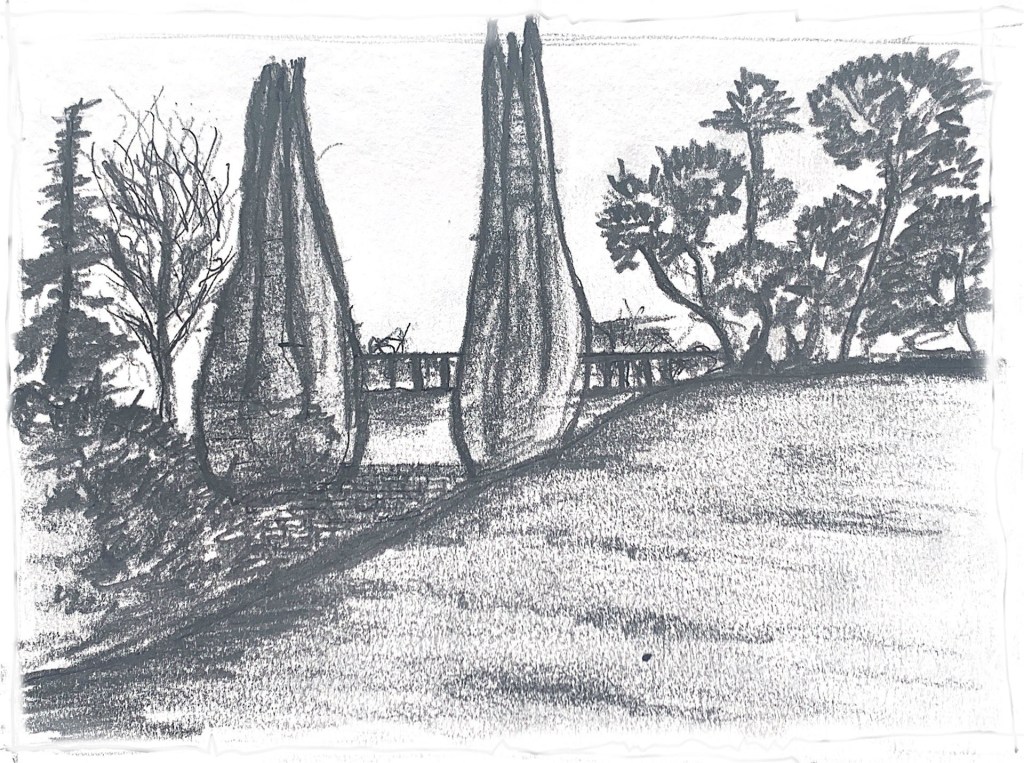
Parque De La Montana- This park houses one of the oldest Egyptian Temples and has good views to the city of Madrid. -Chris Ototo
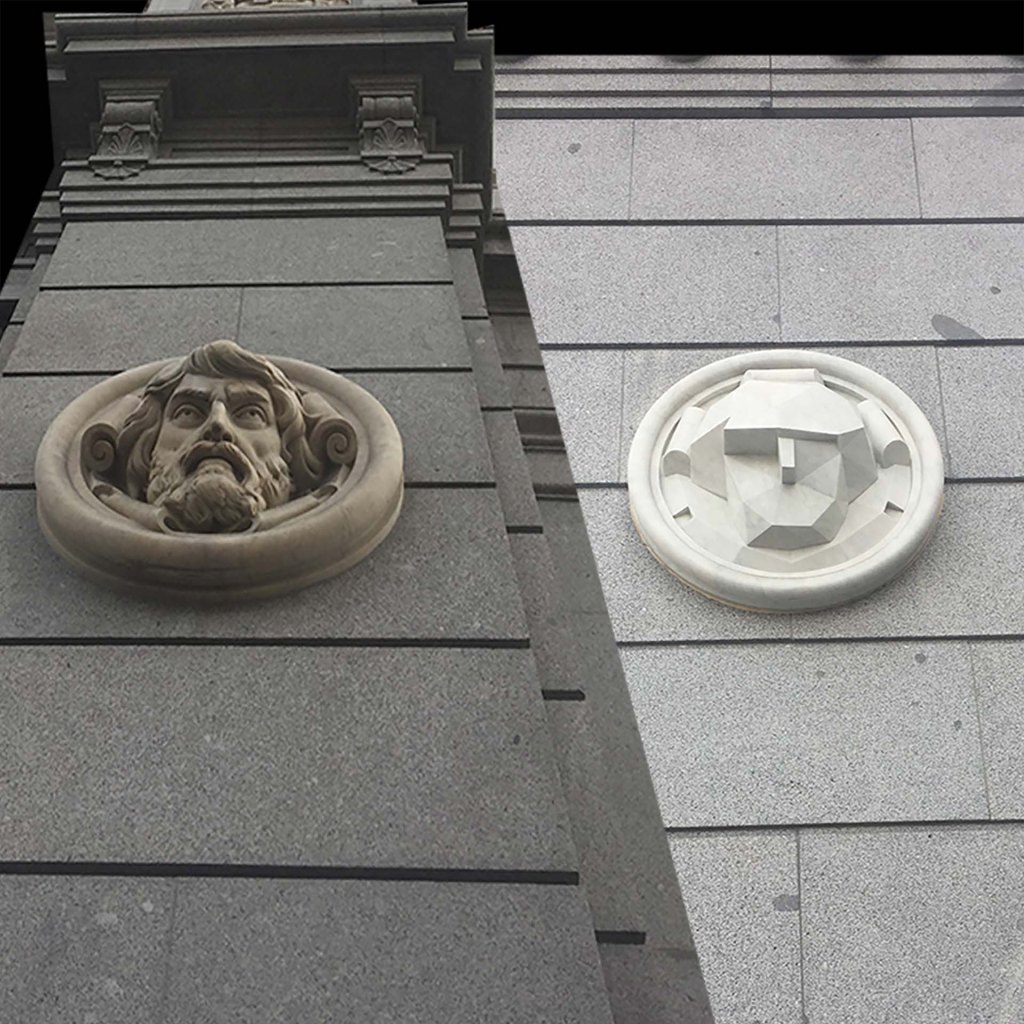
The transitional faces of Banco de España. – Sonali Devarajan 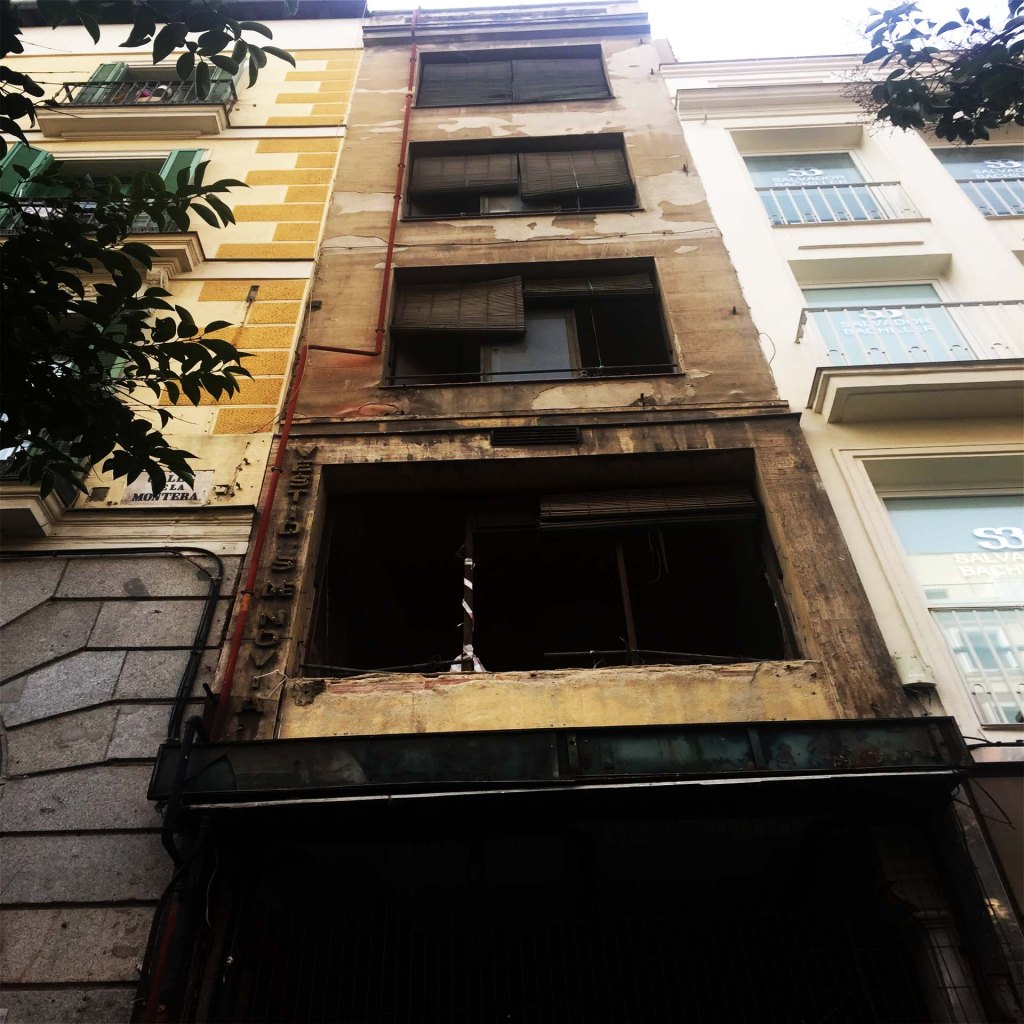
A rare empty gap among dense development. – Sonali Devarajan 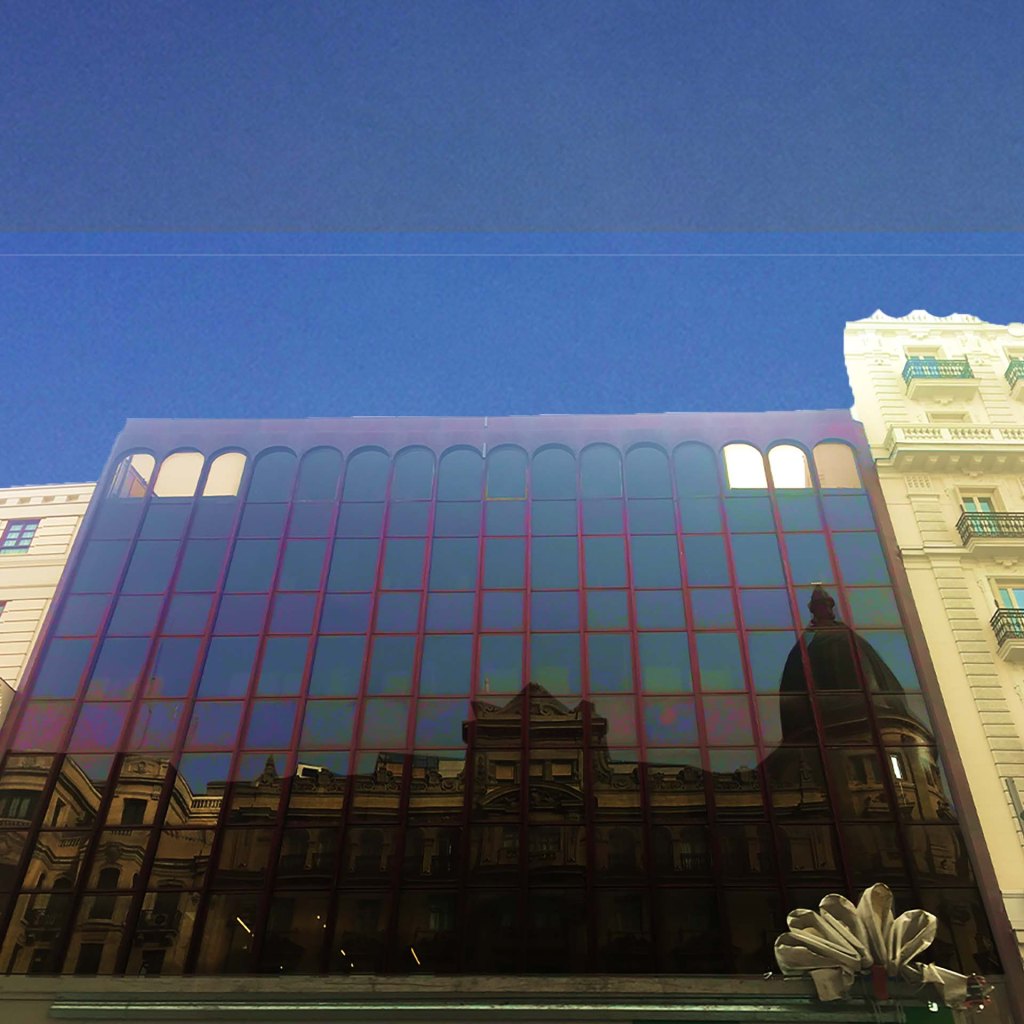
Old reflected in new. – Sonali Devarajan 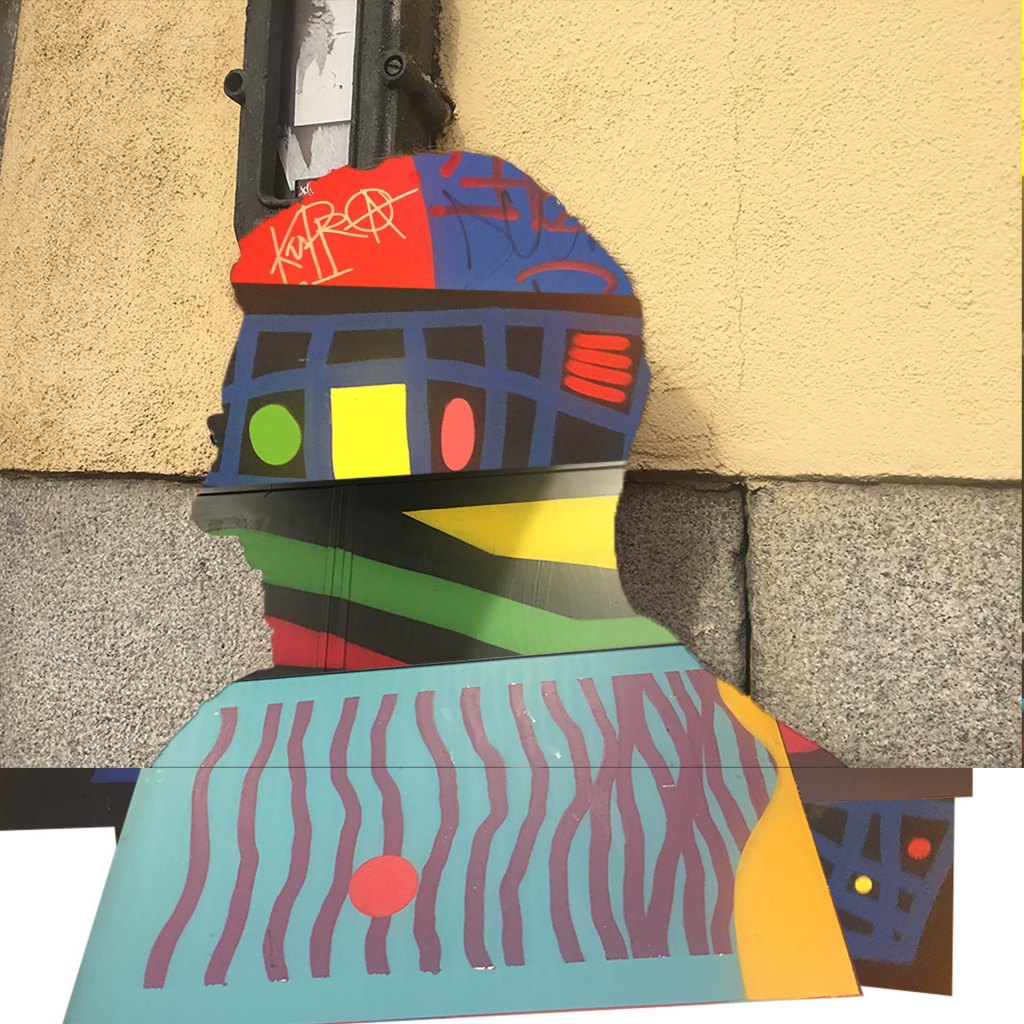
Bright murals and sunshine. – Sonali Devarajan

