Farewell Madrid.
Well we made it to the end of Madrid. The time surprisingly flew by, it is hard to say where it all went. The University did a good job of keeping us busy, but also allowing plenty of free time to root around the city. It is unfortunate we didn’t have more time in Madrid, I feel like I have seen so little of the city. The streets weave and curve creating secret nooks and crannies that not even locals can find.
Though we are leaving, Madrid felt like a welcome home for me, meeting friends that came to Minnesota from Spain, some I hadn’t seen in almost 7 years. Since their departure from the Twin Cities it has been occasional “when are you going to visit Spain?” and “you have to let me know when you visit”. Well it finally happened. They showed me some great local foods and restaurants, strange events like Loco Bongo (large scale bingo), and brought me around the city to show me it in a different lense, better than wandering.
Though I know I will miss Madrid, here is what I won’t miss:
- I won’t miss all the traffic
- I won’t miss the smog
- I won’t miss avoiding all the dog poop
Here is what I will miss:
- I will miss my friends that I leave behind
- I will miss the impressively clean and efficient metro system
- I will miss the massive parks
Until next time Madrid, Adios.
-Jordan Hedlund
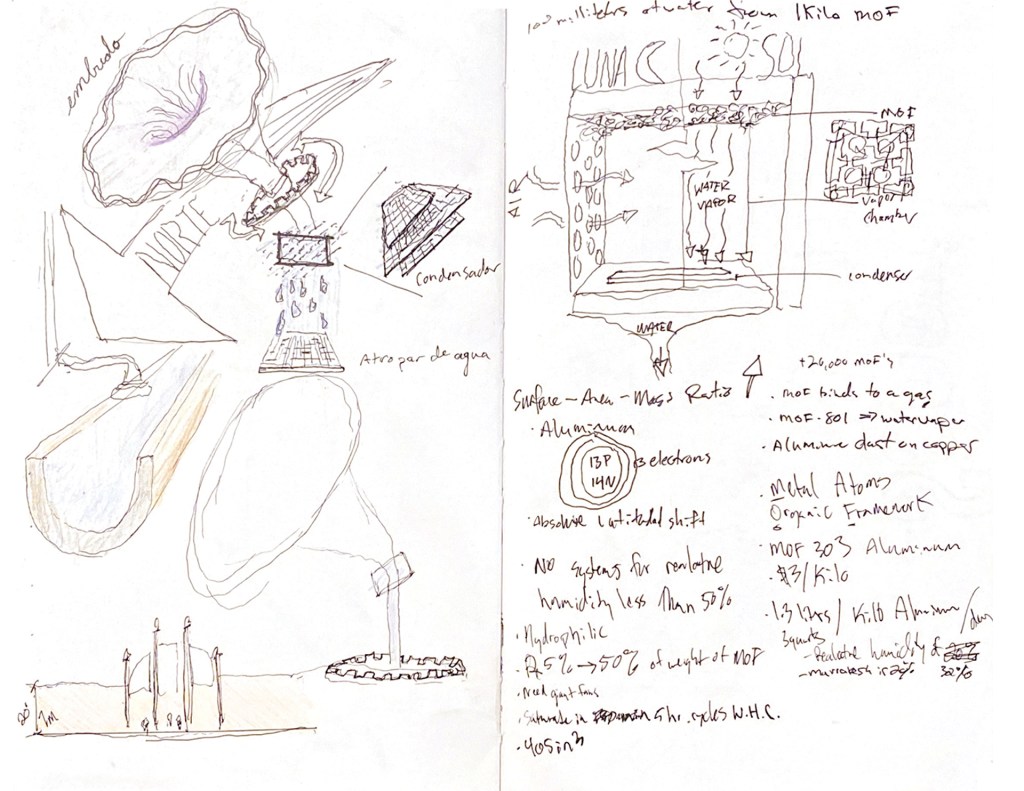
Sketchbook notes for studio project on the MATADERO
-Jordan Hedlund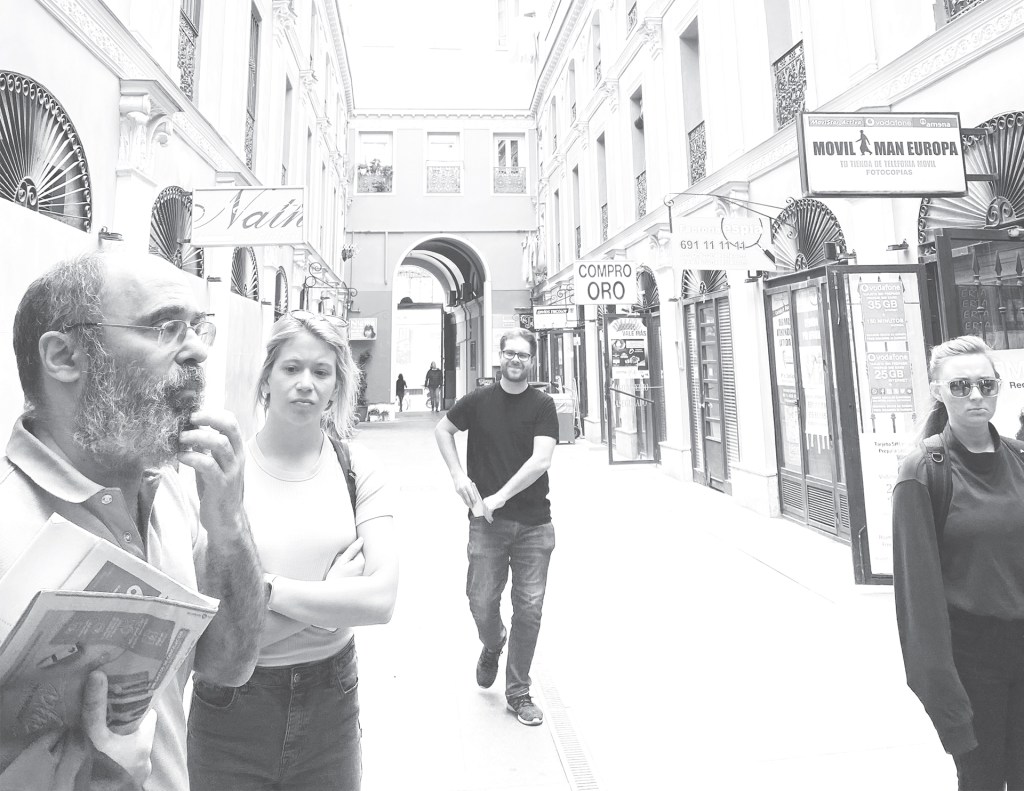
Our fearless tour guide PABLO.
-Jordan Hedlund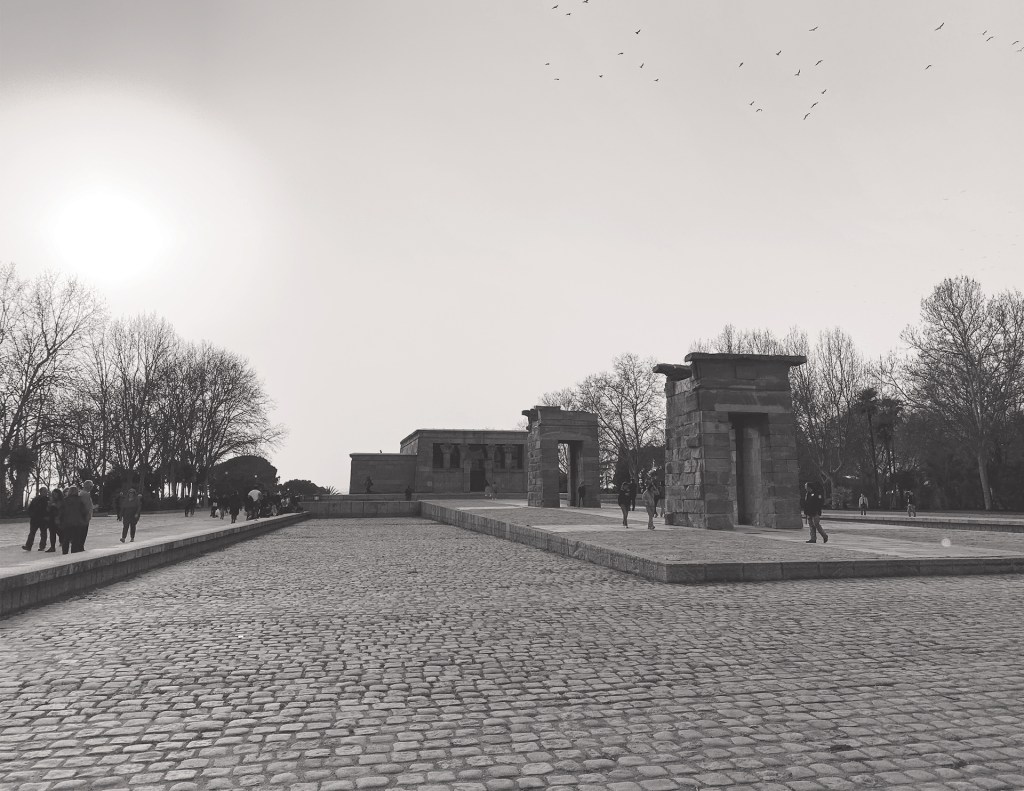
I bet you didn’t know there is an EGYPTIAN temple on Madrid? also thats smog.
-Jordan Hedlund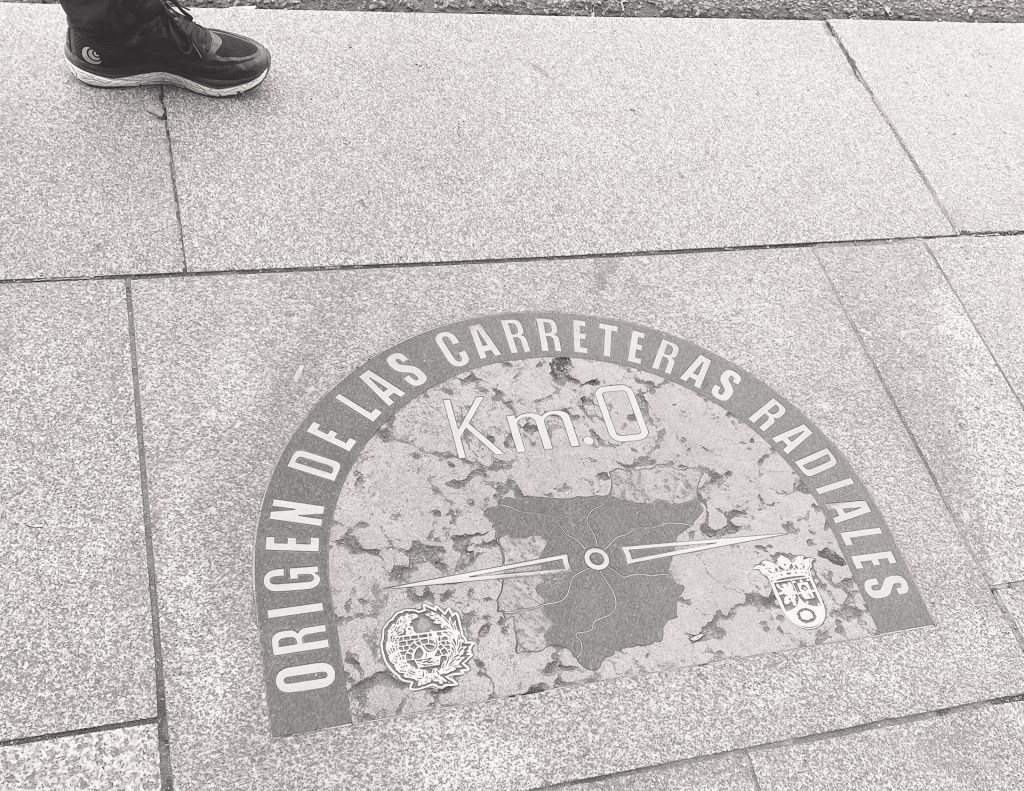
Puerta del Sol where major road coordinates start, this is KILOMETER 0.
-Jordan Hedlund
I may not have fallen head over heels for the city of Madrid – but I value the experience and respect the way of the people in this place. I have been reading a book this semester titled “How To Do Nothing,” where the author, Jenny Odell, writes about “resisting the attention-based economy.” An important lesson that I have learned from Odell is focusing on and making time for the things that really matter in life – not perceived productivity or success at a job but rather being in the moment and exploring these moments – whether that be alone or with others.
I find myself evaluating the United States way of life based on Odell’s ideas – and am quite disappointed in the way we place value on people and time. However, I am very impressed with how the people of Madrid have navigated these notions – I found that Madrileños really value time with others and make relationships a priority.
In Madrid, the streets are lined with cafes and restaurants filled with people conversing over a café or cerveza and tapas. It doesn’t matter the day or the time – even in the middle of the work day people take the time to be in the moment. Lunch is not a microwave meal in front of the computer, but rather an event to relax, enjoy, and catch up with others. I admire the way Madrileños value time and relationships and hope to carry these ideals with me back to the states!
-Rachel Peterson
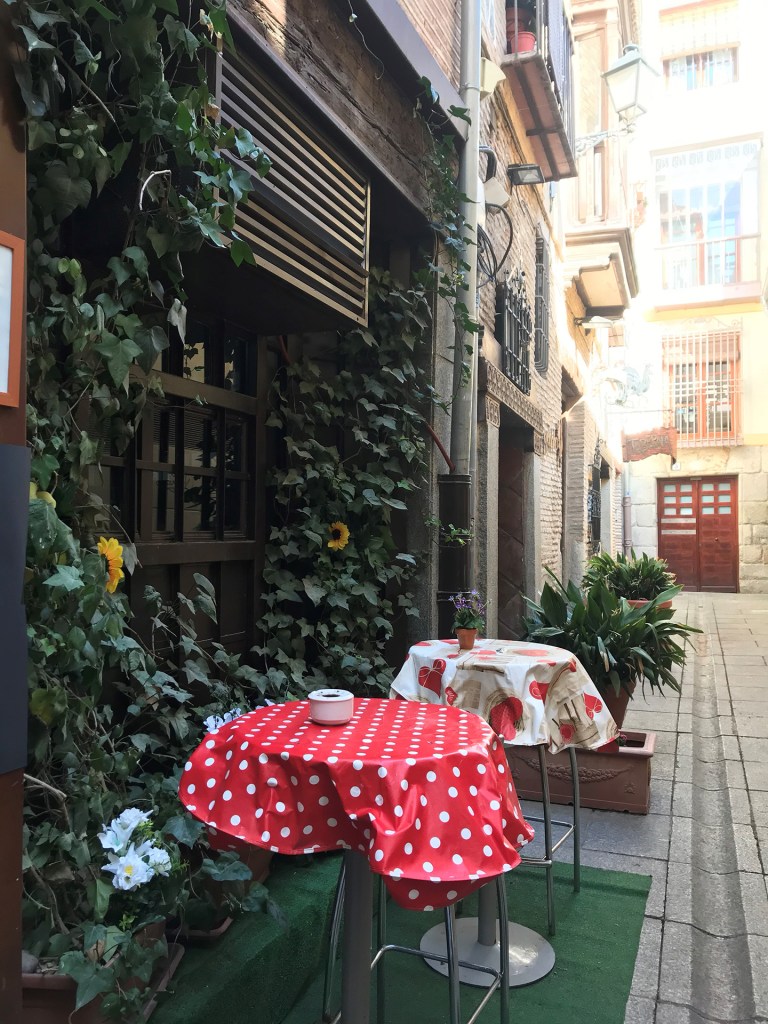
Quaint café in Madrid’s side streets.
-Rachel Peterson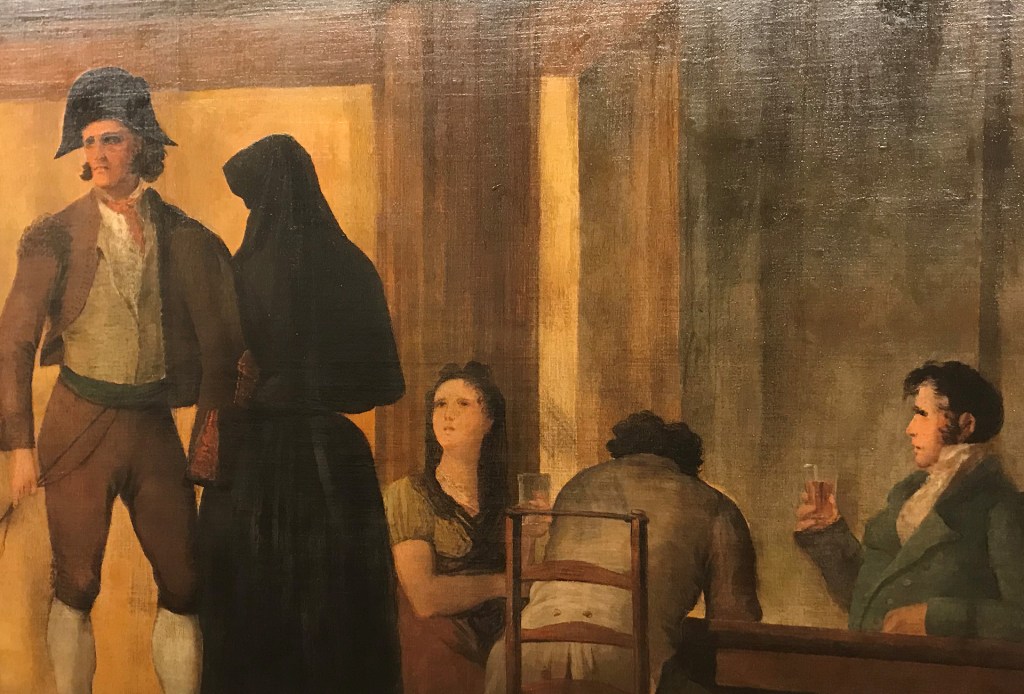
Historical painting representing the emergence of “café culture.”
-Peterson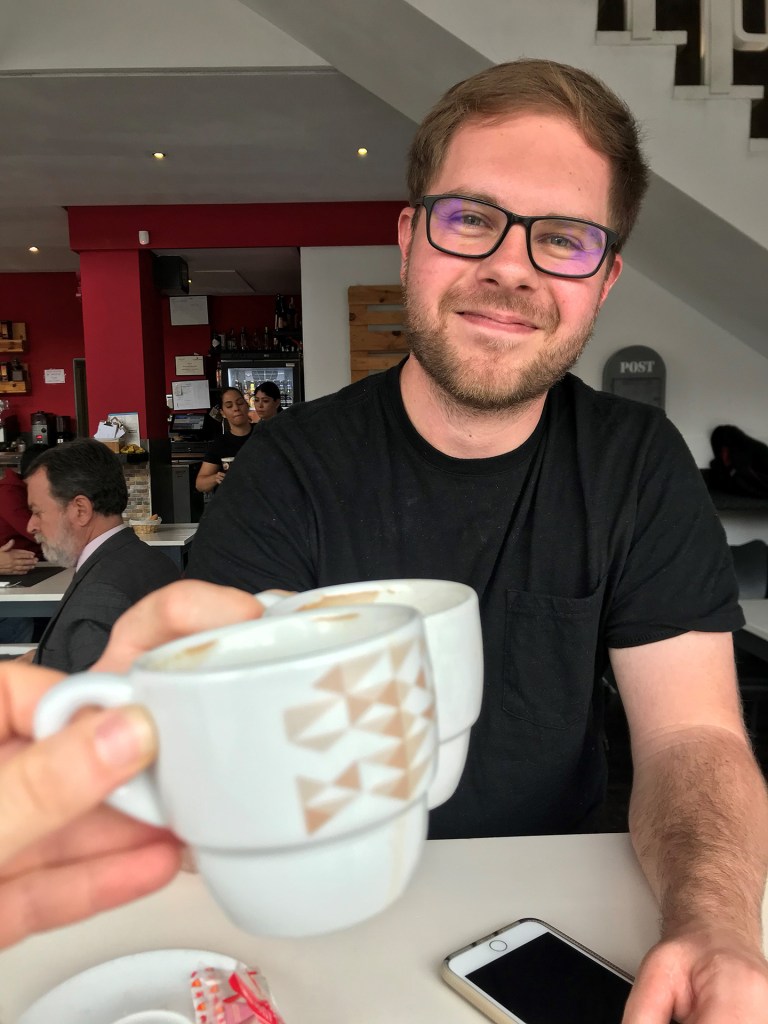
Enjoying café con leche at Glacé Café.
-Rachel Peterson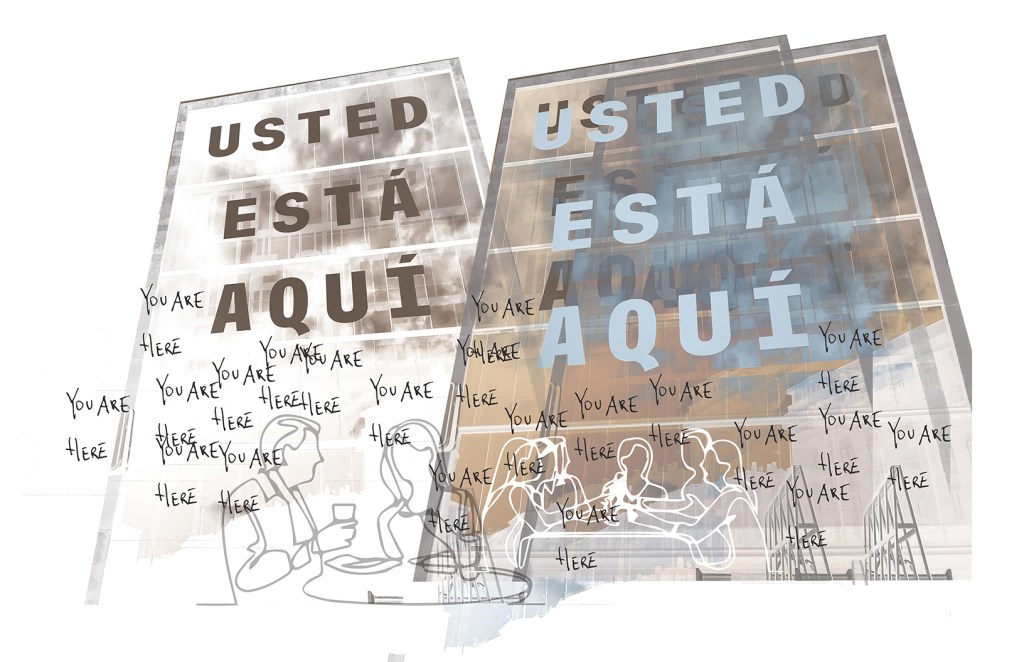
Madrid’s Motto: You Are Here.
-Rachel Peterson
After staying in Madrid for a month, I can confidently say that Madrid is indeed a tourist destination hub because of its rich history, great traditions, and a welcoming, small-town atmosphere. Through our visits and walks, we had a close interaction with the city not only physically but also socially and emotionally. Favored by good weather, we had an opportunity of walking with Pablo, who is a living Madrid’s history dictionary, to several neighborhoods. We started by looking at how the city grew to get a deeper understanding of the design styles used, materials, and what influenced its expansion. We then snaked through Lavapies, which is a multicultural neighborhood and Gran via a street rich in 20th-century history.
The old town neighborhoods in Madrid is characterized by narrow streets with cars parked on one side and shops overlooking each other. Despite this, they managed to squeeze in a few trees to modify the microclimate. However, the most worrying thing is that everything all paved, leaving a 6ft by 6ft tree boxes. But at least they have considered having some trees in these small spaces rather than not having with all the paved areas. It’s worth noting that these cities have extensively used “Mudejar, “an Islamic style, in most of their buildings, even in churches which quite contradictory. Many cathedrals have used the gothic style, which has seen a lot of transformation.
It will be sad if I do not mention the Madrid Rio project. This is a massive infrastructure project that buried the M-30 Road and created a park on top. We experienced the whole park through bike rides with a tour guide from the architectural office that was involved in this multi-billion project. From what we picked form her, Madrid Rio seems to be a successful project even though it was expensive.
-Chris Ototo
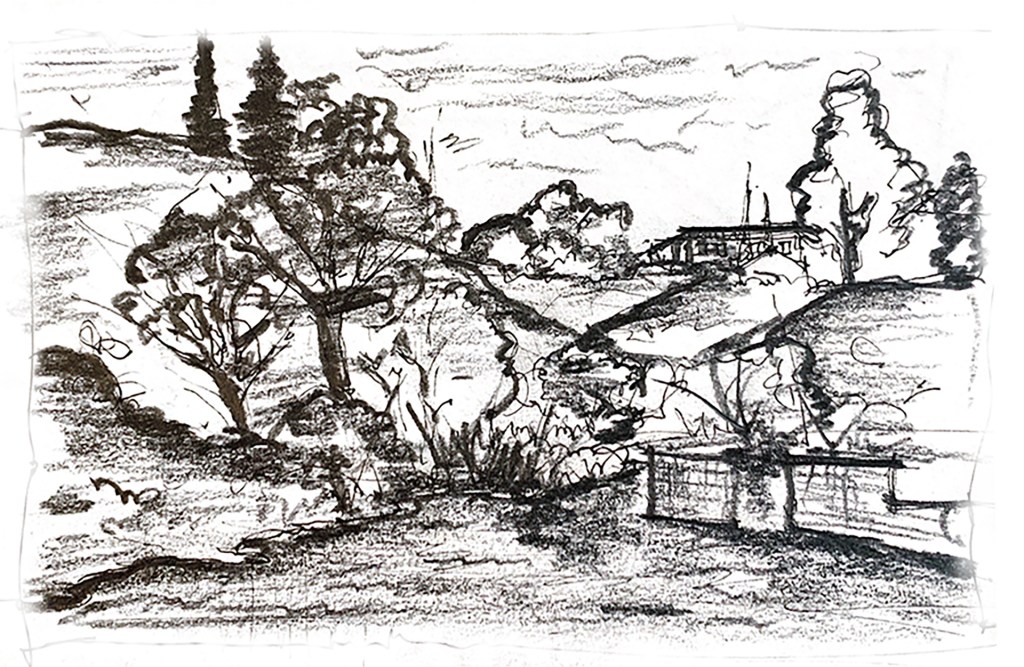
A view from the Manzanares River, Madrid.
-Chris Ototo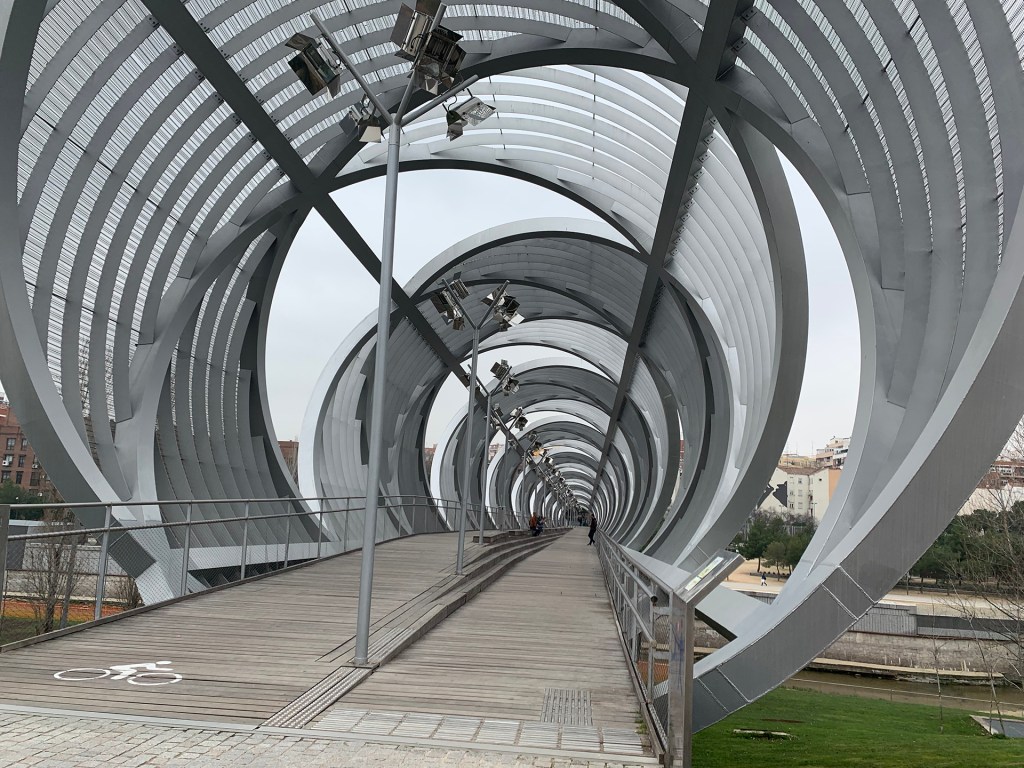
Pedestrian and bike bridge in Madrid Rio.
-Chris Ototo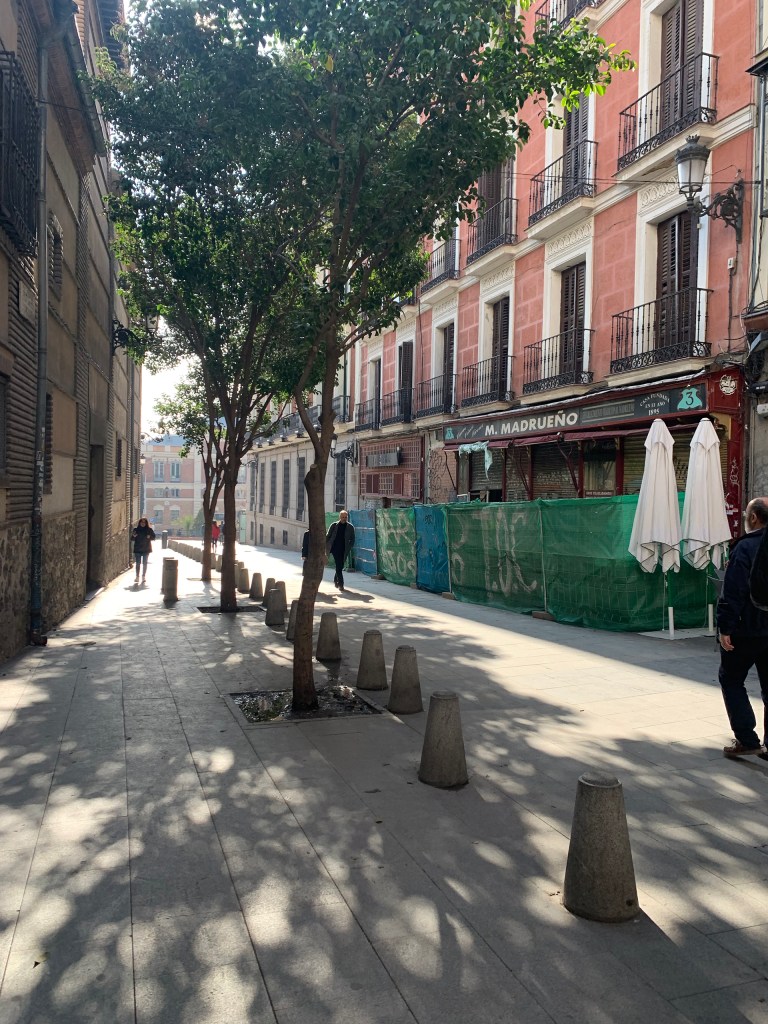
A typical narrow street in old Madrid neighborhoods .
-Chris Ototo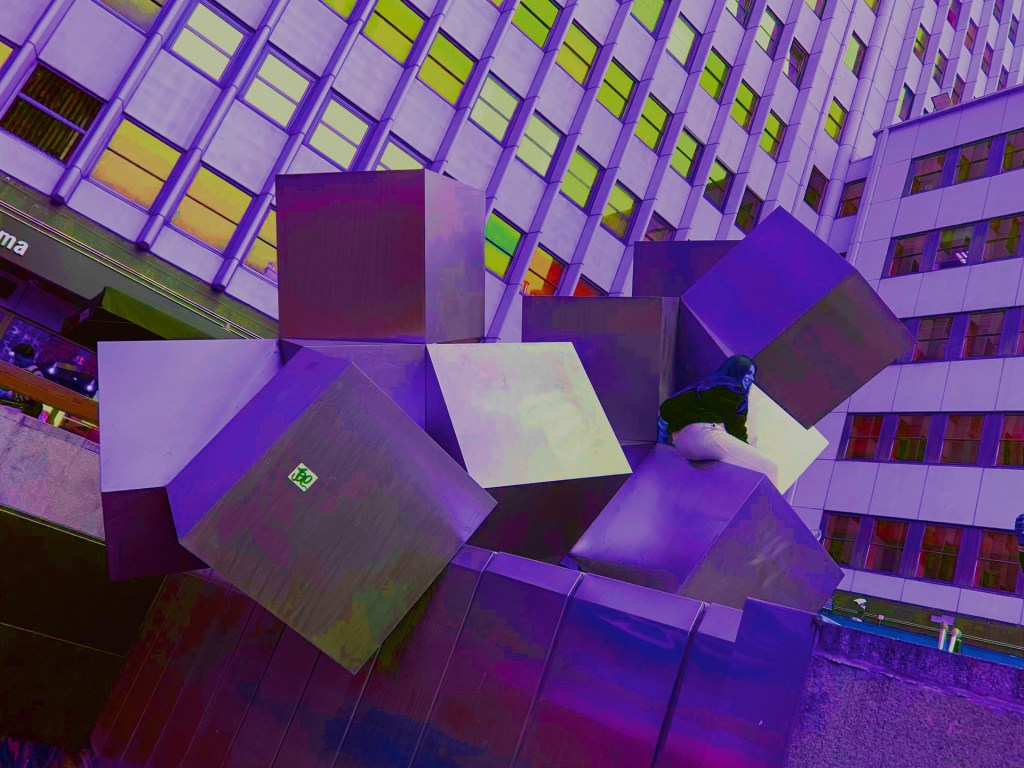
A Plaza that doesn’t have a name but known by the cubes in Madrid.
-Chris Ototo
Our adventure in Madrid was the most unfamiliar experience of slow progression. Coming from a concentrated capitalism, it was refreshing to realize that there are places on earth that do not invest every fiber into work and progress. People were always out and about talking to one another, and it seemed, generally, that everyone practiced being present in the moment. Work is still a part of life, but it is not life itself. Yet, I was surprised to find, with such a relaxed atmosphere, progress is not forgotten. My surprised wasn’t to attribute progress to capitalism; it was just the pleasant observation that in a city that is noticeably more focused on socializing and relationships there is an undertone of consistent growth.
The physical manifestation of this progress can be seen in things like constant maintenance. When we walked through the streets and parks, we could always spot one or two people doing maintenance in public spaces. This included everything from mowing lawns, sweeping sidewalks to cleaning garbage cans. It was to the point that when I noticed something broken or missing on city street, I would be confident it would not be broken for long. In these small ways, I would say progress (though far from being equal) is more consistent throughout the city than in the United States. Less places seem forgotten. In Madrid there is more of a celebration in maintenance as progress. There seems to be less big changes that there are small steps.
So it goes that our Madrid experience was just the same. There was a more consistency between academic, personal and relationship growth. We were able to experience place and people much more intimately in Madrid as we learned step by step, explore what piqued our interests and fit it into the bigger picture of our progress.
-Lauren Arndt
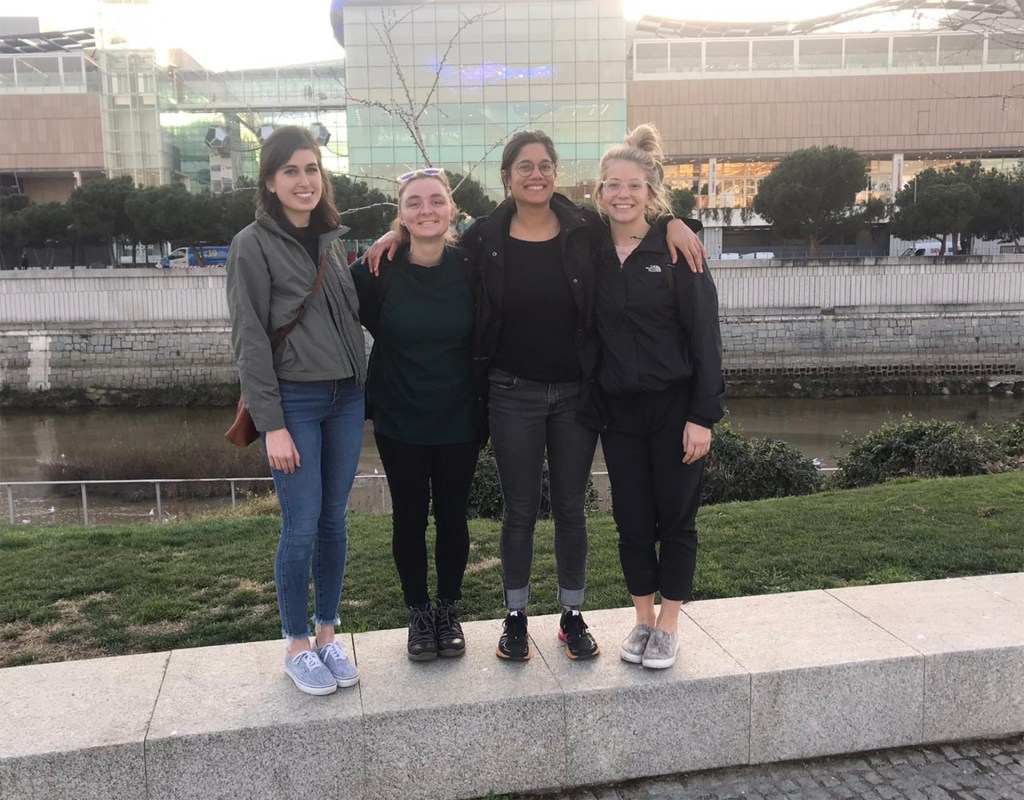
Four LA gals taking on Madrid Rio.
-Lauren Arndt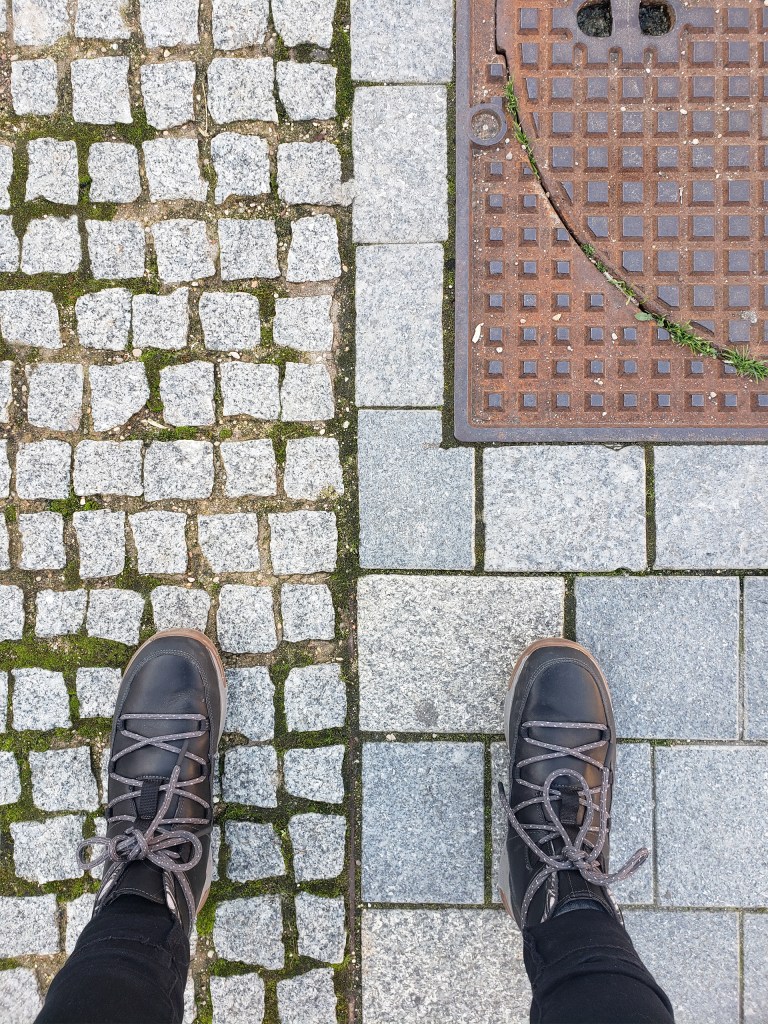
Madrid’s personality comes through in its textures. The city consists of most if not all hardscape, with the different types all unceremoniously running into one another.
-Lauren Arndt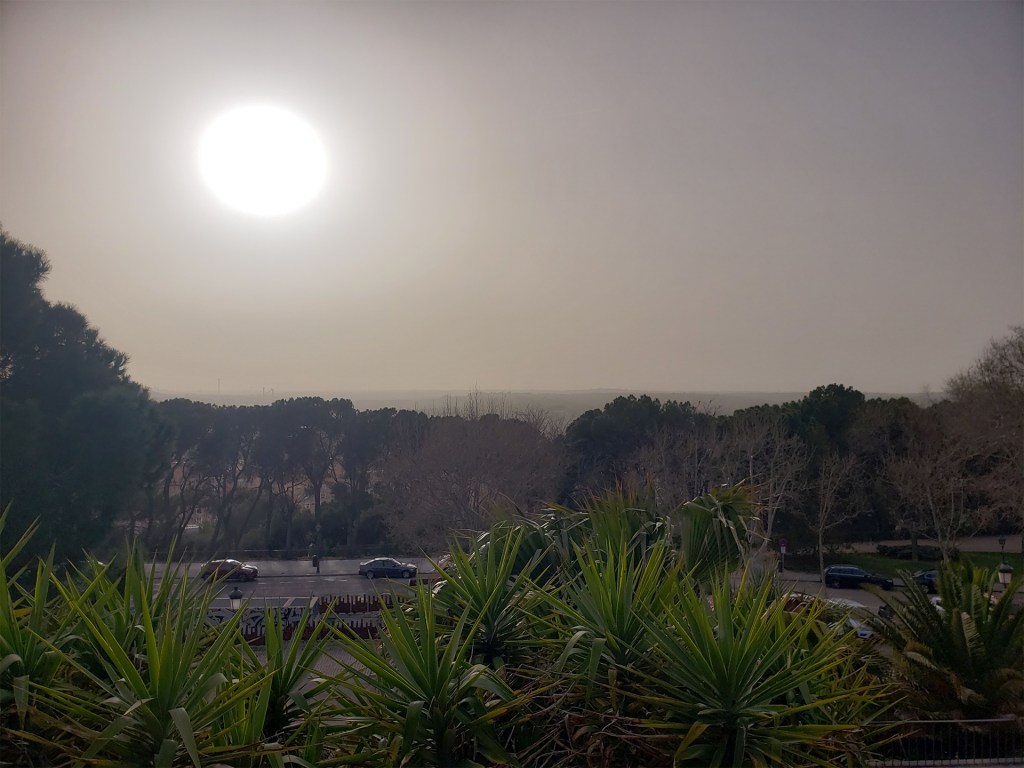
A dystopian view of the mountains to the north. You can’t see them? Well, they’re hiding somewhere behind the curtain of air pollution.
-Lauren Arndt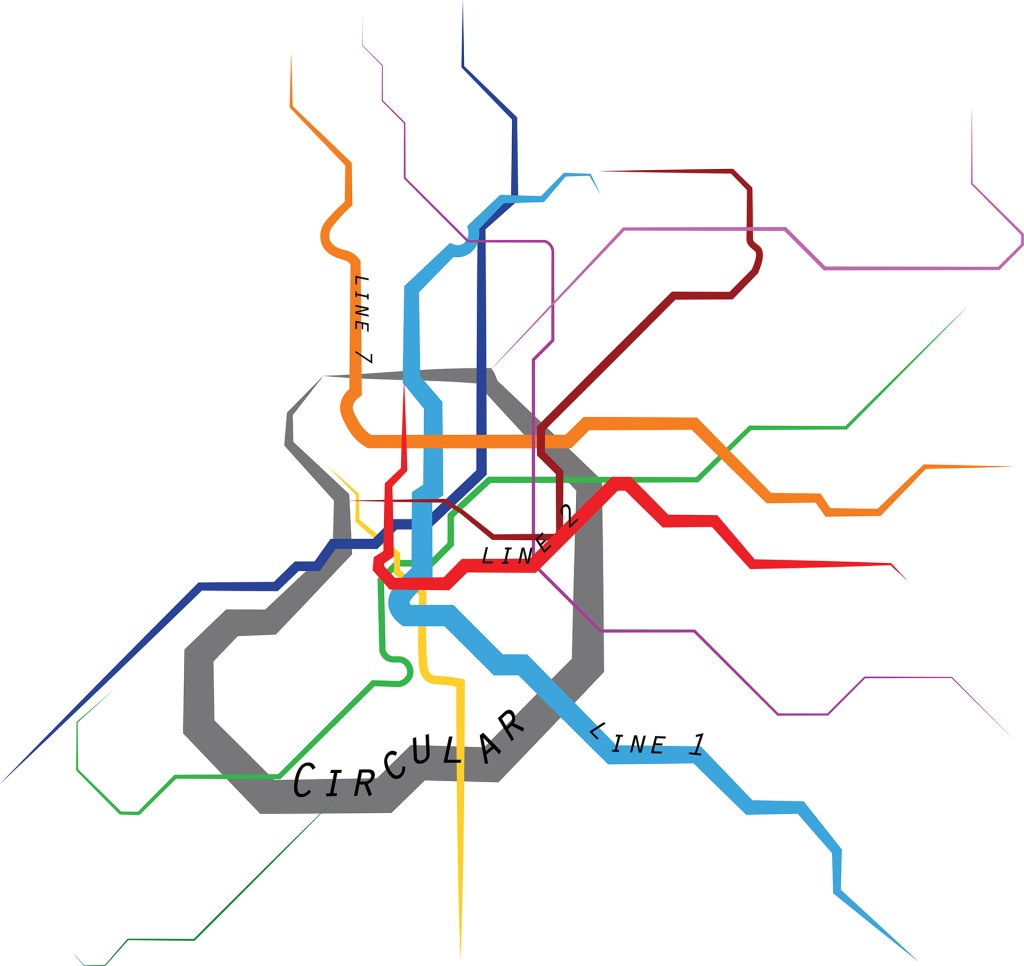
Our experience of Madrid as told through the Metro Line. Larger lines show a more traveled route during the course of our stay.
-Lauren Arndt
Brief as it was, comprising merely four and a half weeks here in the city of Madrid, the capital of Spain, our stay has been quite an adventure. We have toured multiple parts of the city, explored numerous museums, visited many historic sites and attractions, and spent our time absorbing the atmosphere and culture of this bustling city. I found it quite enjoyable learning about the history of the city, seeing it’s development, and learning the language, and though brevity doesn’t do it or myself justice, I honestly feel I will leave here with a good understanding of the social, political, and environmental dimensions that comprise the mosaic of Madrid.
Some highlights for myself were observing the architectural styles of the buildings and the way plants were used, either formally or informally, on and within those buildings as well as in the landscape, plazas and gardens we encountered. Additionally, I found it quite interesting how architectural styles were being combined and appropriated in various ways as a sort of clue to how people from different cultures left their mark over time.
Something I was drawn to about Madrid, which made it feel like home to me, was the vernacular makeup of the old city. No two streets are alike, and while appropriation and recreation of architectural style may make buildings appear very similar, they may have been constructed during completely different decades. While the city is undoubtedly very large within the context of Spain, the small streets and intimate connective tissue of the city, gave it a small-town vibe. I think it was this detail in combination with the prevalence of urban parks, plazas and restaurants, which will leave me missing the landscape of Madrid the most.
Farewell for now,
-Collin Wenberg
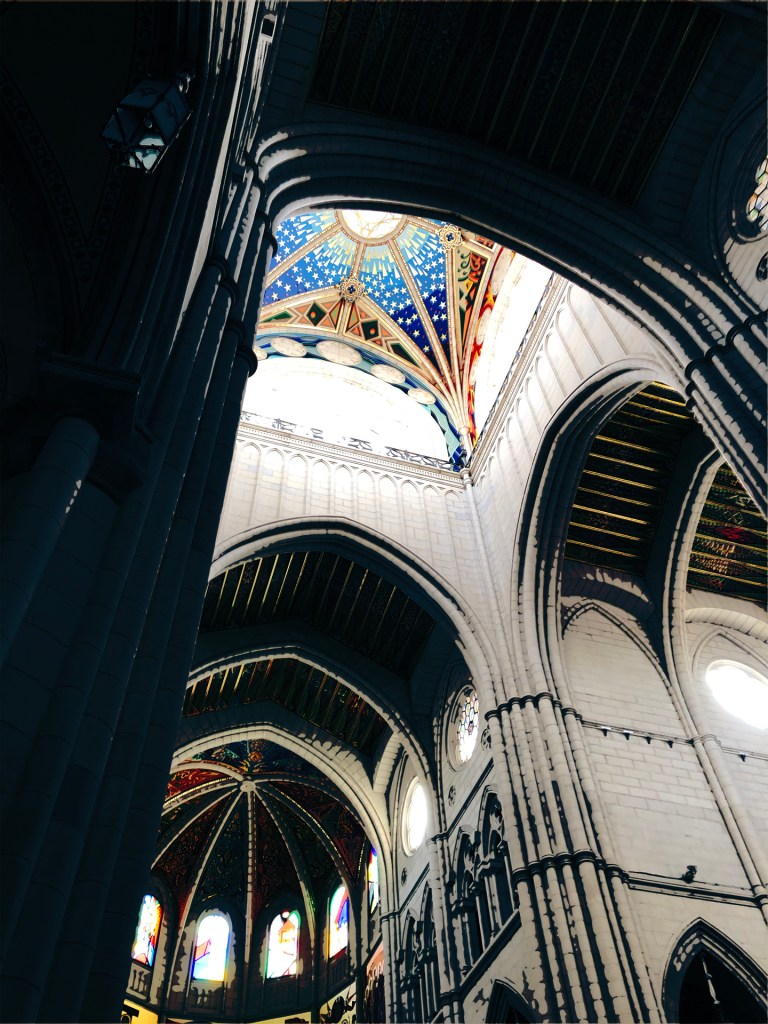
The commanding architecture of the Almundena Cathedral is simultaneously Baroque and Romaneque.
-Collin Wenberg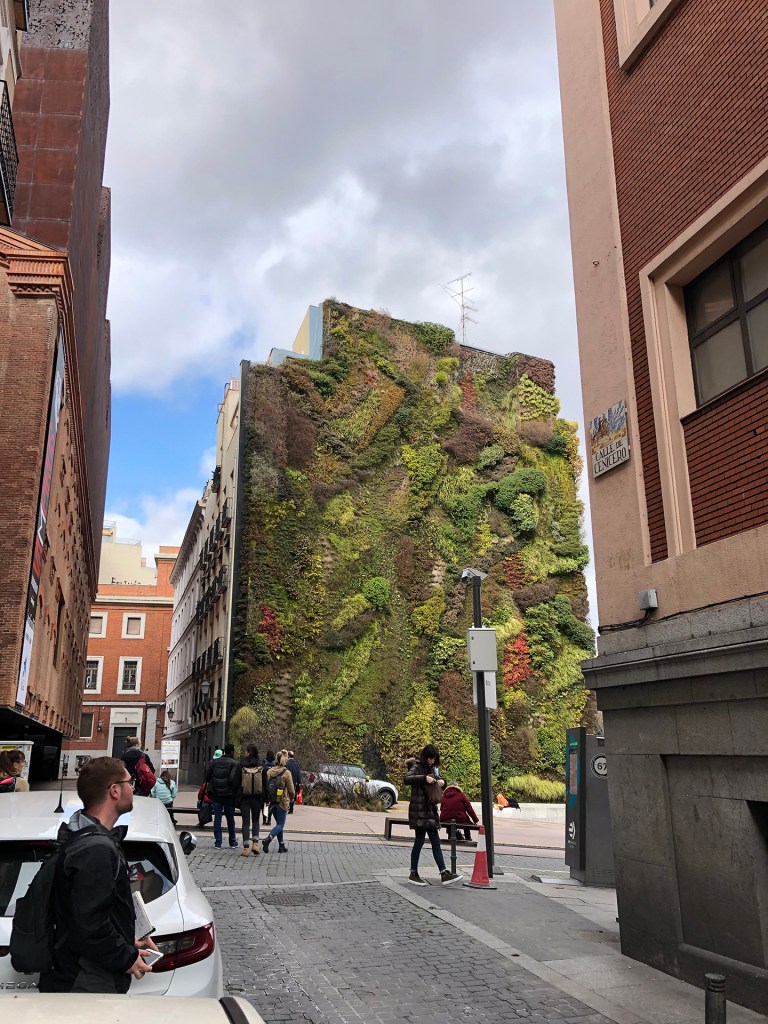
The informal use of plants, Cortes District.
-Collin Wenberg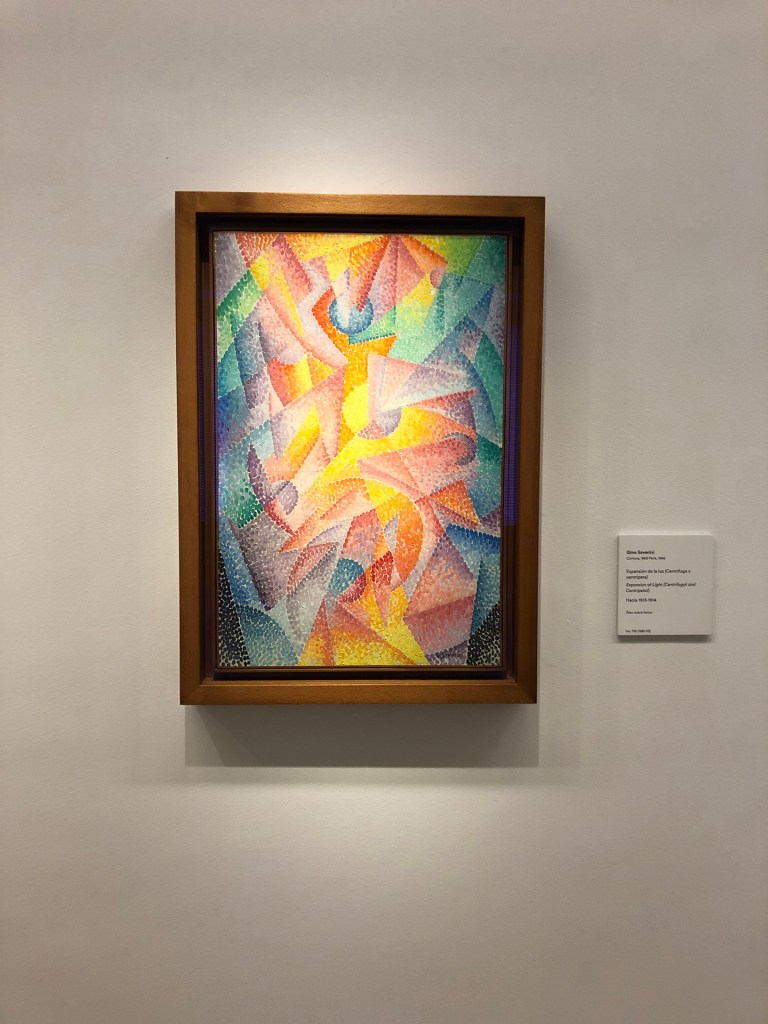
A piece from the Thyssen Bornemisza Museum I chose to represent the mosaic of Madrid.
-Collin Wenberg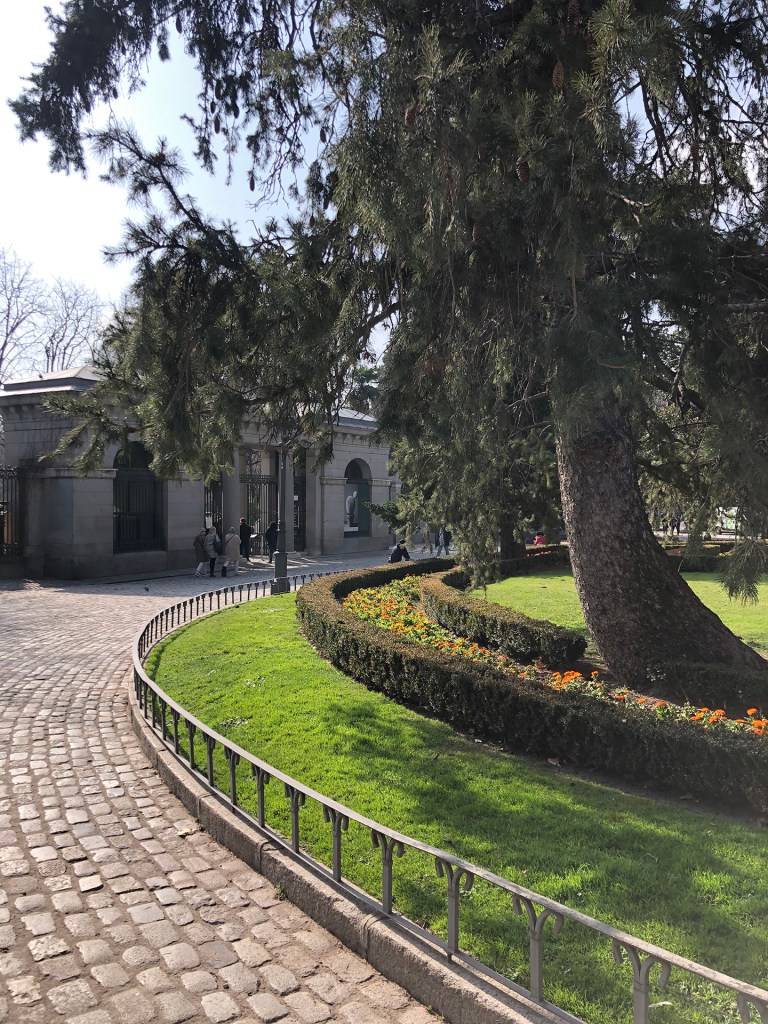
A formal landscape garden outside of the Museo Nacional del Prado, in juxtaposition to the informal use of plants from the Cortes District Image.
-Collin Wenberg
Tomorrow we leave Madrid for our week-long tour of Andalusia, and for me it will be a bitter-sweet goodbye. One of the benefits of visiting a place as a student, as opposed to a tourist, is that you have the opportunity to glimpse and appreciate the nuanced histories, politics, and cultures that make up city life. Absorbing and synthesizing all the information we have been exposed to over the past four weeks has not been easy but here’s my shot at describing the content and qualities of our experience so far. Here it goes…
Last week, Pablo Carbajosa (our history professor) referenced a wonderfully comprehensive and illustrative book on the history of Barcelona. Noting that such a book has not yet been written for Madrid, most of us in the room thought to ourselves, “of all the historians and political theorists in the world, you should be the one to write it, Pablo.” We’re all still waiting on Pablo’s book, but we can almost undoubtedly say that it will include chapters on the city’s founding as a Moorish citadel, “Majerit” in the 9th century; the beginning of the Habsburg Dynasty and Madrid’s status as the capital of unified Spain in the 16th century; the Bourbon period of “embellishment” in the 18th century; the discord and upheaval that characterized Spanish politics in the 19th century; the cruel and oppressive era of the Franco Dictatorship, and the beautiful and inspiring social movement that followed its fall; the rapid and sometimes reckless tear of urban expansion at the end of the 20th century; the aftermath of economic crisis and environmental degradation, the quality of Madrid’s vibrant and diverse neighborhoods, resistant to gentrification; and the rise of right-wing nationalist politics.
Our hosts in Madrid gave us the chance to learn about these important pieces of Madrid history through tangible experiences. A warm “thank you” goes out to Daniel Glattstein Siminovich for guiding us along Madrid’s central axis to visit the meristem of urban expansion and speculation, to Pablo Carbajosa for his passion and interest in sharing his views on Madrid history and politics, to Ana Tovar Garcia from Burgos & Garrido Arquitectos Asociados for our tour of the massively complex and beautiful Madrid Rio project, and finally to all the folks at Accent and the U of M for planning and coordinating an unforgettable month abroad. Below are four of my favorite sites/moments that haven’t been necessarily represented in the blog so far, along with many others chosen by the rest of the studio. Enjoy!
-Brett Stolpestad
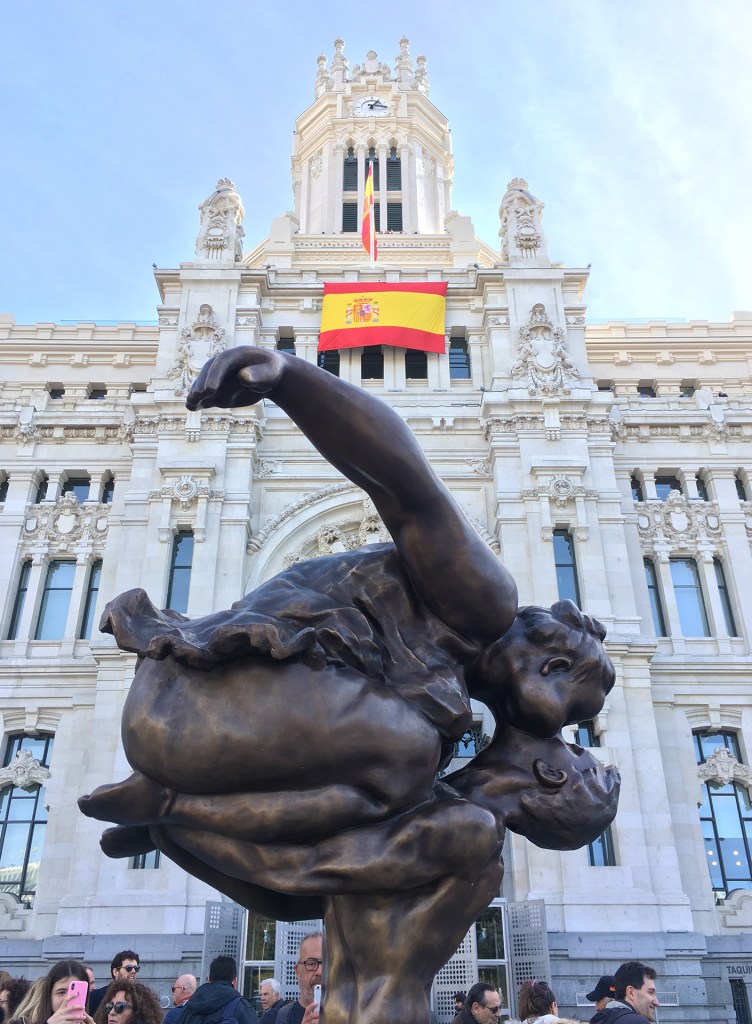
“Sculptures by Chinese artists Xu Hongfei displayed on la Plaza de Cibeles.”
-Brett Stolpestad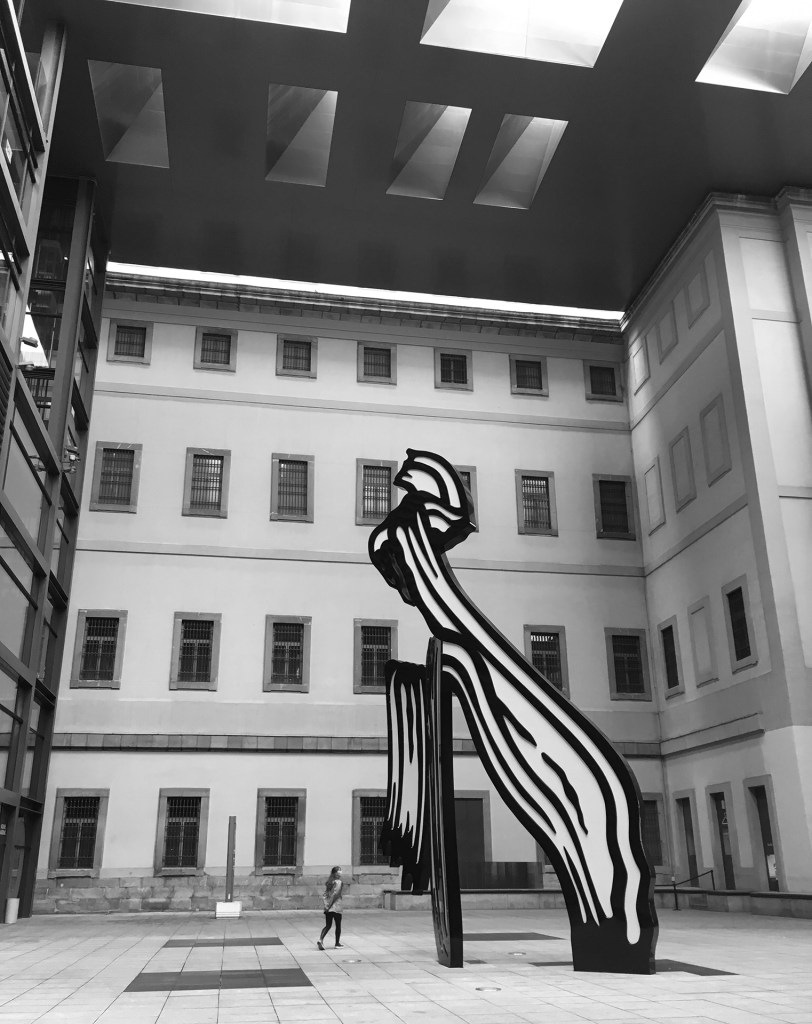
“Marla admires the giant banana outside the Reina Sofia Museum.”
-Brett Stolpestad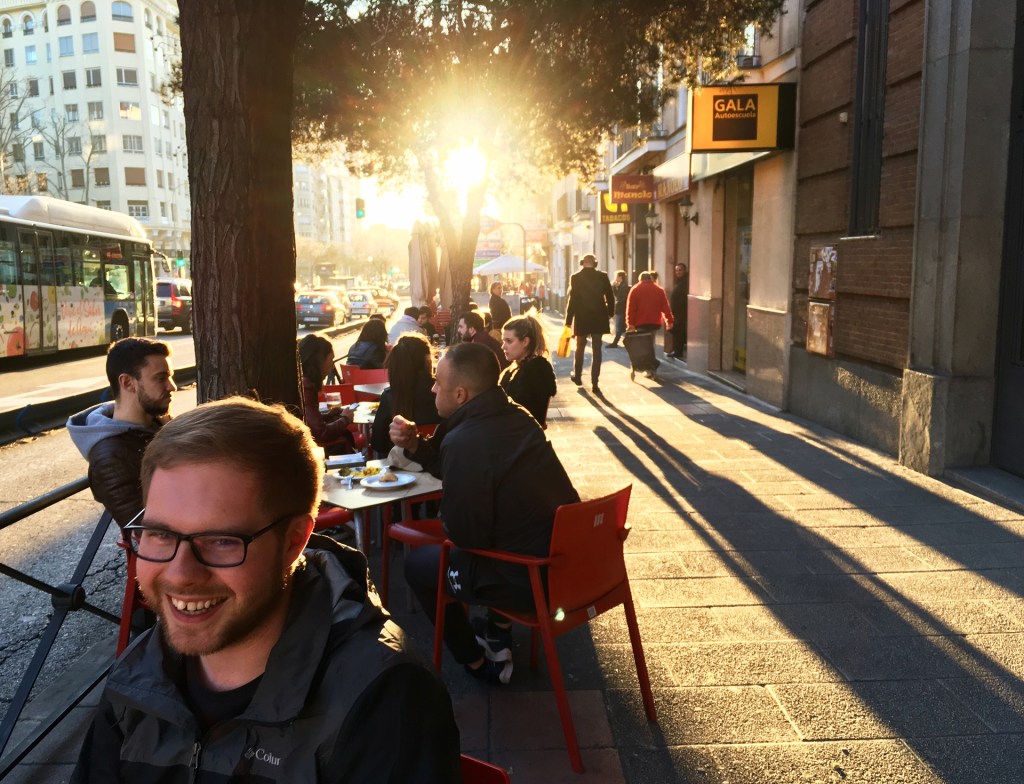
“Tapas in the twilight hours. Calle de Raimundo Fernández Villaverde, near our university residence.”
-Brett Stolpestad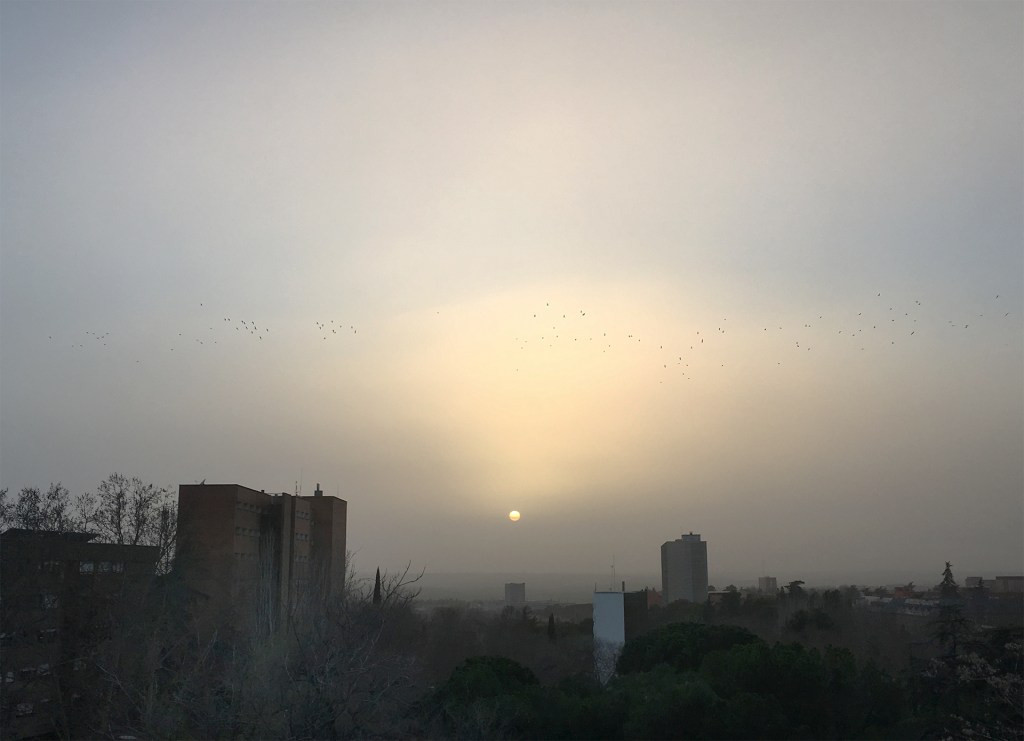
“Madrid has a bad smog day. Policy decisions, excessive vehicle traffic, and mountain valley weather patterns occasionally compound to produce extremely poor air quality.”
-Brett Stolpestad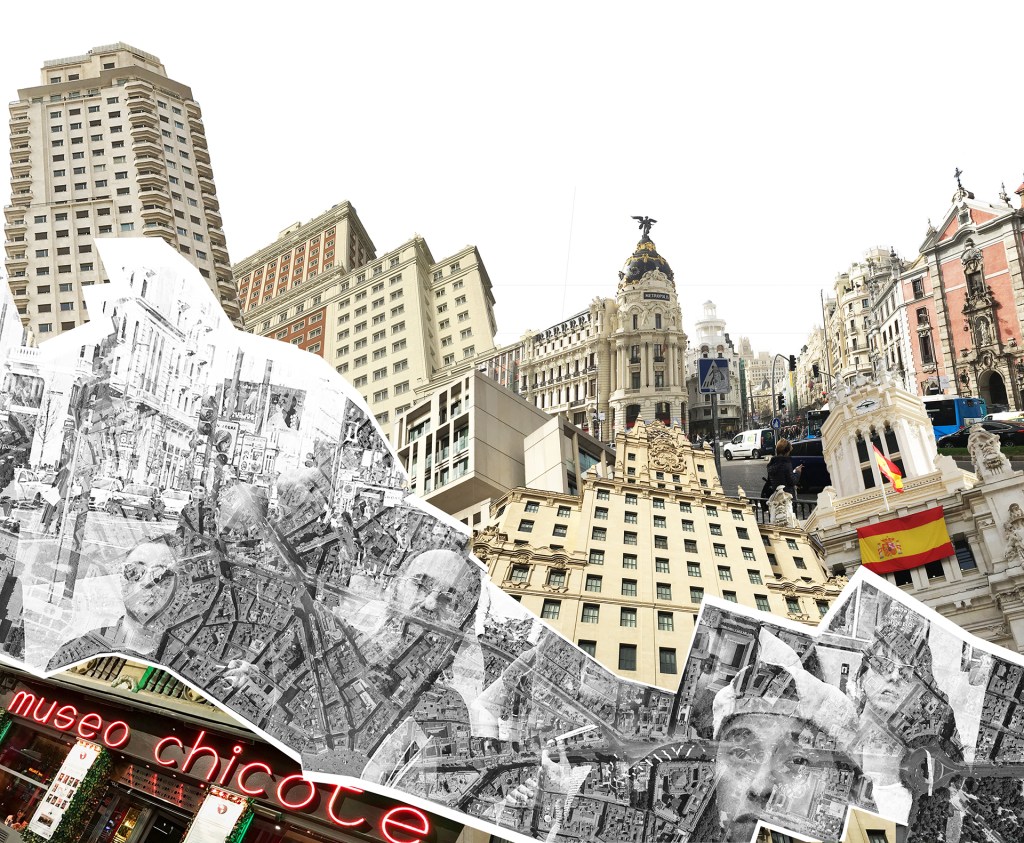
“Gran Vía impressions.”
-Brett Stolpestad
Lessons from Madrid: Take Your Time
Traveling abroad always requires you to make certain adjustments. Studying abroad demands even more. Trying to accommodate the finely tuned routine of a graduate design student into the inflexible schedule of Spain proved to be quite the challenge. Trained to maximize efficiency and productivity, you find your practiced daily regimen interrupted by the seemingly unsystematic daily operations of a new culture.
Vestigial traits from the rule of Franco contrast harshly with the fast-paced homework-oriented student. Daylight can’t seem to catch up to the day, due to the fact that Spain hasn’t reset its clocks since Franco changed them back in 1940, and dinner is often not eaten till 10 pm. Many shops close for hours during mid-day, health concerns regarding tobacco are disregarded, and beer for breakfast is normal.
However, the point of living abroad is not to force your life back home into a new context. Rather, a culture-savvy student abroad will attempt to adopt a new lifestyle and try to appreciate their studies from a different point of view. For many US students in Madrid, the intimately social culture, disrupted daily schedule, and pork and potato laden diet comes as a shock. Assimilating to life within the drastically different Spanish timetable while still fulfilling the expectations of a graduate program seems like an insurmountable challenge. However, just like any other change approached with an open mind, learning to appreciate life in Spain can leave you with valuable lessons. Taking the time to understand the culture, history, and rationale behind a different way of life is an important step on the path to enriching your own.
-Marla Brown
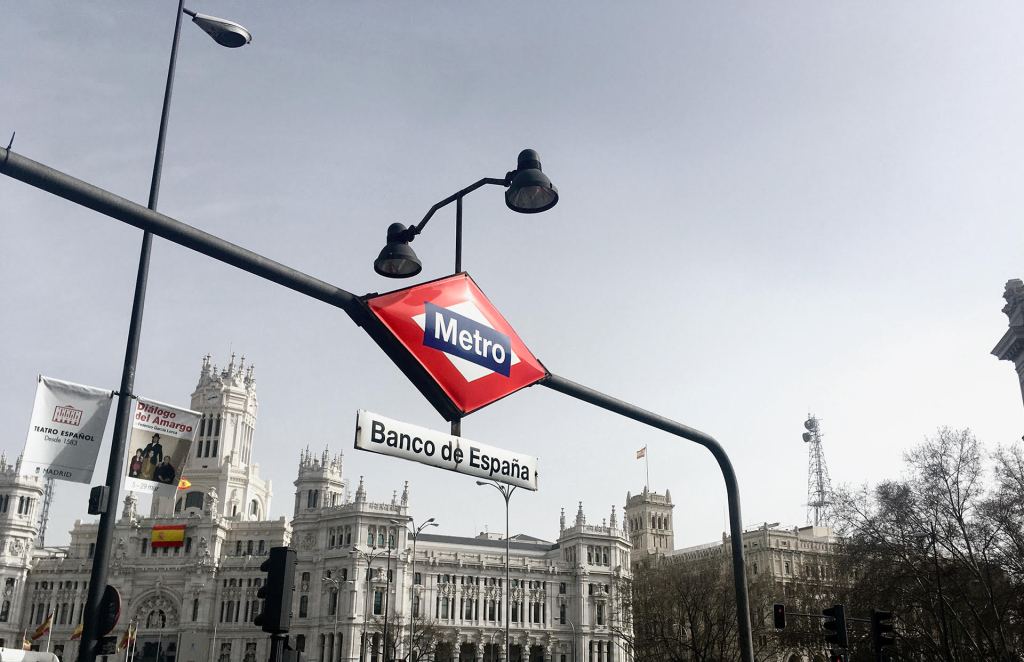
Exploring the Gran Vía, Madrid’s most recognizable street, leads you to Cibeles. Once the city’s post office, the building now serves as City Hall / exhibition space.
-Marla Brown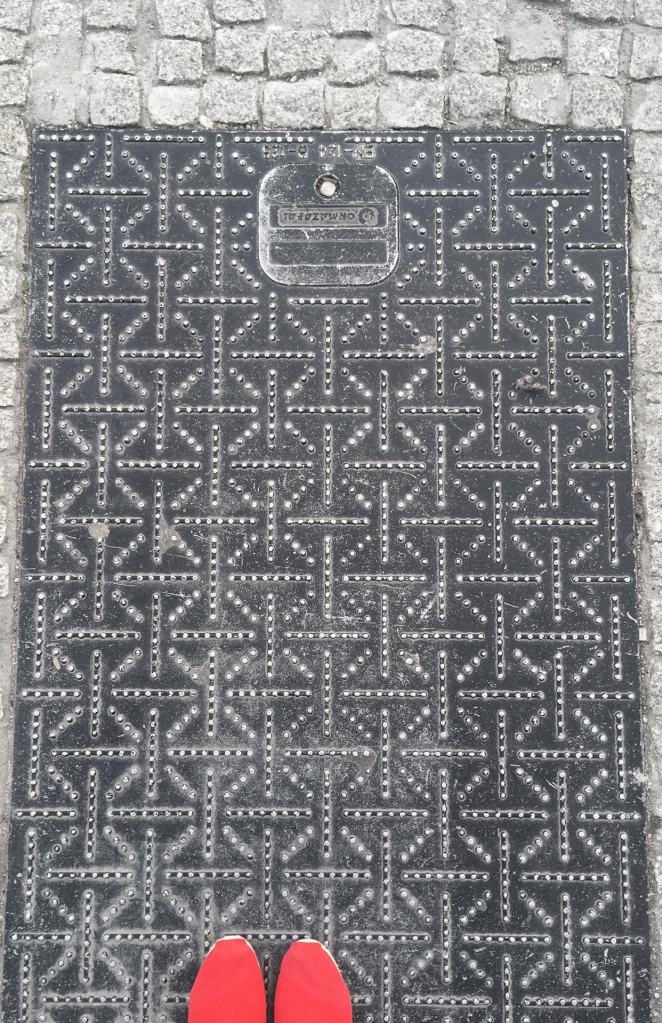
On the Manzanares River, the old slaughterhouse – Matadero – decorates the site of years of spilled blood with interesting service grates.
-Marla Brown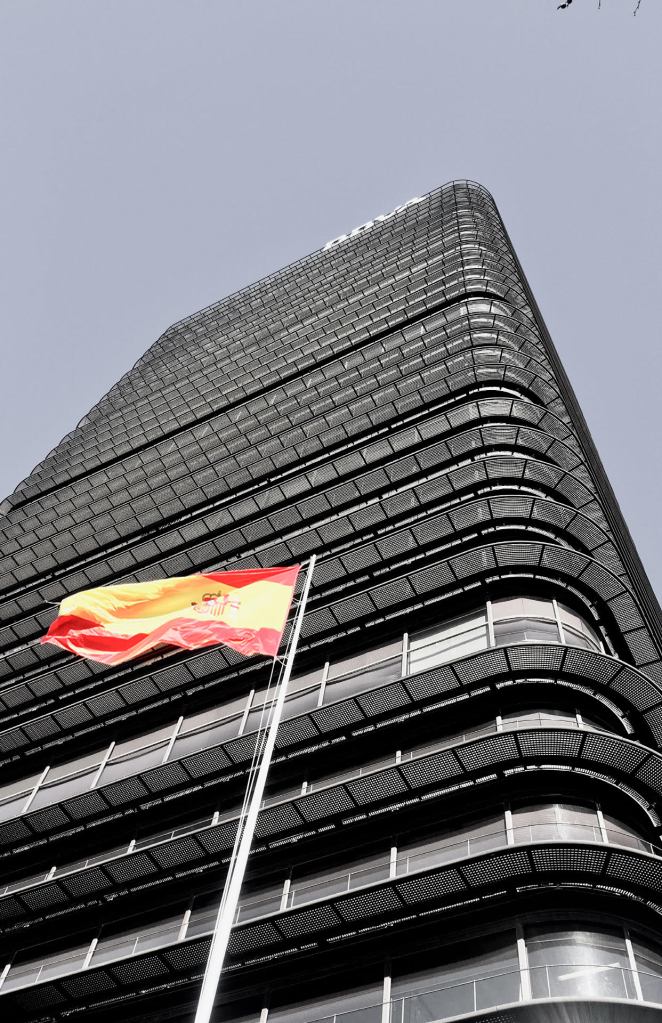
One of the largest financial institutions in the world, this BBVA tower flies the Spanish Flag.
-Marla Brown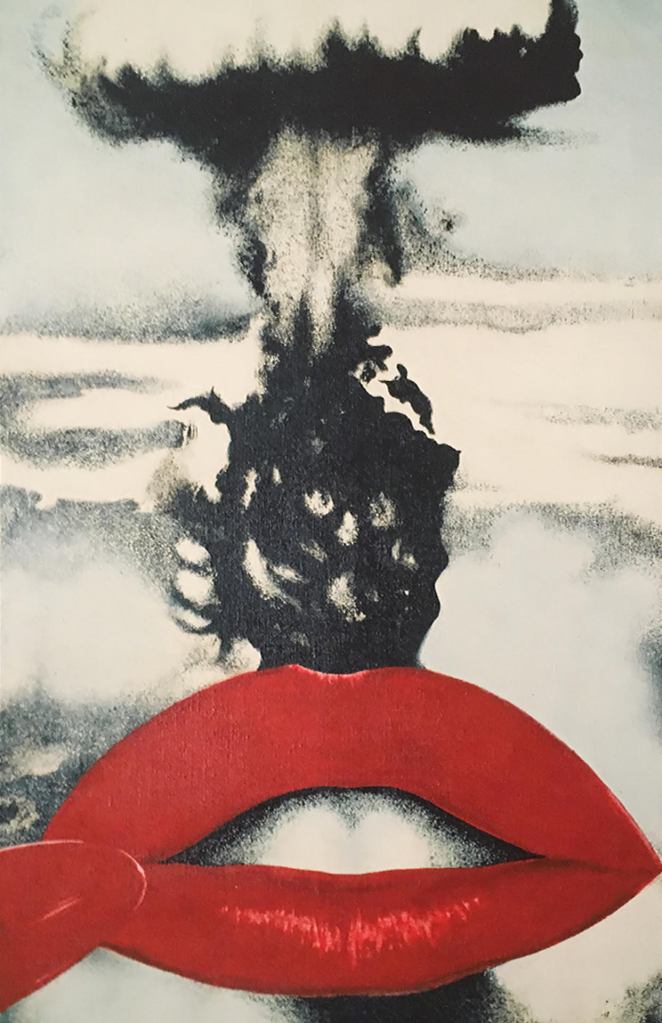
Part of the Promoción del Arte in the old Tabacalera (tobacco factory), a battle of the sexes rages on.
-Marla Brown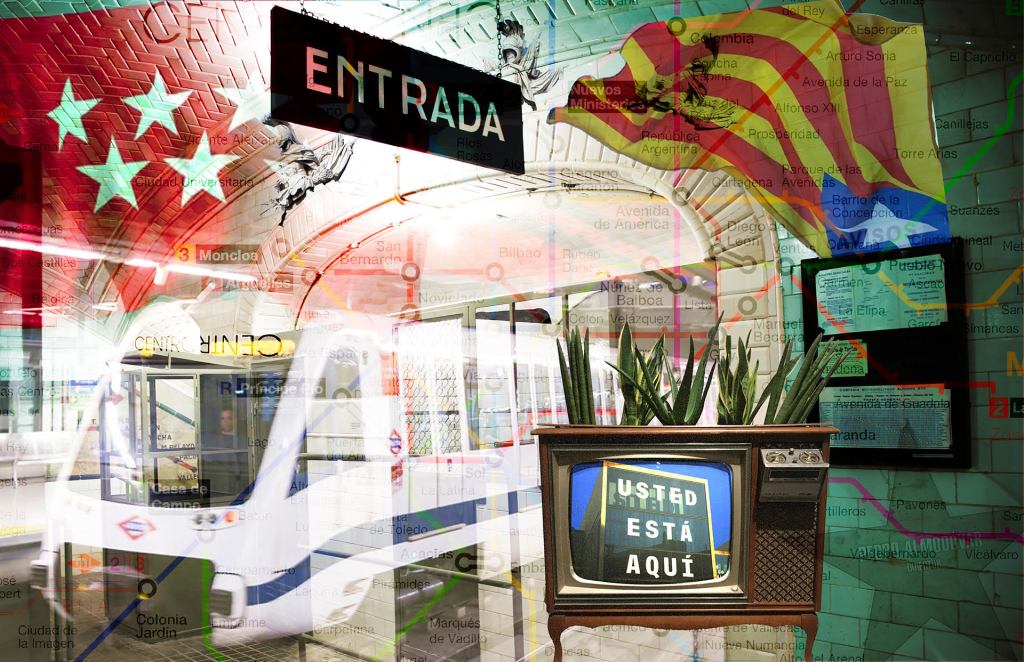
The elements of life in Spain collide, overlap, and merge. The result is often chaotic and enigmatic – but an interesting experience nonetheless!
-Marla Brown
It’s hard to wrap up Madrid. It feels like a home and, for me, a neutral one. It’s fast and dusty and there’s traffic and always some place to eat, drink, stop, see. It’s old and trying to be new. But it doesn’t really ever feel that new to me. And, if you agree with that, I just sort of love that failure. I think I recognize that I am unique in identifying with the chaos. I like the pace of the hum and the smog. It sweeps me up and I feel really unimportant and maybe a little important at the same time just because we’re walking fast with truly nowhere actually to go. I like that Madrid became a capital after other Spanish capitals. I like that the mayors of Madrid don’t mean anything politically beyond the bounds of that position. I like that the parks don’t mean anything special, even if occasionally people try to act like maybe they are special. My favorite park in Madrid is Parque de la Bombilla. I asked several people about it and got responses like, “yes we have a lot of parks”. It’s a long and narrow park. It has almost no grass, a few trees, and lots of empty space. The emptiness has red and gray concrete and lots of graffiti. It looks bombed out, and I wish I could have found out if it really was, at one point. Its edges are a railroad and a street near an unassuming neighborhood full of housing that reminds me of a communist Germany from the movies. The energy is delightful. And I just wish it were longer and longer and longer. With more nooks and crannies of graffiti and concrete and trees and relaxed dogs.
-Sonali Devarajan
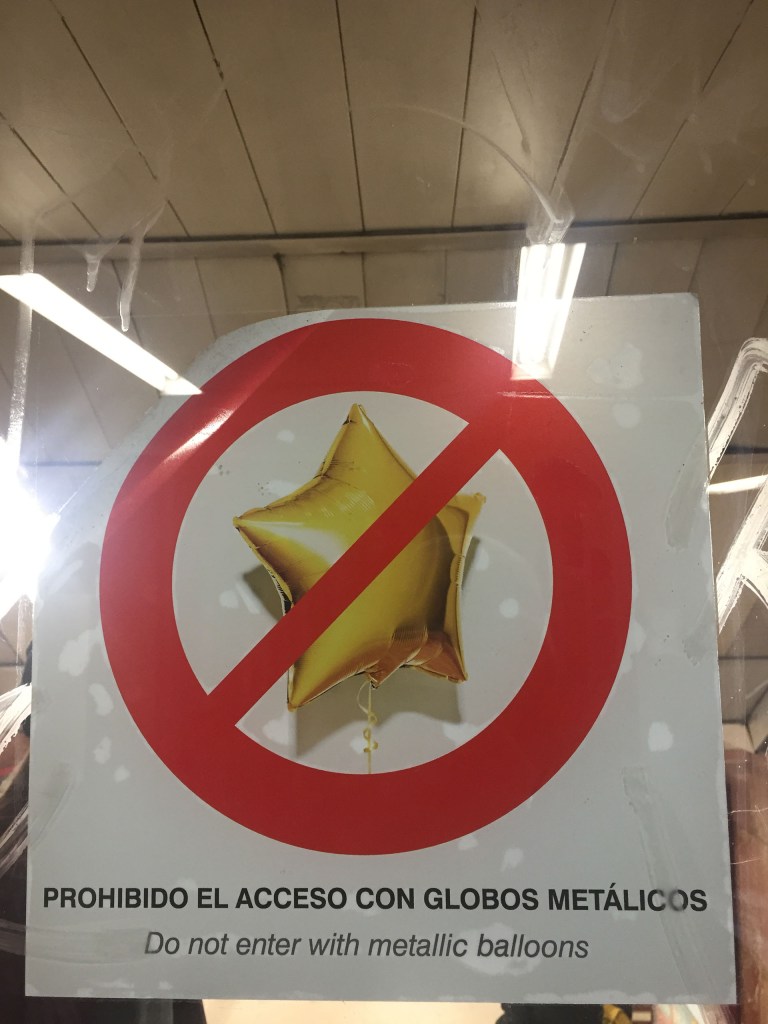
A new sign at our metro stop.
-Sonali Devarajan
My favorite sign in the metro.
-Sonali Devarajan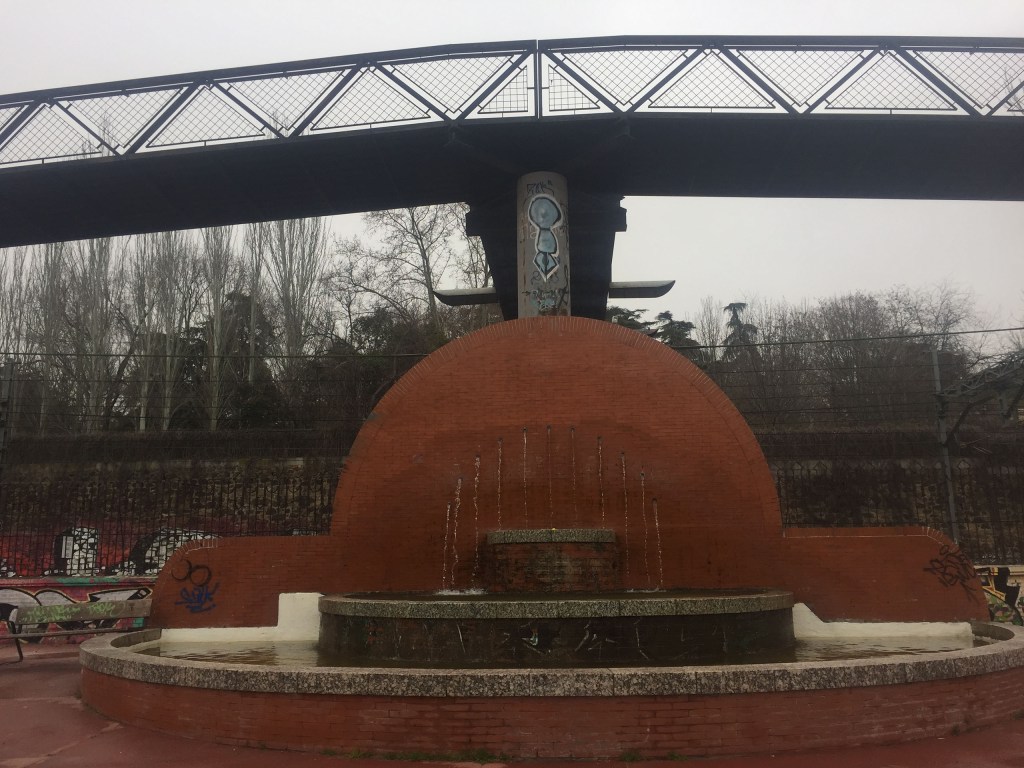
Parque de la bombilla.
-Sonali Devarajan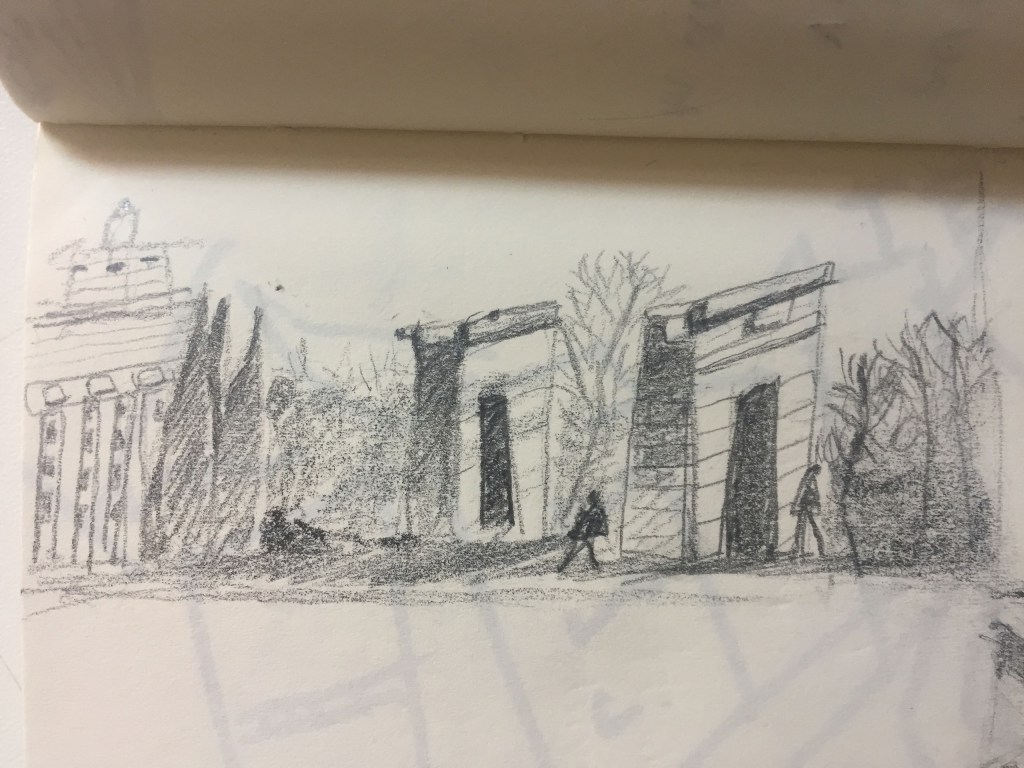
Templos de Debod, Parque Oeste.
-Sonali Devarajan
Malasaña Memories
Granite paved sidewalks spread out before me giving texture to my stride after emerging from the underland. The sky is blue, and the sun is out, but the air is heavy, each breath infiltrated by pollutants. The streets don’t make sense at first, their spider web orientation confounding the ingrained expectation of the logical Cartesian grid. In many ways Madrid defies expectations and challenges the notion of what a city metropolis can be. My eyes dart around the building facades noticing the details in the colored shutters, wrought iron balcony rails, and window ornamentation. Adjacent buildings share general patterns but are each unique at every level of detailing. A motorcycle zips by with a loud roar of its engine, the streets suggesting complex ecosystems of vehicular traffic requiring constant alertness. There is an excitement in the air and a general enjoyment in the faces of the people walking by. I turn left down a small side street and a new landscape emerges, one that is grittier, more lived in, brimming with a charming character of authenticity. This is Malasaña. There’s more topography here. The narrow streets rise and fall, dominated by people on foot. There are different personalities to Malasaña depending on what day and time you visit. The restaurants and cafes dominate the early afternoon while the bars and clubs rule the night. On Mondays, most shops are closed, and the neighborhood has a ghostly quality to it, as if you came across a frozen river with a crystalline layer of ice concealing the dynamic water below. Everywhere I look my eyes are excited by the colors and textures of the street, graffiti, half-torn posters, stickers, windows into bookstores and restaurants. In the afternoon when the sun angle is just right to bath the narrow streets in golden light it feels like a world outside of Madrid. The distinctness of each section of the city is both what makes its identity elusive and eclectic. I eat tapas, drink café con leche, and sketch in my notebook. In the evening there is live music and time with friends. The neighborhood keeps shifting and changing, adapting to everything you bring to it and take from it.
-David Hedding
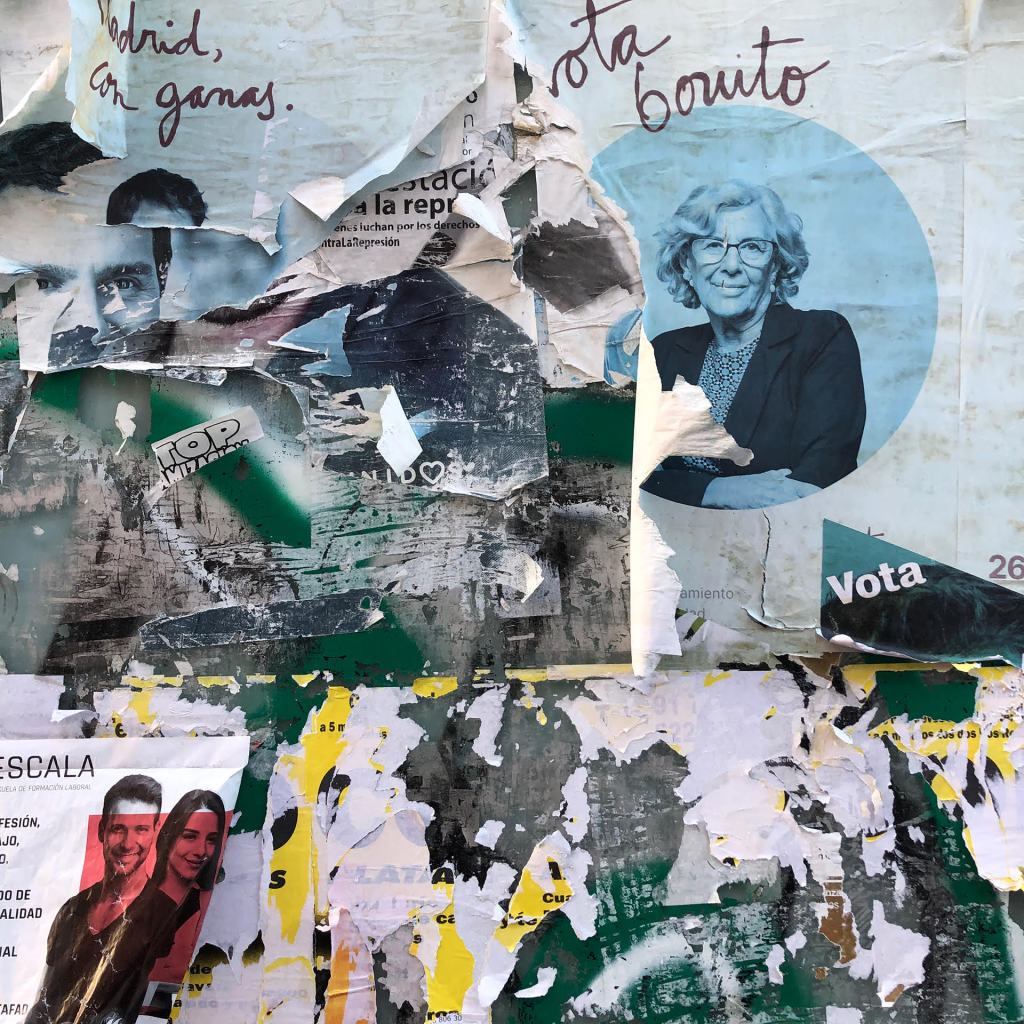
Street posters in Malasaña.
-David Hedding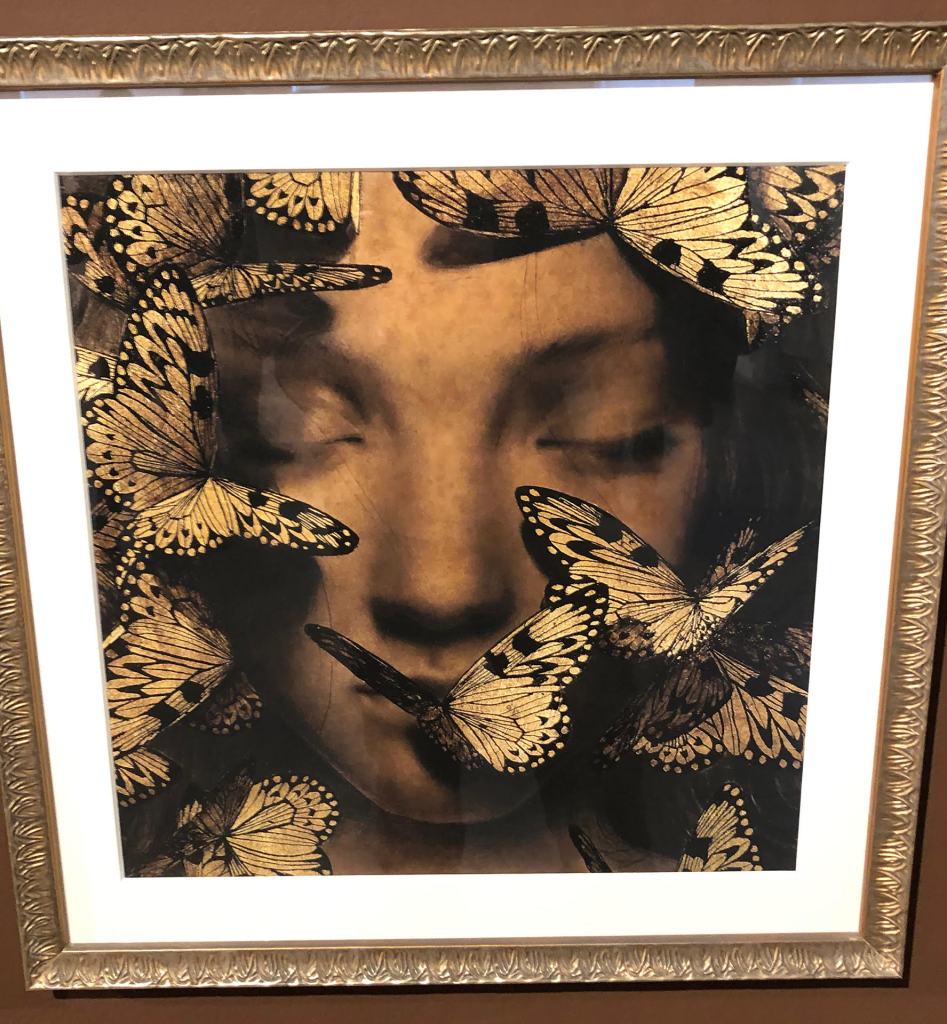
Favorite artwork from the Museo ABC.
-David Hedding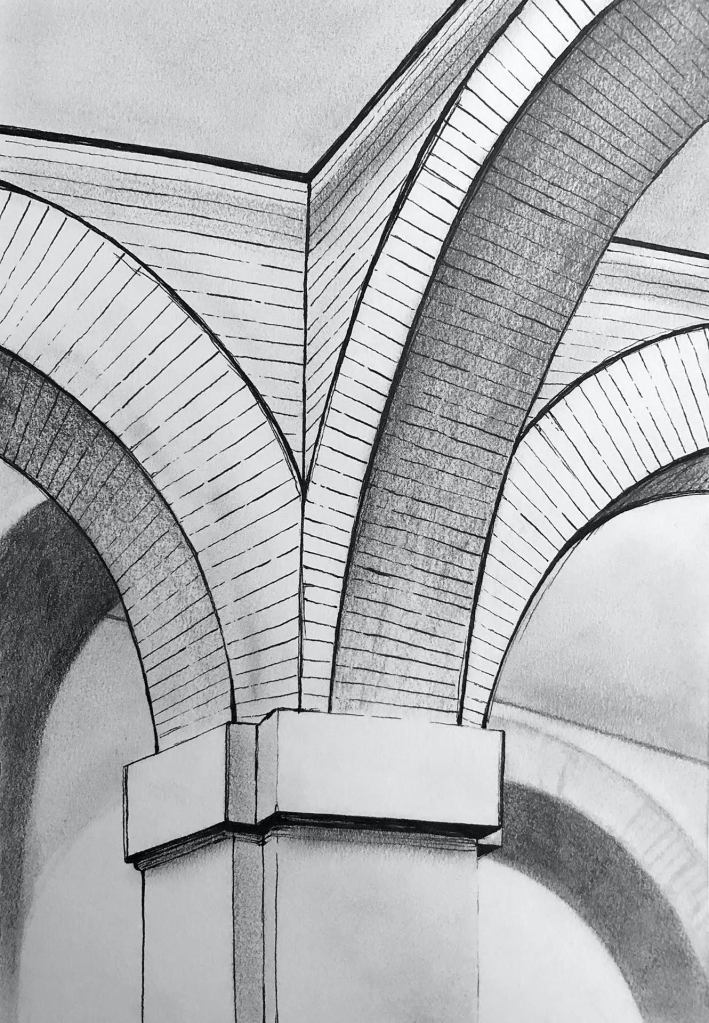
Pen and Graphite sketch of the arches inside the Conde Duque.
-David Hedding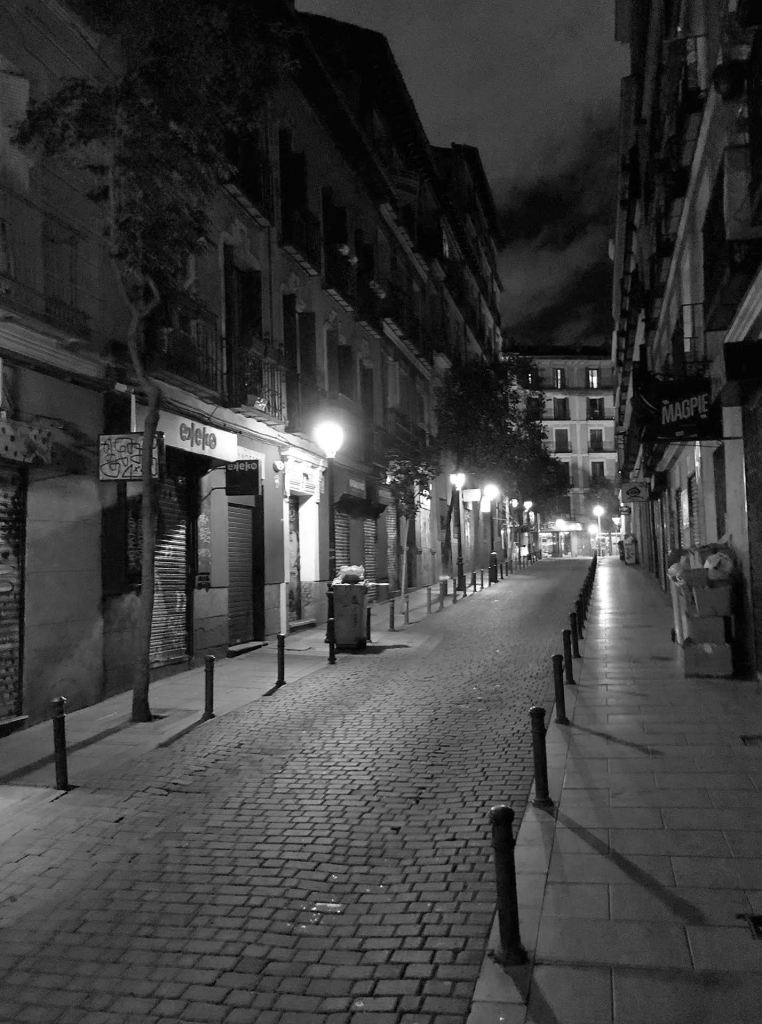
Monday night in Malasaña.
-David Hedding
Madrid is tricky. It’s a place of history and culture, a place of business and high-rises, it’s a place of enormous parks and tiny plazas. But what is Madrid, really? It seems that Madrileño’s struggles with identity. Who are they? What do they embody? How are they represented amongst the fabric of the city?
Madrid became the capital of Spain almost solely for its central location. Out of this birth the old city grew to a conglomeration of mixed architectures, mixed cultures, mixed urban planning styles, mixed…everything.
Madrid’s identities are inconsistent, but with them comes great surprises. Unique neighborhoods like Malasaña and Lavapiaz are vibrant, eccentric and multicultural, always ready to surprise and excite visitors. The Chamartín neighborhood resembles a modern American metropolis, dominated by the glass facades of towering office buildings and defined by major thoroughfares. Madrid’s historic center is full of stories and centuries old structures, and lots of tourists. Food is uniquely Spanish, or anything else.
But, if I am being honest, there are consistencies that do unify the city. Will it rain today? Certainly not. How’s the air quality outside? Poor. Is it time for dinner yet? No, it’s only 9pm, maybe just a snack instead. Should we get tapas? Absolutely.
Madrid taught me many things in a short time. But what it taught me most was about the confounding adaptation humans make to occupy a new place and make it home. Like the many people before me that came to Madrid, called themselves Madrileño’s after a time, and helped to add to this collection of people and places, I too found myself at home after four short weeks. If Madrid’s Identity is one thing, maybe it’s not being inconsistent or lacking a vision, but rather it is defined by its ability to welcome new people and ideas and build them into the strangely hodgepodged urban fabric that is Madrid. This city is anything but perfect, but what’s not exciting about that?
-Kyle Franta
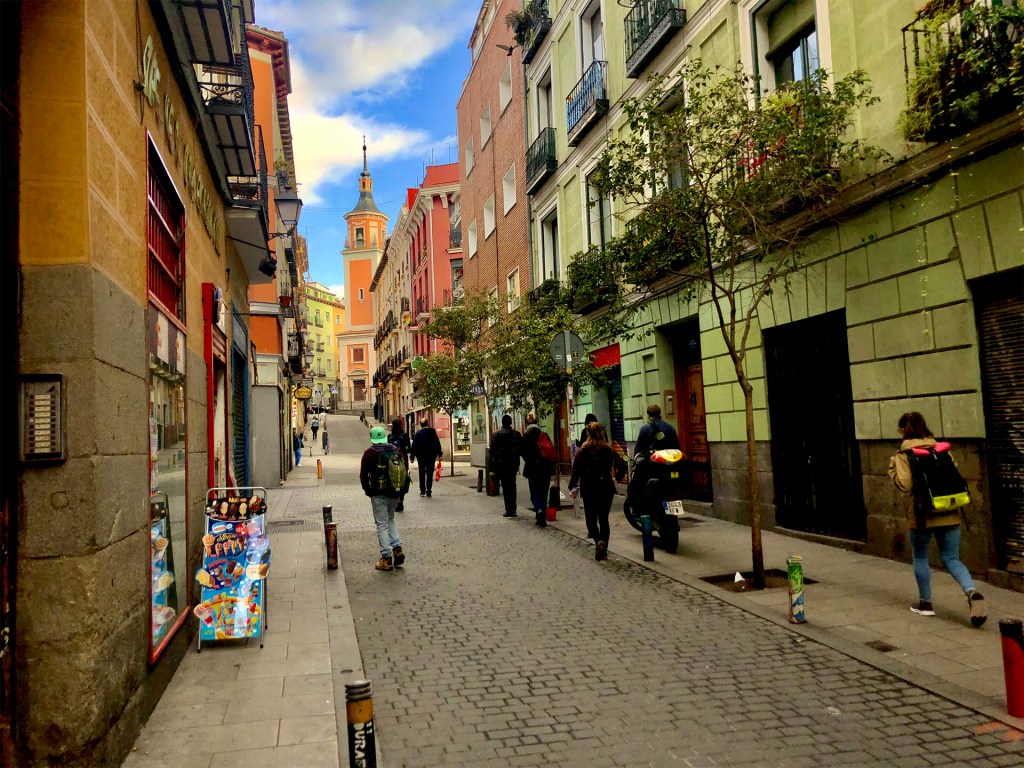
A street in Lavapies.
-Kyle Franta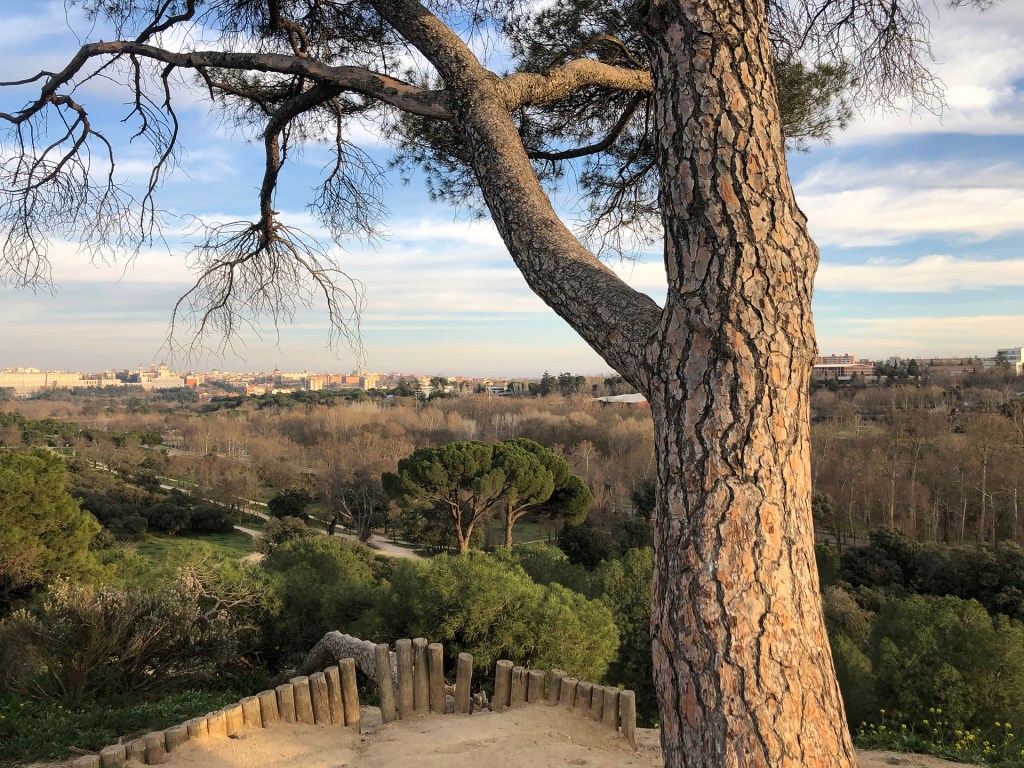
An overlook in Casa de Campo.
-Kyle Franta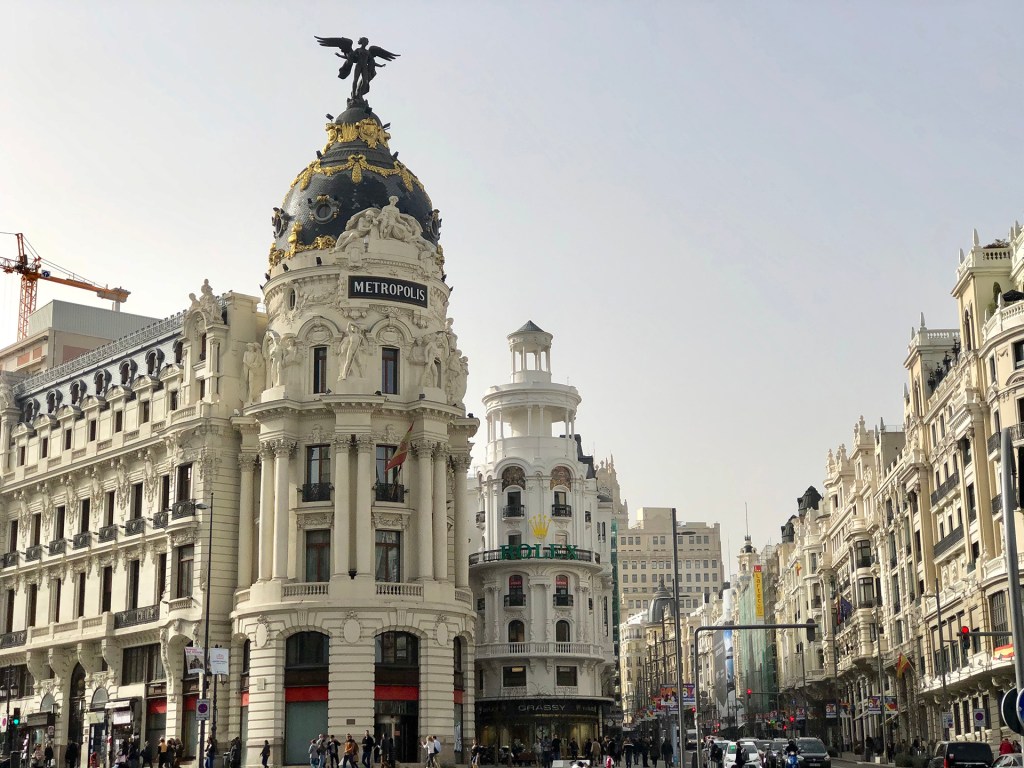
Gran Via on a smog filled day.
-Kyle Franta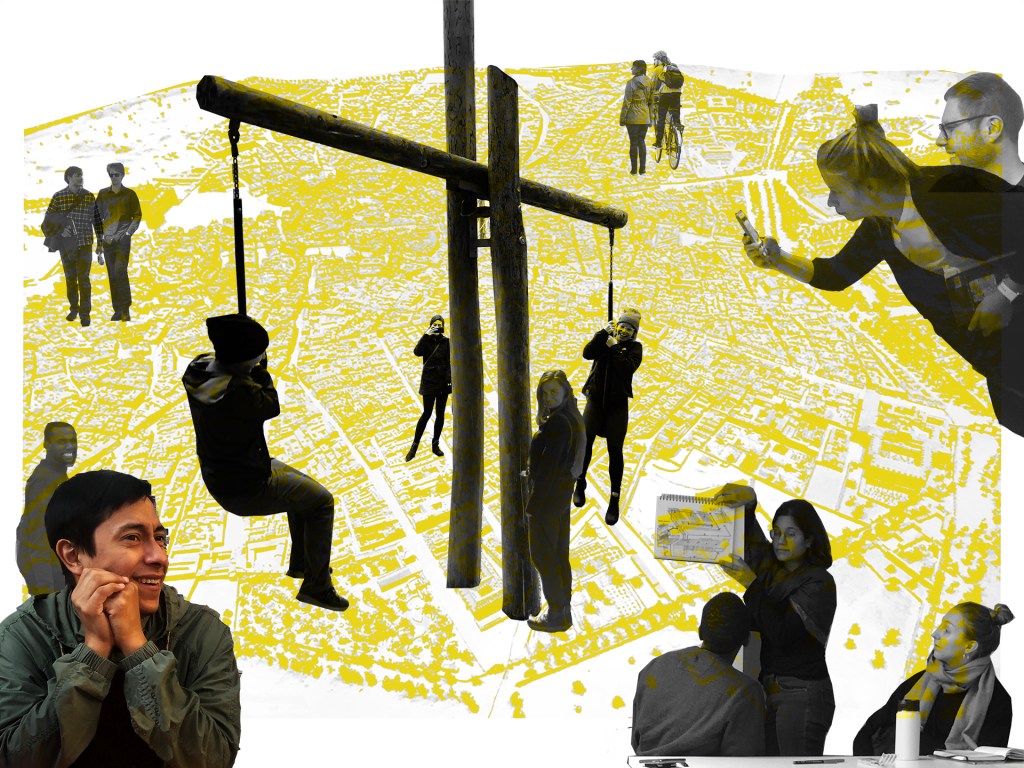
The LA Squad exploring Madrid.
-Kyle Franta
It’s hard to say what a month can do for you (or you can do for it) in a new place – time is weird. To begin to know a place requires full attention and intention; a month is precious time. It is also the same amount of time is takes to build – or break – habits, including the habit of attention or inattention. This past month, there was the ritual of traveling to school, either by walking or by Metro, and taking the metro elsewhere (which required a multi-story dive into the circular where cellular service did not exist). There were the greasy eggs in the residencia each morning, the walk across multiple stoplights to leave home, and there was the Dia or Mercadona (take your pick), among other small experiences each week or day. A month is short but long enough to forget I am a visitor (and take advantage of that fact), even when I have barely scratched the surface of palimpsest Madrid. But the distractions I experienced each day, what I thought kept me from paying attention, are what make up the city for me now. It’s impossible to be objective or omniscient – all I can do is be there (and probably read about it first).
Observations: Dog, old dogs, offl-leash dogs, tiny off-leash dogs with older people. Younger generations walking arm-in-arm with older generations. Mothers and daughters? Grandmothers and granddaughters? Out until midnight. Babies out until midnight. Frayed wires above apartment entrances and laundry hanging from balconies – a lot of blankets. Smoke. Smoke in my face. Waling quickly to relieve myself of being downwind from the smoke. Green crosses indicating pharmacies and tobacco stores that also sell stamps. Cheap wine that does not seem to be inappropriate to order anywhere or at any time of day.
While we spent time in museums and doing schoolwork (of course), we also spent a lot of time walking. The walks became more familiar, even when the location was new (i.e. the smells and textures beneath our feet and flow of traffic was familiar). Walking is how we experienced Madrid. It is hard to not compare Madrid to what I know, but it is also difficult when I spent the last five months traveling almost exclusively by car in the U.S. I wonder, though, if part of experiencing Madrid is by car. After all, it is a primary mode of transportation. Am I missing something experienced by many in Madrid by not speeding up time and passing the same things at a much faster clip? Would I even have been able to pay attention?
-Kendra Klenz
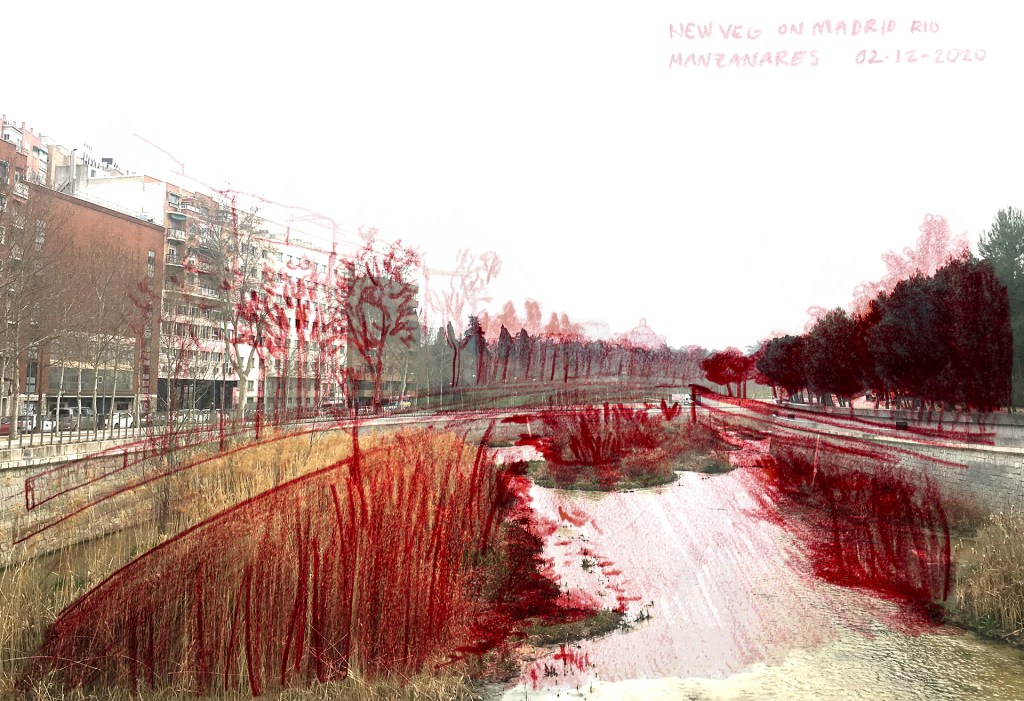
Madrid Rio project on the Rio Manzanares. New vegetation in the channelized river was not a design intention of West8, but a consequence of releasing some small dams along the river.
-Kendra Klenz
Plaza Mayor at in the evening.
-Kendra Klenz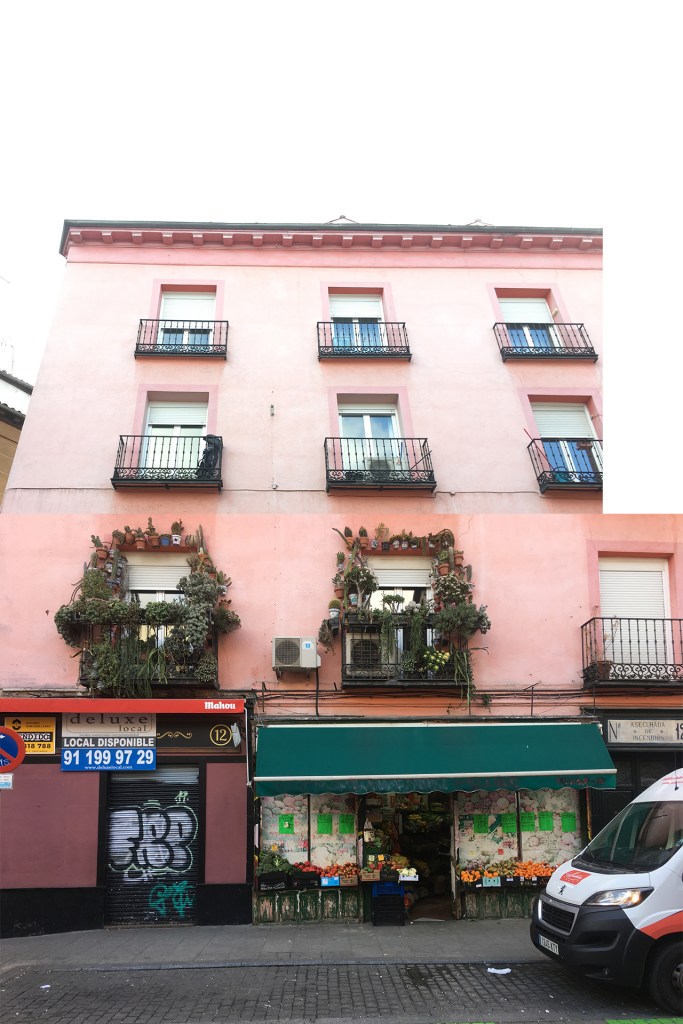
Apartment with a decked out balcony in Lavapiés across the street from Cine Doré.
-Kendra Klenz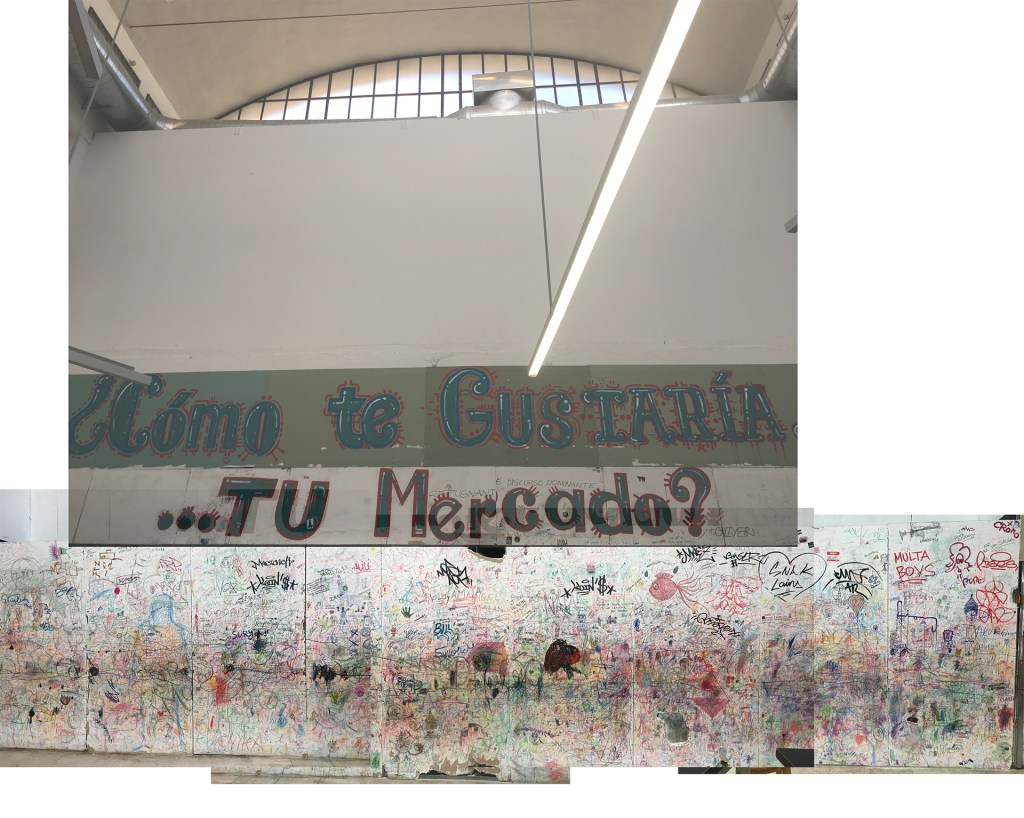
Inside a Mercado in the Lavapiés neighborhood.
-Kendra Klenz
Long walks with Pablo, smog and cigarette smoke in the morning, tapas tapas tapas. Bye, Madrid.
While we were told Madrid is a city struggling to move into the future, held captive by its dictator past, our stay in the capital of Spain revealed a city of resilience. Our project site, the Matadero (a slaughterhouse repurposed to be a creative hub), reflects Madrid’s desire to be a place for expression and moving forward. In its struggle to define itself, it has found meaning in being a place of searching.
My favorite part of Madrid was the “Golden Triangle” of art museums, the Thyssen-Bornemisza, the Reina Sofia, and the Prado. From Goya’s Black Paintings, Hieronymus Bosch’s “Garden of Earthly Delights”, and the slew of modern pieces at the Thyssen to the graffiti along the streets of Lavapies, Madrid houses the oldest fine artists to the newest street artists.
The day we visited the Thyssen, we took a 45-minute walk back to the residencia along the Grand Via, Madrid’s iconic road. The sidewalk was filled with a chain of purple-shirt wearing women stretching most of the length the Grand Via. We were unsure of the cause, but Madrid is clearly a place of vitality and desire. I walked the stretch of this road four times: once the first day I arrived in Madrid, once after the Thyssen, once an early Monday morning where the sidewalks were filled with schoolchildren, and once with our history lecturer, Pablo. Each time, the diversity of people and sounds revealed a new side of the churning city.
As the old city crumbles, people fill in the cracks and make Madrid new.
-Erin Schregardus
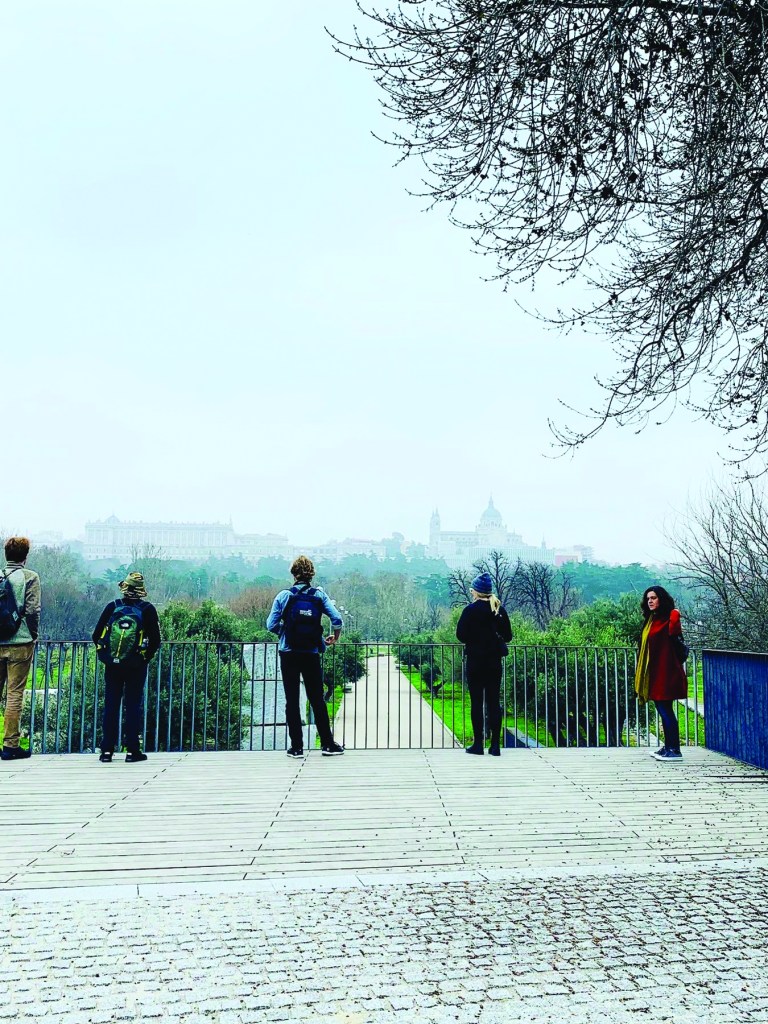
Veiwing the palace from the Rio Manzaneres.
-Erin Schregardus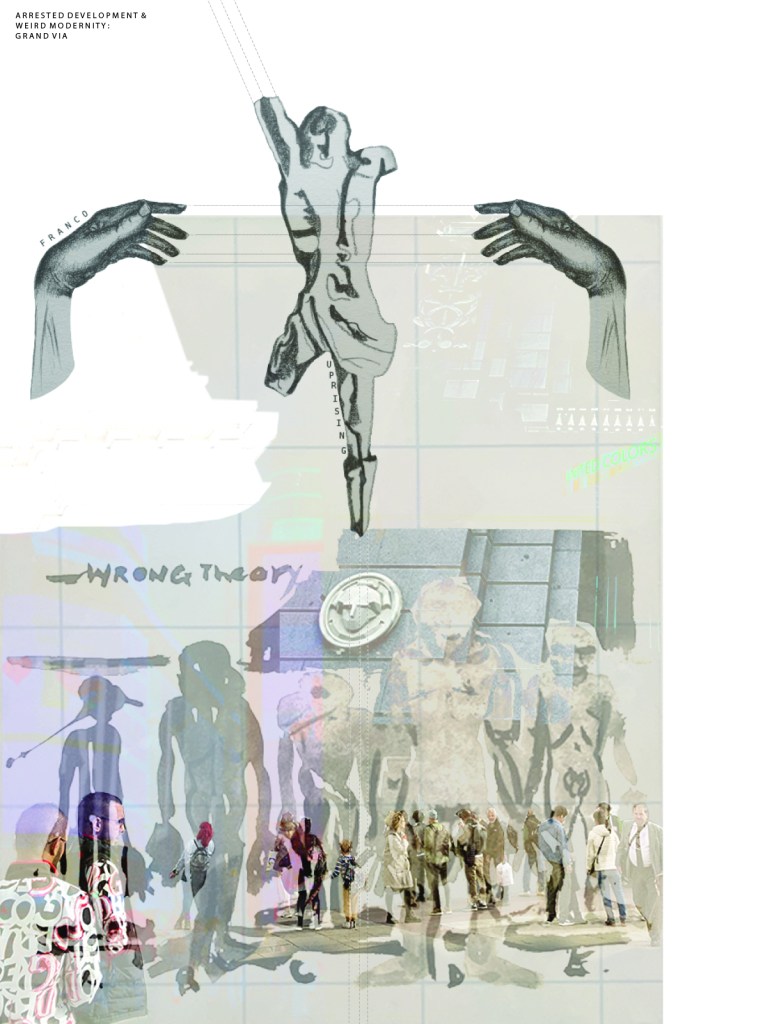
Sketch and collage of Madrid struggling to find itself under the shadow of Franco.
-Erin Schregardus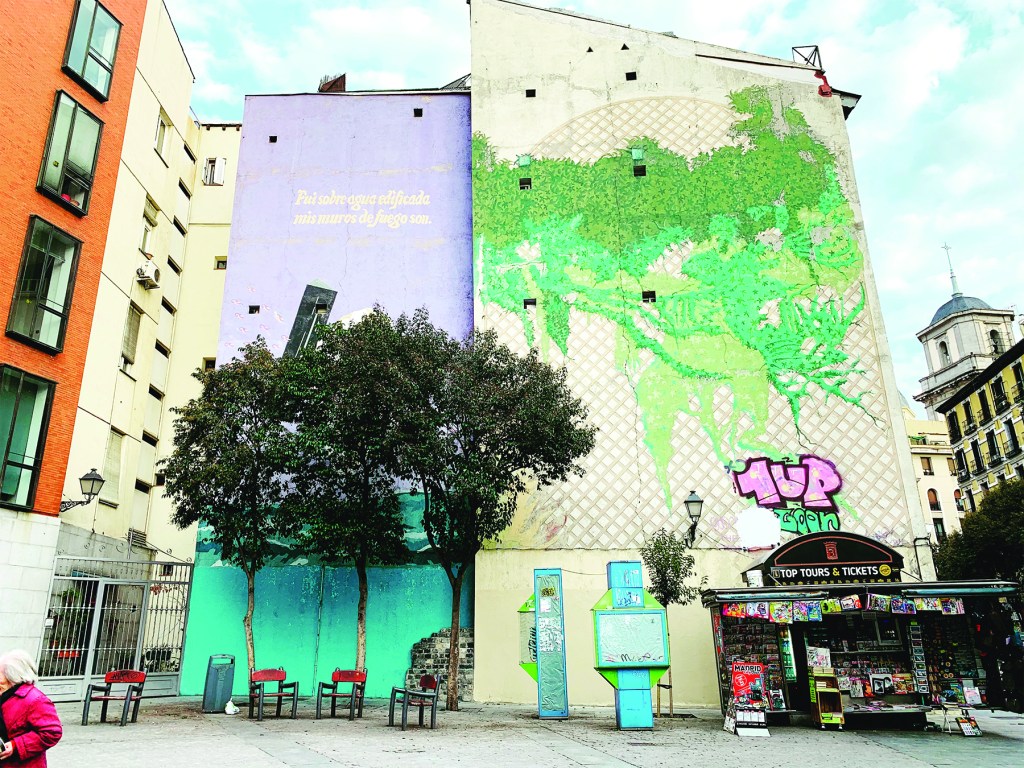
Street art near Plaza del Sol.
-Erin Schregardus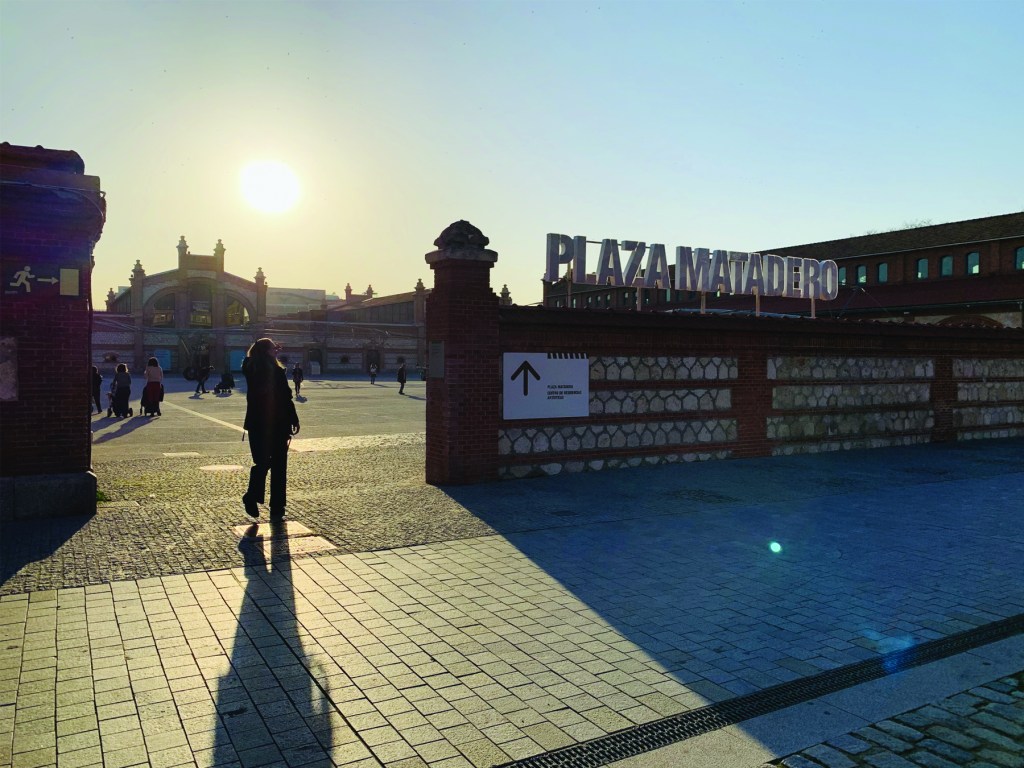
The Matadero – our project site.
-Erin Schregardus
 2020 Cities on Water