Two Roman columns and two reproductions stare back from across the plaza on a former branch of the Guadalquivir River, then marsh, then paved promenade. This is the Alameda de Hércules – the oldest public garden in Europe. The Alameda was built in 1574 as a promenade of white poplar trees and now also contains hackberry trees from a 2006 restoration of the site. Like a toned-down Times Square, its history is of a place for the wealthy to gather to a place that was both poor and surrounded by brothels (35 according to one estimate). The Alameda was reclaimed from the former identity shortly before the Universal Exposition of Seville in 1992.
For the Alameda, even when measures were taken to prevent the promenade from flooding, it persisted until the 20th century. Now fully (?) erased, that riverine history is marked only by a change in the color of the pavement to a sharp blue and a central water feature where water emerges directly from the ground.
Along the promenade are painted yellow benches, sharp, rectangular, and heavy, they reinforce the linear space. There is also a pavilion of sorts to match the color and style of the benches. Another word I might use for these objects is crusty: their layers of paint waiting on edge to seize and fall away.
I see the Alameda as a place of collection: a collection of people and nightlife, a former collection of water, a collection of posters and paint, and curated collection of static objects of vastly different styles and times, and a collection of small artifacts of human and animal life, which are most obvious in the accumulation of objects in tree pits (poop, orange peels, bottle caps, straws, gum, tomatoes, glass of all colors, feathers, catkins, sunflower seed shells…).
Seville already feels like a place of accumulation on large and small scales. In fact, Seville was the place of collection for goods like gold and silver from colonies. All goods from the New World were required to pass through the Casa de Contratación. 20% was taken by royals, and the rest made its way through the rest of Spain.
What can different kinds of accumulation and their context tell us about a place?
-Kendra Klenz
The beautiful Spanish weather continues to not disappoint, 65 and sunny. I can feel my skin sucking up the moisture in the medditerrainian air. I think it has rained once since I left 6 weeks ago, but I don’t know who is counting. Day 2 of Sevilla and we have hit the ground running with our “Sequence I Hack I Splice” drawing workshop with Ozayr. The intent is to unlearn our normative senses, draw what we see, be intentional, then hack and slice our sketchbooks to discover the “DNA” of the city.
Today we were brought to a few sights, but my favorite was La Setas, or “mushrooms” in spanish. Imagine an 85 foot tall amoeba shape mixed with the parallel patterning of a giant waffle fry. It claims to be the largest wooden structure in the world, but i’m not entirely sure what that means or how it is defined, but it is impressive to say the least. Though the structure looms over the entire plaza underneath, the waffle-like holes allow staggered light to permeate through.
Another staggering fun fact is that the final price tag of the project was nearly double what it was supposed to be. After sinking nearly $14 million euros into what was supposed to be a sunken parking garage and market, ancient Roman and al-Andalus ruins were discovered. Construction was halted and a design competition for the space went out. The final design is the wooden structure we see today, but due to construction complications on the actual feasibility of the design, what was initially estimated as a $50 million euro project is projected to have cost nearly $100 euros. Trying to draw the oddly shaped panels is frustrating, but luckily there is plenty of space in my sketchbook.
Hasta luego.
-Jordan Hedlund
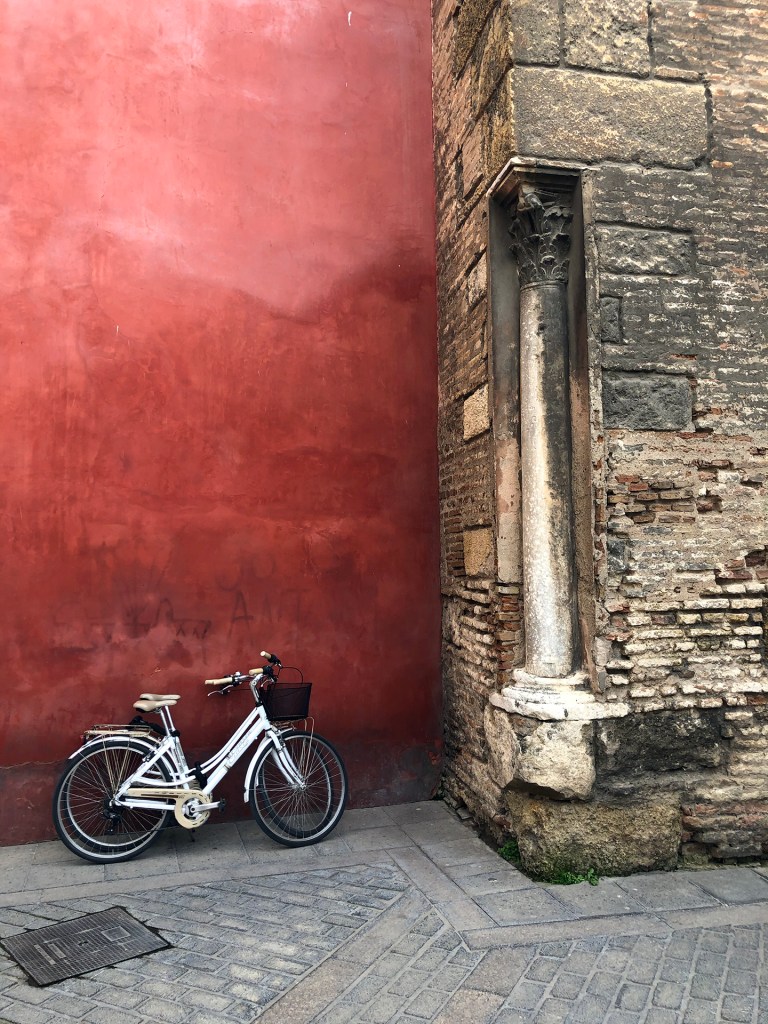
Spolia: A repurposed column built into a wall near La Giralda.
-Kyle Franta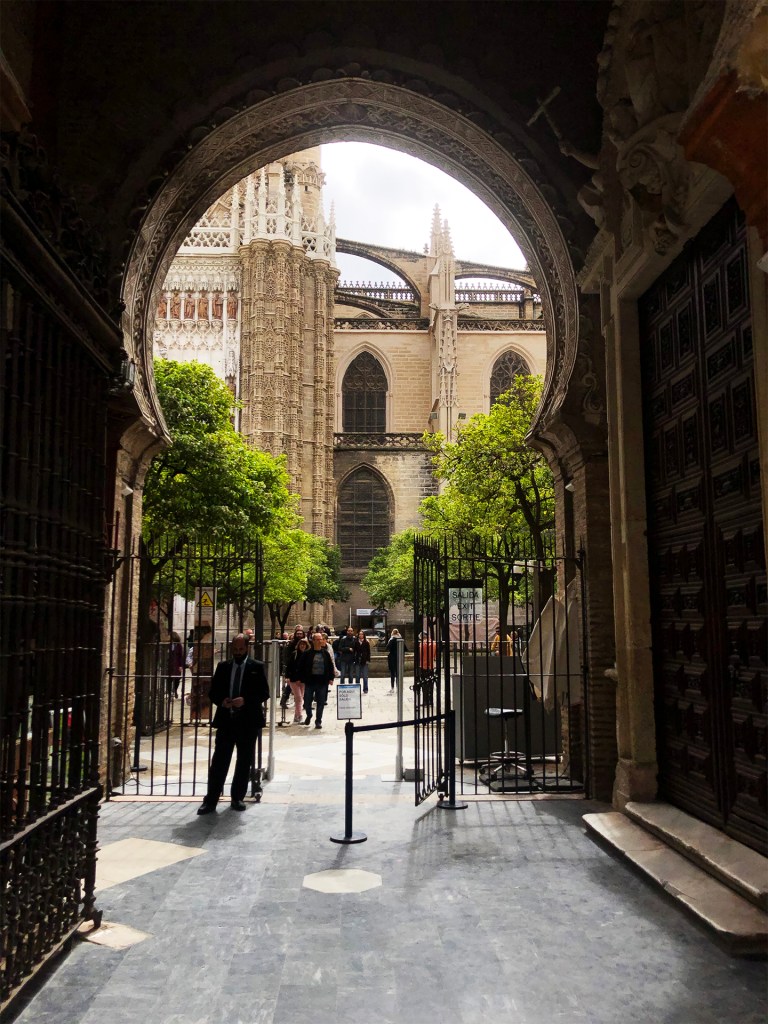
A gateway into La Giralda.
-Kyle Franta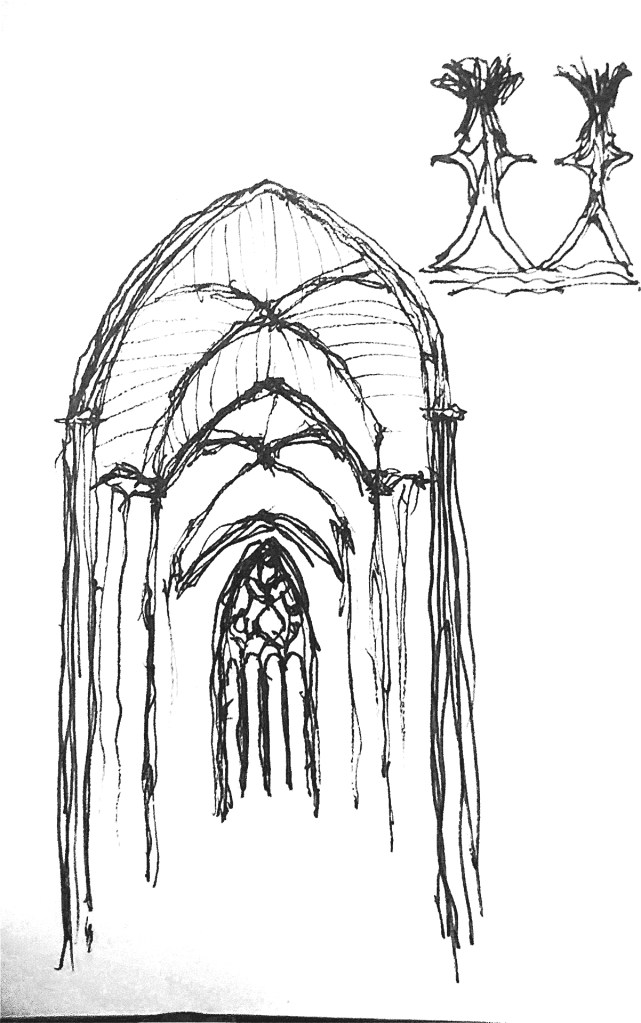
Drawing the arches inside the Cathedral of Seville.
-Kyle Franta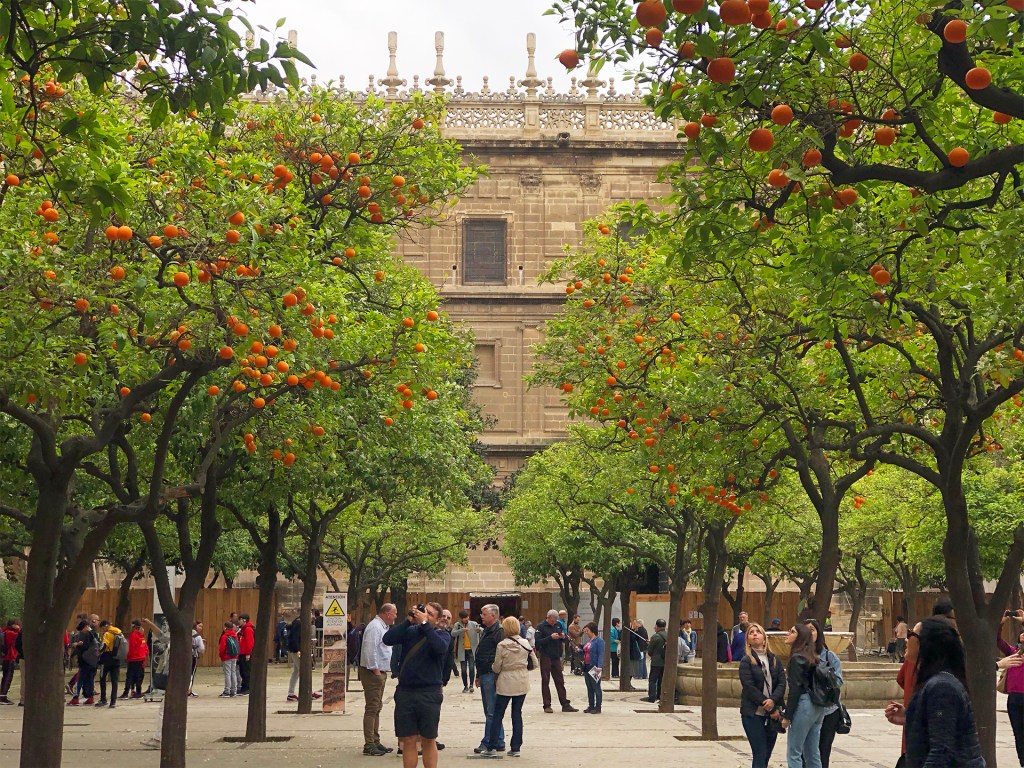
Patio de los Naranjos.
-Kyle Franta
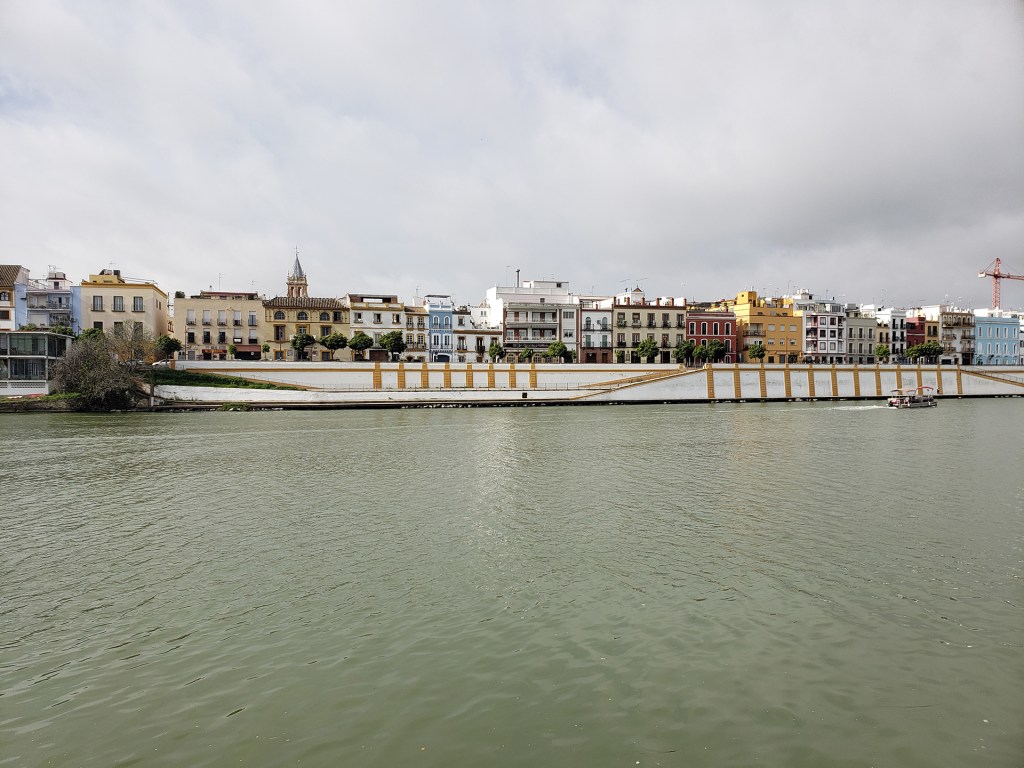
Lovely cloudy morning on the riverside.
-Lauren Arndt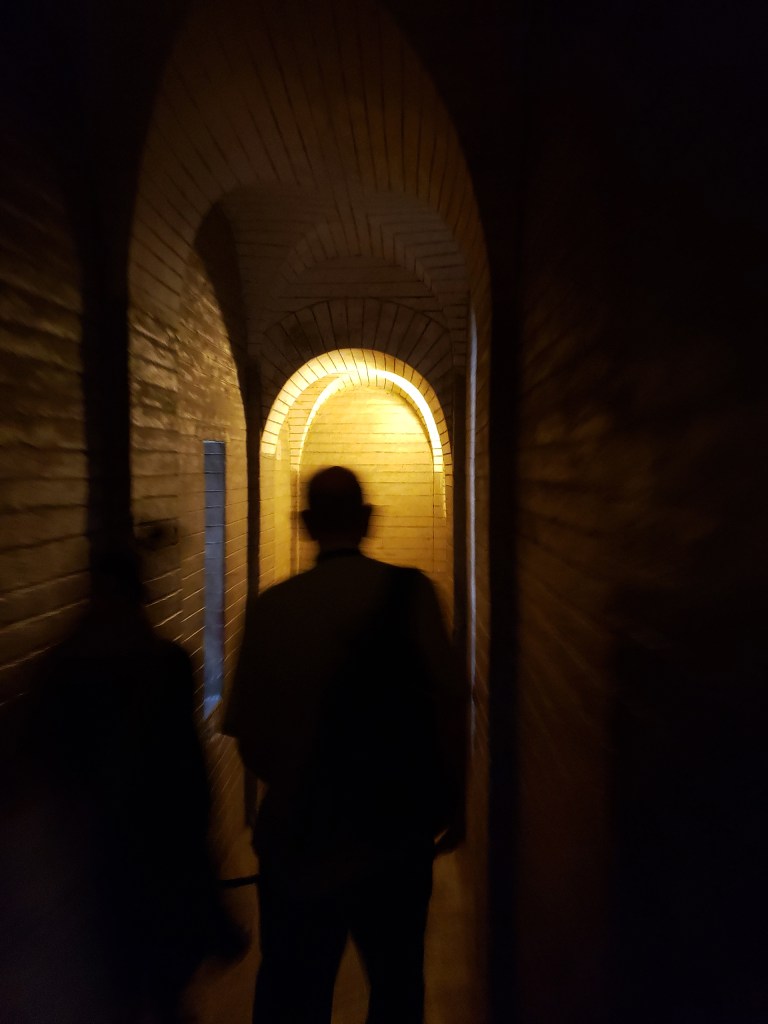
Ambient, active stroll down the bell tower.
-Lauren Arndt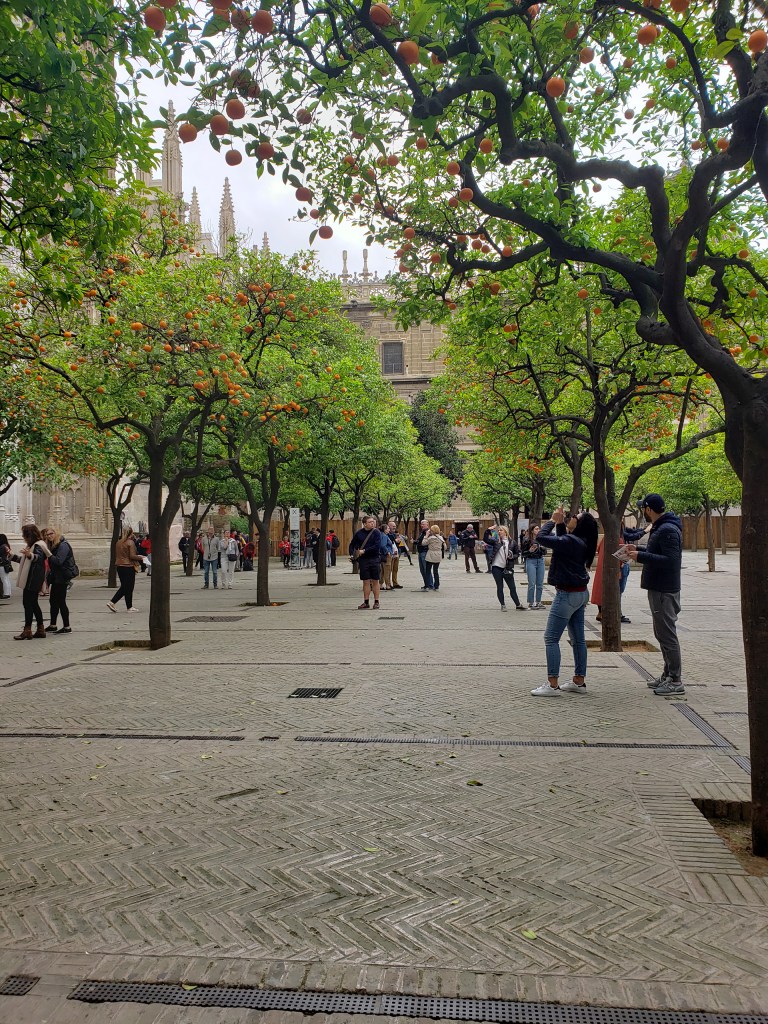
If you wait and stare long enough, you just might see an orange drop.
-Lauren Arndt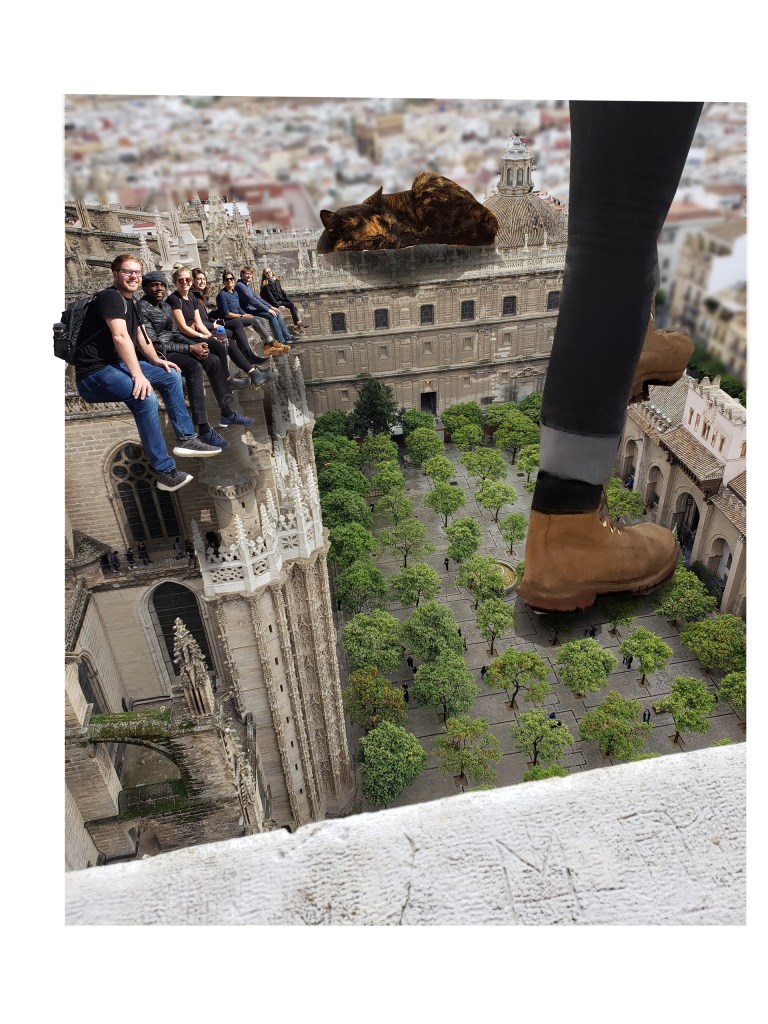
When you can’t decide what scale to work at.
-Lauren Arndt

