Today was our trip to the lost city of Medinat al-Zahra. This destroyed city was the location of the palace of the Umayyad caliphate during the early to mid 10th century. The destroyed city is only a 20 minute drive from Cordoba, at the foot of the Cordoban Mountain Range. It was the location of the caliph officials including their living quarters. Today the site is only about 10% excavated since its discovery in the early 1900’s.
Since the city was destroyed and been reclaimed by nature over the last one thousand years, the restoration efforts have centered around partially rebuilding it to represent what it once was as well as a museum showing critical artifacts. The site sits in the beating sunlight during the day with few trees or shade for respite. The palace was built at the base of the mountains, but standing at the entrance near the top terrace it is clear to see why it was built there. The panoramic view gives a clear indication of its defensive position. It served as a stopping point for anyone coming into or leaving Cordoba.
Going to Medinat al-Zahra was really interesting because this was not only one of the oldest structures we had seen while being abroad, but the palace reused Roman spolia. Throughout the structure capitals from previous Roman pillars were used here as well as at the Mezquita-Cathedral in the old city. It is a strange juxtaposition to see the integration of Roman and Moorish architecture together, known as Mudejar. We toughed the afternoon sun and saw the very small portion of the palace grounds that had been excavated.
-Jordan Hedlund
Our excursion today took us 7 km outside the city of Cordoba to the ancient seat of the caliph of Andalusia in the tenth century; Madinat al-Zarah, built in 936-976, is the largest archeological site in Spain.
This site is unique and extraordinary in its societal endeavors; the terraces of sun-crumbled stone reveal bits of architecture and design that describe the metropolis’ efforts to define and refine the Andalusi culture artistically, politically, and scientifically. On site, discoveries of both pagan, Greek, and Roman reliefs are thought to be an effort to legitimize the Caliphate. Notable spaces are the Court of Clocks, possibly used by court astronomers to determine hours of prayer; the Hall of Pillars, the entrance to the Caliphal residence; and the Hall of Double Columns, the only space where Koranic inscriptions have been found.
Visitors enter the ruins from above, while ancient Andalusians would have made the hot trek uphill as the caliphate loomed over. Viewing from the top, solar fields glint in the distance. Controlled mock-gardens of the ancient caliph extend the lower reaches of the site. Ordered and delicate, the remnant walls and decoration are expansive, stepping up the hillside and overlooking the realm. Winding down through courts and halls, triplet horse-shoe arches frame views of the valley; hazy mint-green and blue haloed by red clay paint and stone tracery. The site is divided by signs notating the residential and spiritual administrative realms, a distinction largely determined by the type of decoration and sculptural fragments.
Remarkably, the site functioned for only about 80 years. What led to the ultimate deterioration of the site was not only time, but also the extensive pillaging that took place from the 11th to 17th centuries. It has since rested in pieces, now dug and dusted by archeologists and wandered over and photographed by tourists from around the world.
-Erin Schregardus
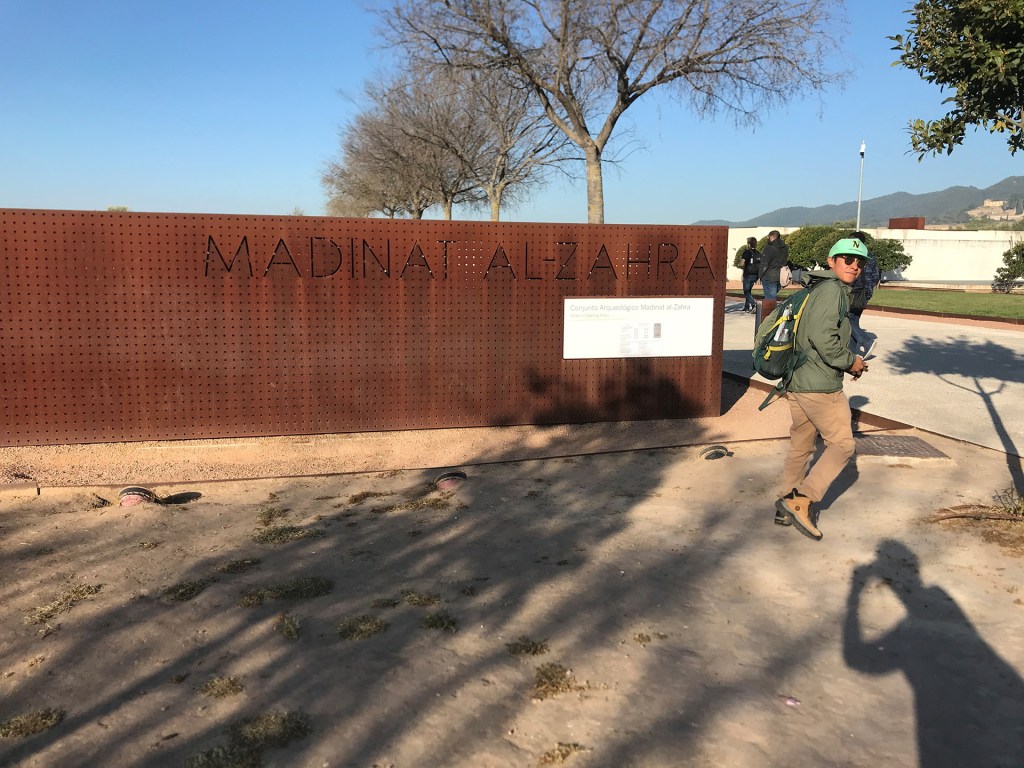
BIRTHDAY BOY JORDY at the entrance of the Madinat al-Zahra. – Rachel Peterson 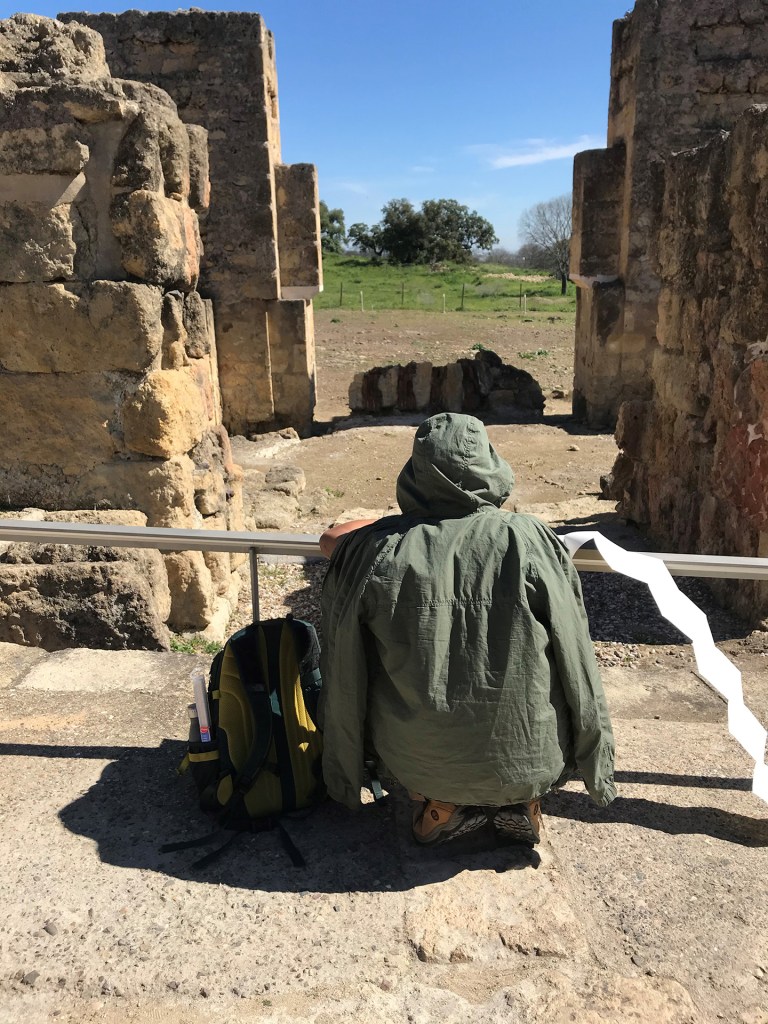
I hear the hardest workers are born on March 10th… here is Jordy meticulously sketching the ruins of the site. – Rachel Peterson 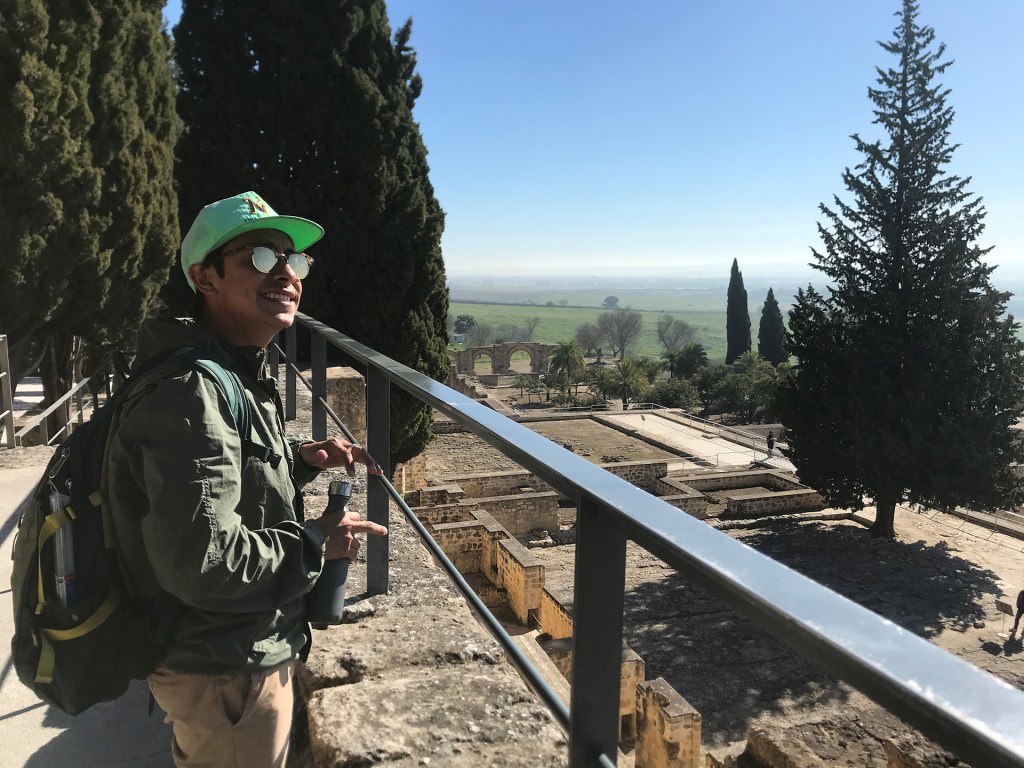
All smiles from Jordan Hedlund on his birthday! – Rachel Peterson 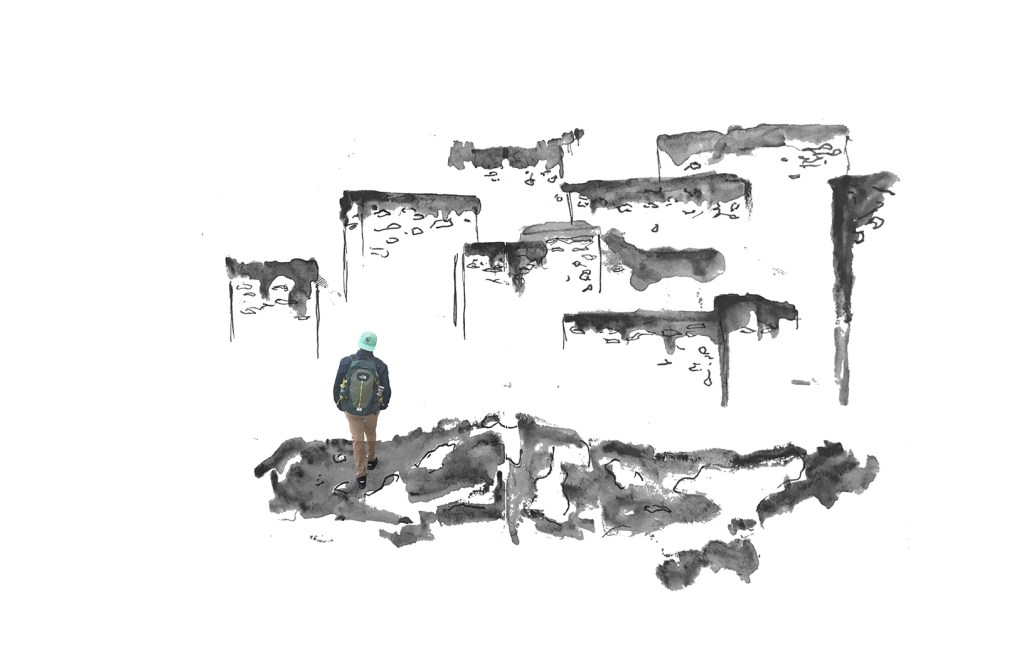
Jordy exploring the “shining city” – what a way to celebrate the big day! – Rachel Peterson
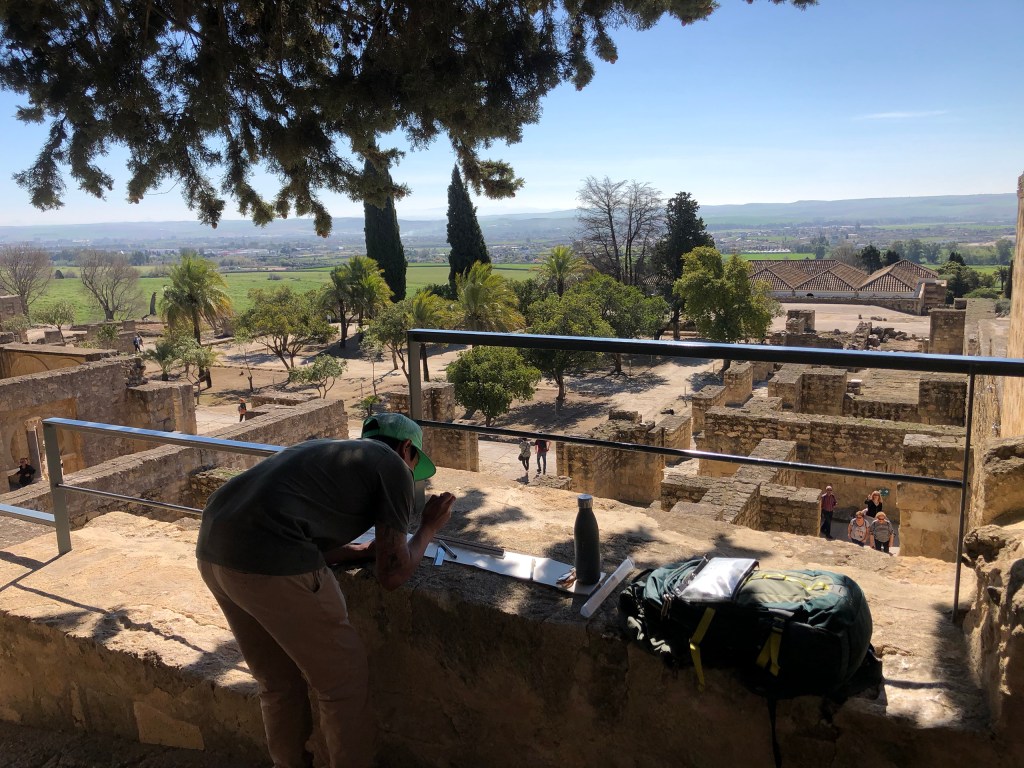
Jordan “The Birthday Boy” Hedlund sketching the ruins of Madinat al-Zahra from above. – Kyle Franta 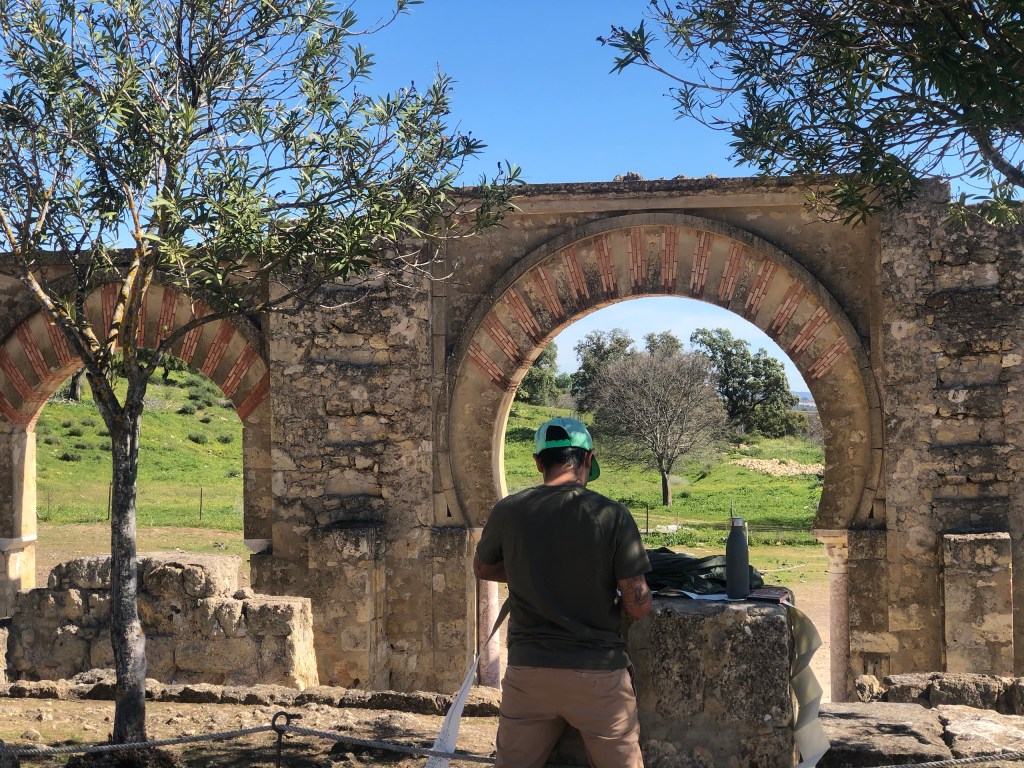
Even a birthday can’t halt discovery. Fellow classmate Jordan Hedlund sketches a series of arches at the site. – Kyle Franta 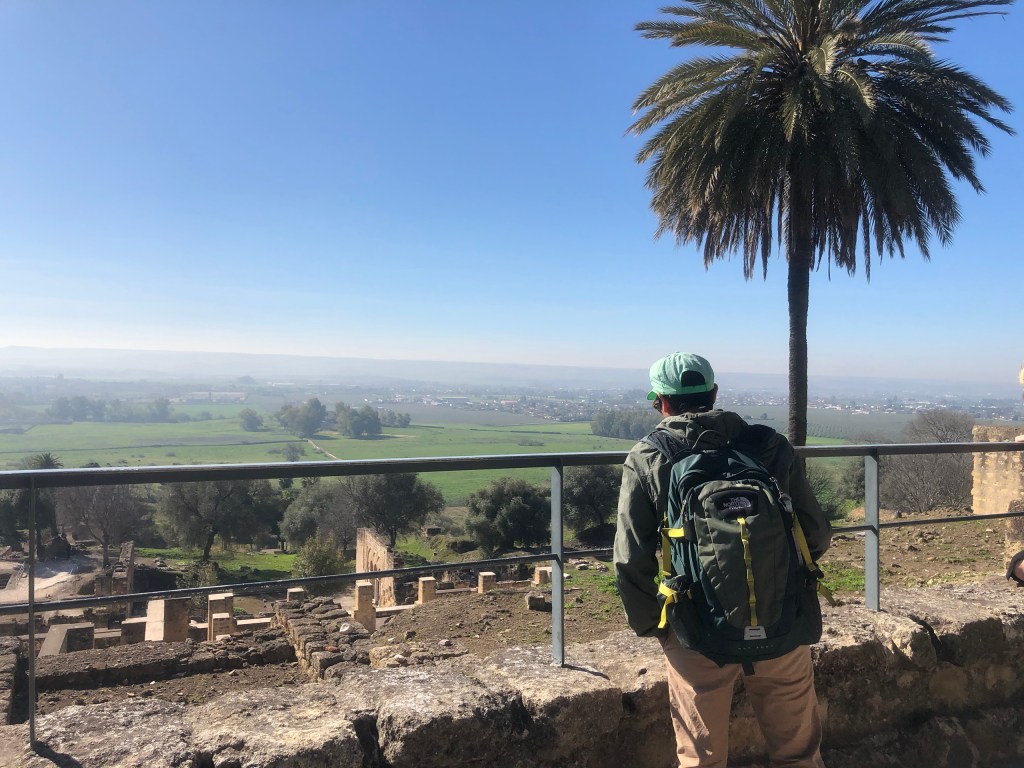
It’s Jordans B-day! Jordy looks out and ponders the history of Madinat al-Zahra. – Kyle Franta 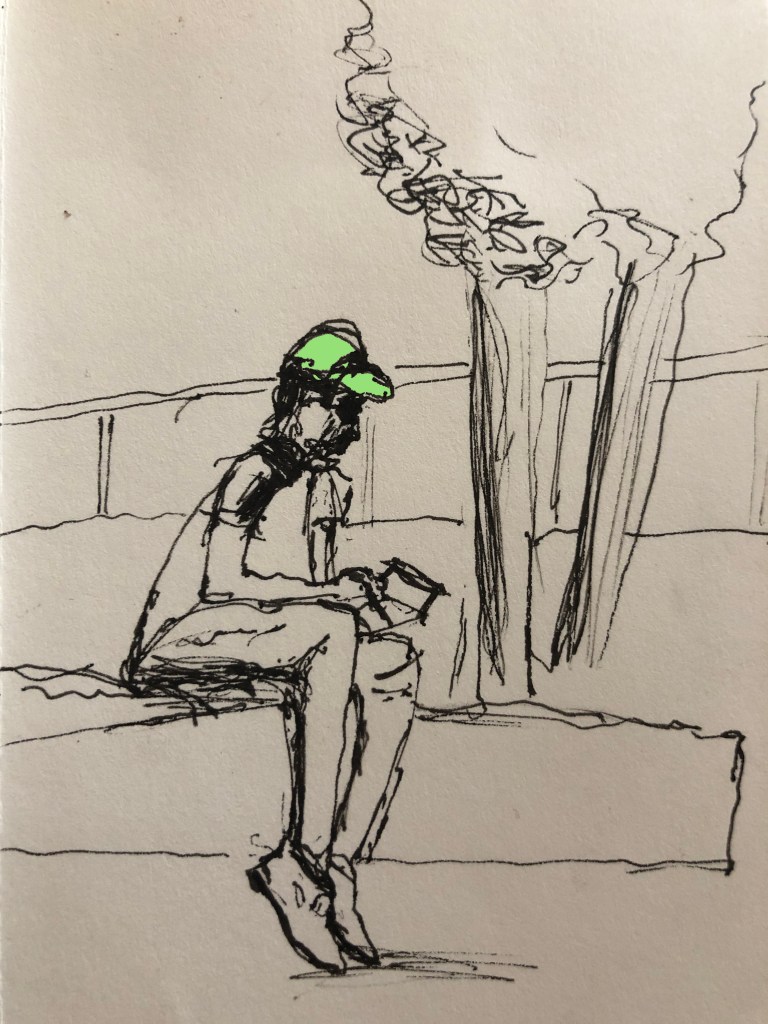
Happy Birthday Jordan! A sketch of the birthday boy in his signature mint-green hat intently drawing the ruins of Madinat al-Zahra. – Kyle Franta

