Pablo Carbajosa, our History professor, led my studio peers and myself on a walk around Central Madrid. Throughout the trip he told us many fascinating historical facts about the development of the city. One which piqued my interest was how three major religions (Islamic, Catholic, and Jewish) coexisted with the city peacefully during a time when religious conquest was not so unfamiliar. Pablo also commented on the characteristics he noticed pertaining to the urban fabric, including how dynamic the urban atmospheres of Madrid were, even from one street to the next. I was curious to see what he was talking about, and before long I felt and witnessed what he was trying to convey.
During our walk, we proceeded from Plaza del Callao, through a street called Calle de la Encarnación, and paused in front of the Palacio del Senado. Comparing the two plazas, it was easy to see exactly what Pablo had intended to show us. The Plaza del Callao had a very lively presence, with people mixing and mingling in every direction I gazed. Shops lined the outer edges of the plaza, as tourists were taking photos and entrepreneurs were selling merchandise, and light bathed the whole scene. It was a warm and bustling place, with beautiful architecture, which achieved touristic appeal. The Plaza del Senado, on the other hand, was very still.
The road to the Senate felt like an abrupt transition, from the warm and lively place behind us, to a place much colder by comparison. Only a small handful of people trickled out from the Senate when we arrived. The street was lined with trees, and the tall buildings shaded us down below, producing a still and cold atmosphere. The space we had entered felt uninviting, and those feelings were confirmed when a security guard confronted our group in front of the Plaza de la Marina Espaňola. Our visit was short.
As we walked toward the Royal Palace, we continued to encounter streets and sites of widely opposing atmospheres within just minutes of each other. From the Palacio Real de Madrid to the Parque Emir Mohamed, and from the Plaza de Puerta Cerrado to Plaza Mayor, atmospheres contrasted and yielded a network of organically woven neighborhoods, forming a mesh of endless fascination. The charm of those dualities within Central Madrid was the peaceful coexistence, and perhaps codependence, of these seemingly disparate entities.
-Collin Wenberg
We began and ended our walk today near Puerta del Sol, kilometer zero, the origin of all roads in Spain. As we walked towards Madrid’s acropolis, centuries collide. The sun is hidden, revealed, reflected, hidden, refracted by city form; you’re cold, then you’re warm, cold then warm, cold, warm.
In their leafless season, the trees are stone sculptures that match the color of the paver-lined roads; they punctuate the flintstone-blanket. Evergreens lend a dark senectitude, soaking up light and dropping dense shadows. Rarely is a surface showing bare earth. Here, plants look as if they are growing from stone. Every breath in brings a new scent: sweet, dusty, smoky, hold your breath.
Tourists spin in circles.
Views beyond the foreground are sparse and intentionally planned. Down corridors, domes of religion rise. There is a constant, palpable tension between the physical church and physical state. This tension between the past and the present, and the fight for an autonomous identity, is especially apparent at Madrid’s acropolis.
Arriving at the acropolis, there is release from Madrid’s tight urban form. Fresh air. The promenade along the palace is one of the longest lines of sight I experienced in that section of Madrid. There is a trio of significant architecture, together making a statement about Madrid’s past, present, and future: first, the palace; second, the Cathedral; third, the Islamic wall. Here, a city both trying to catch up and find its own way is visible.
The palace (1735), one of the largest in Europe, is confronted by the Cathedral of Saint Mary the Royal of Almundera (1993). Separated by an empty courtyard, the cathedral and palace seem both in confrontation and association. What was in the place of the cathedral before? What did the palace surveil that it can no longer see? Now it looks at the cathedral, which looms tall, dark, and ungated over the courtyard. The palace is set back behind a gate of iron, gold, and stone; distant and light. A view of Madrid drops away from the edge of the courtyard and runs to the mountains.
This void between palace and church, old and new, is bisected with an endless line of tourists.
Madrid began as a hamlet. When it gained capital status, it lacked the defining grand gothic architecture of other major cities. To fulfill this standard, the neo-gothic cathedral was built in the late 1980s after the fall of the dictator Franco. Inside the cathedral, the stained-glass design embraces a pride of Spain: Pablo Picasso. His cubist style and brightly colored modern-hued stained glass and mosaic ceilings are stark and at odds with the neo-gothic forms. The bright, playful colors of the windows remind me of the colors of construction throughout the city: Cheeto orange construction tarp rising against the blue sky, deep golden insulation soaking up and drooling the late afternoon sun that mutes the tans, pinks, and greys of the historic city. There is no longer the scent of burning votive candles, but only the pulsing of electric flames. These new pieces contrast the gothic calls of pointed arch arcades and ribbed vaults. Consequently, the inside feels frozen in several different ages, though intensely trying to move forward. Carved into the cathedral doors is a scene of the consecration of the cathedral by Pope John Paul II in 1993, elevating the church to the status of its medieval ancestors. The cathedral visibly grapples with addressing the question of how to elevate and establish the autonomous Spanish identity while holding on to the perceived prowess and validity of ancient identities. What story(ies) does it want to tell?
Continuing down the acropolis, we came across an Islamic palatial retaining wall, the oldest conserved monument in Madrid. Juxtaposed with the new cathedral and the palace, the retaining wall figuratively sets the foundation of both the new cathedral and the old palace.
Now the new architecture is hotels for tourists.
-Erin Schregardus
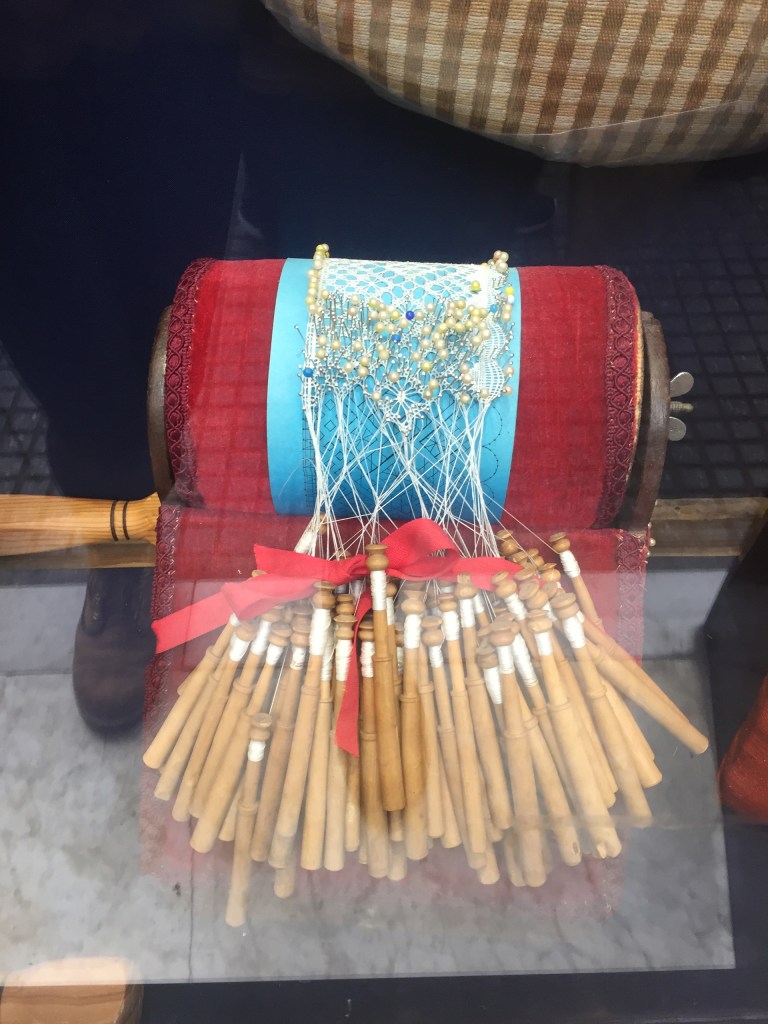
Madrid’s rise to economic prominence includes pressure on small traditional shops like this Spanish lace weaving store, one of the last still in existence in central Madrid.
-Sonali Devarajan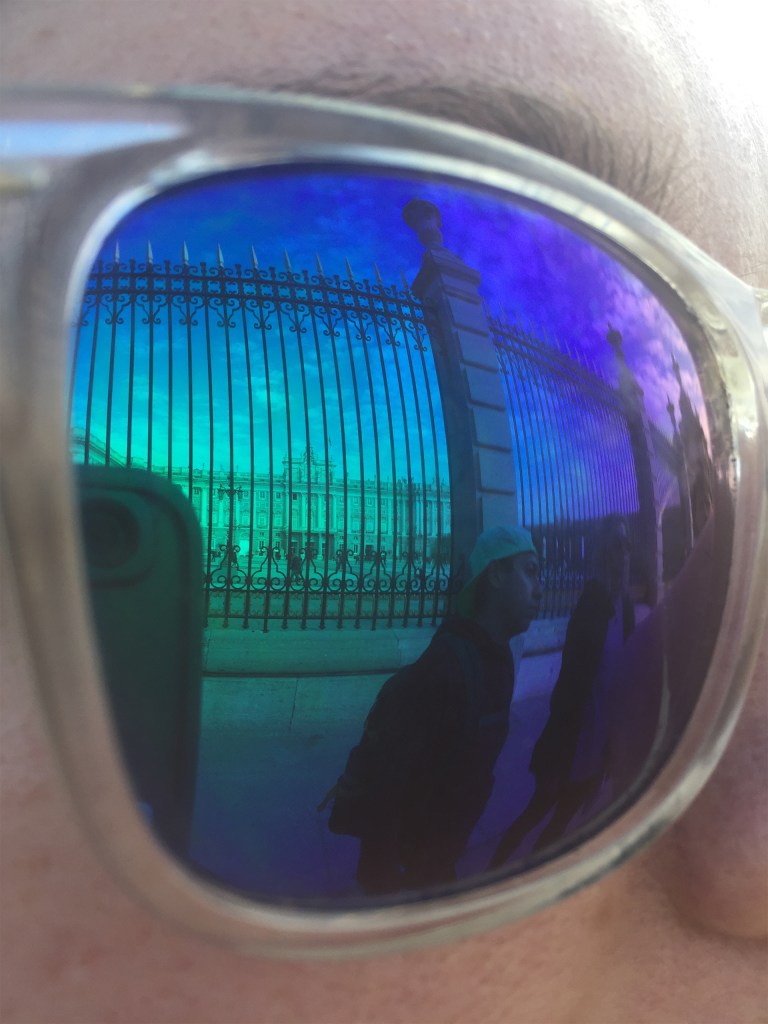
Nearly all Spanish kings ended their reign living in exile until the last king. After Alfonso XIII, kings was advised to maintain a low profile outside of Madrid. Alfonso XIII was the last king to ever live in the palace.
-Sonali Devarajan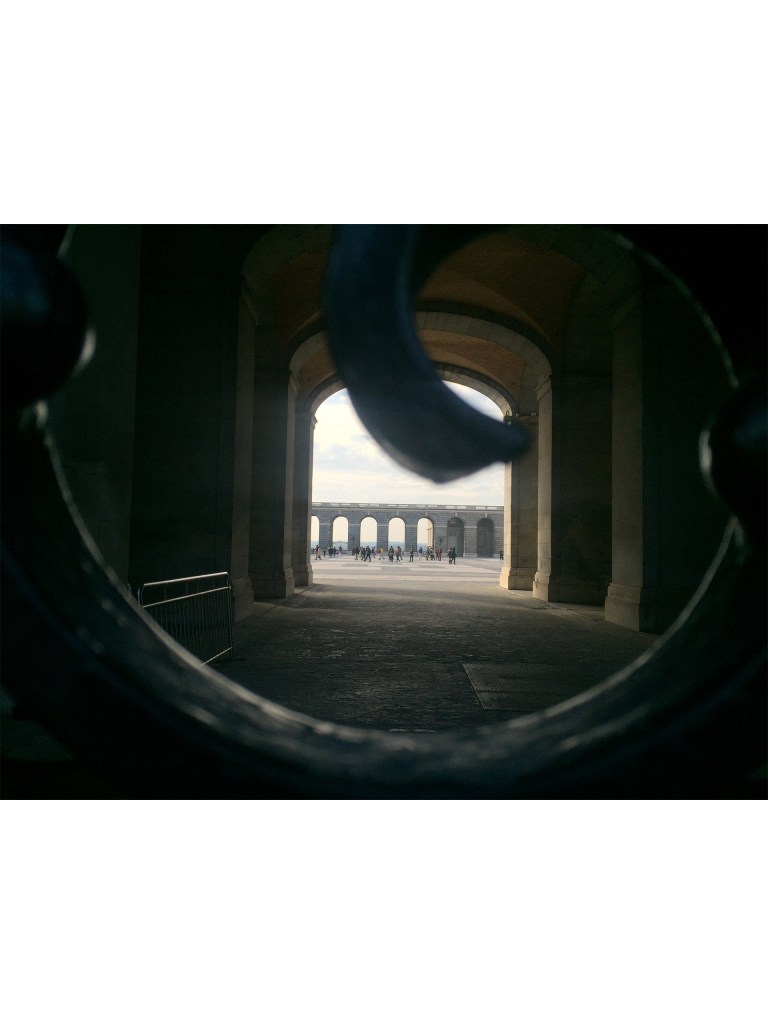
Now the palace grounds host long lines of tourists, an extensive arms museum, and occasional state dinners and events.
-Sonali Devarajan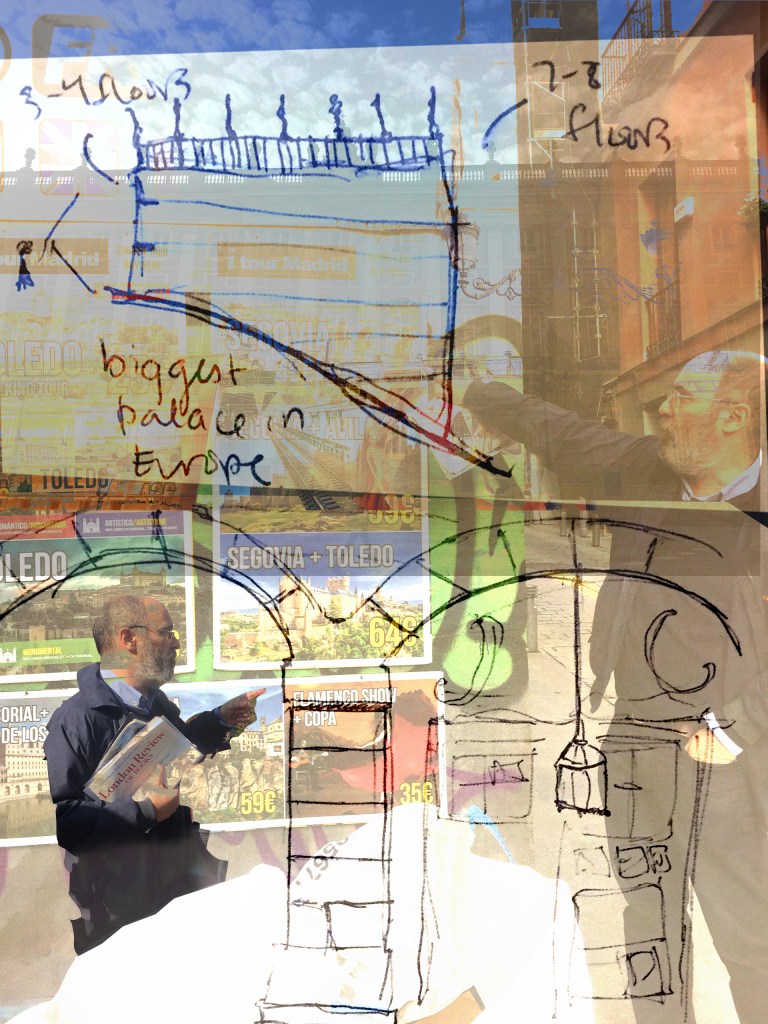
Pablo is our guide through Madrid pointing out architectural transitions, politics, and catastrophes.
Collage by Sonali Devarajan
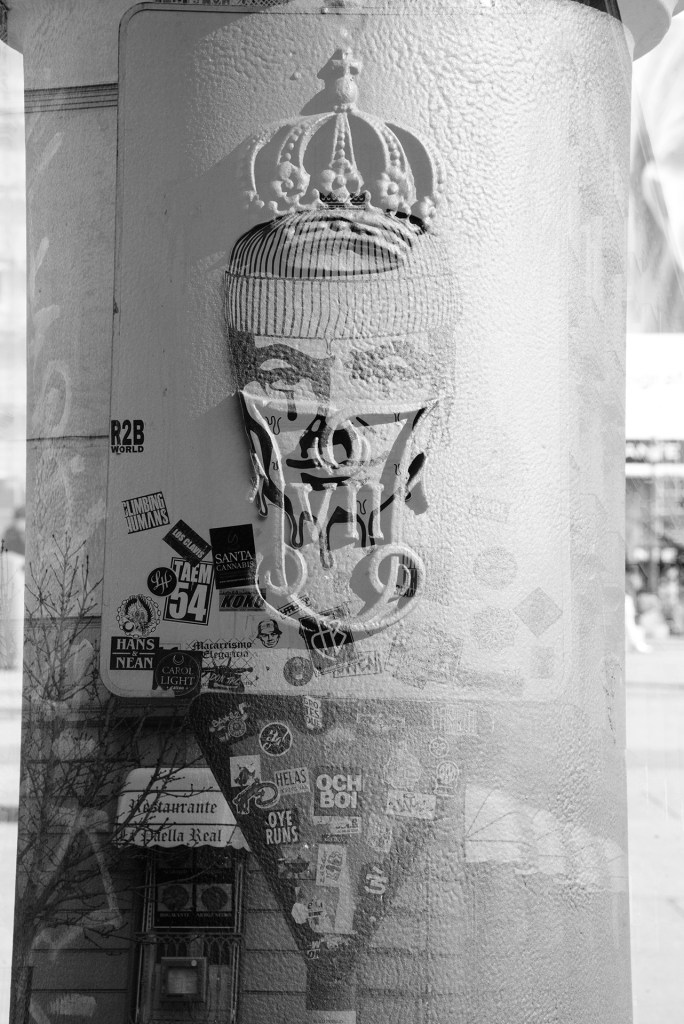
Double exposure of historic crown relief on a street lamp and contemporary graffiti on the back of a street sign.
-David Hedding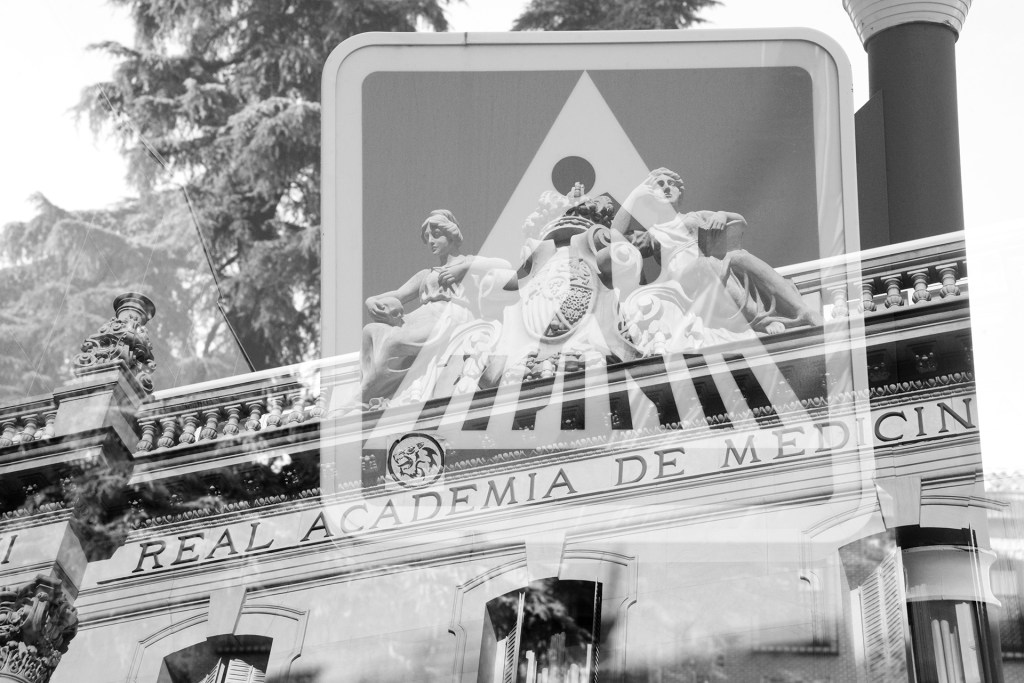
Double exposure of the Real Academia de Medicina and a generic symbol for the human anatomy on a crosswalk sign.
-David Hedding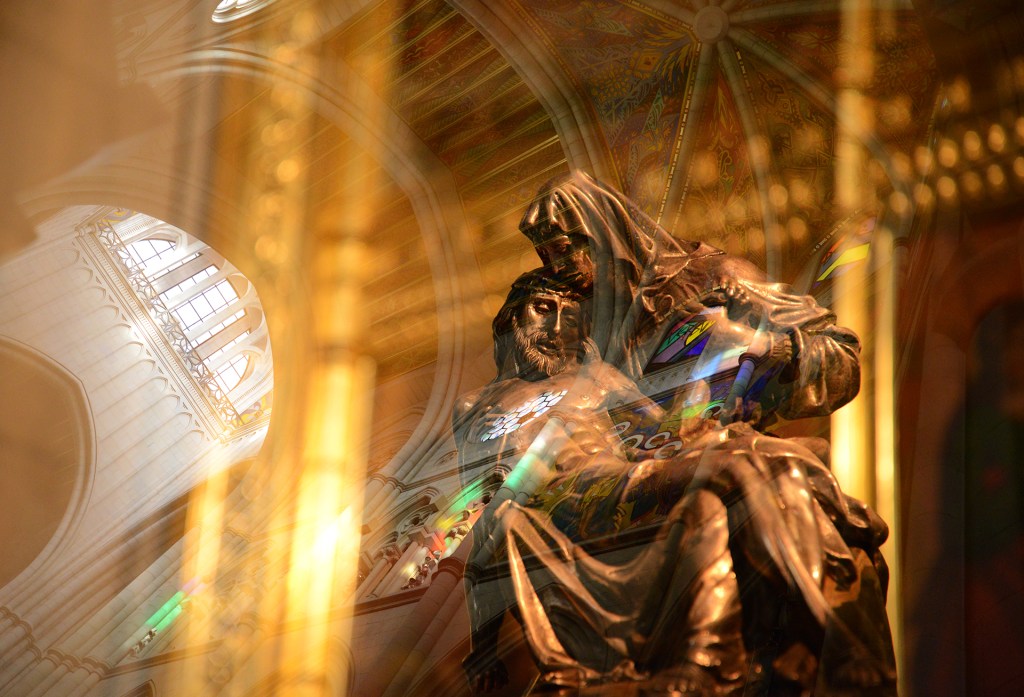
Double exposure of a sculpture of Christ and Mary Magdalene and the Catedral de la Almudena not completed until 1993.
-David Hedding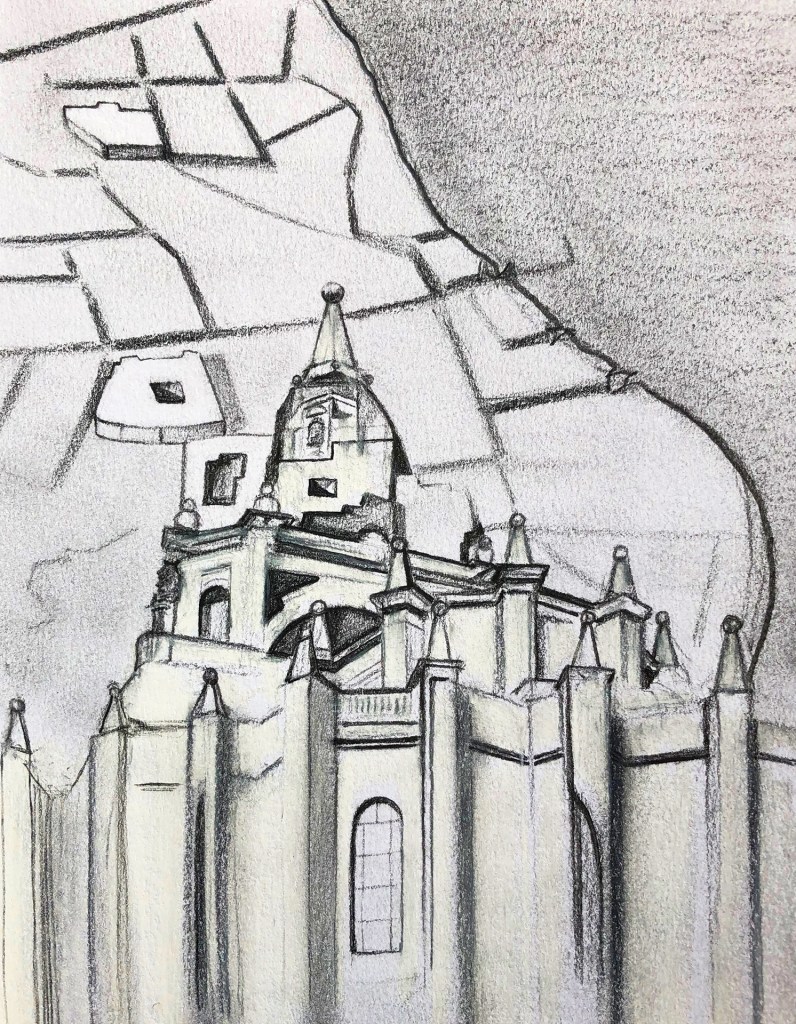
Catedral de la Almudena and the old city wall of Madrid.
-Drawing by David Hedding
 2020 Cities on Water