Tesoro y Dibujos: Exploring the Prado
The Museo Nacional del Prado is widely recognized as containing one of the world’s most extensive collections of European art. A treasure and source of pride for Spaniards, the Prado Museum is not only one of the most visited sites in Spain, but it also houses the premier collection of Spanish art, including much-loved – and highly analyzed – works by Diego Velázquez and Francisco Goya.
The Prado itself is an incredible edifice. Originally opened in 1819 to demonstrate the merit of Spanish art to the rest of Europe, the museum is now home to thousands of paintings, drawings, and sculptures. Representing hundreds of years, showcasing the evolution of European art, and providing context for some of the most significant artistic developments throughout history, the Prado is a must-see destination for art enthusiasts and cultural neophytes alike.
While there is an air of reverence and awe surrounding works such as Las Meninas and Saturno Devorando a su Hijo, the more obscure corners of the museum deserve equally close examination. Up a darkened spiral staircase in a far corner of the upper level exists a circular room illuminating the Tesoro del Delfín. A royal treasury consisting of bowls, goblets, and other vessels used by the kings and queens of the past, the room exhibits a stunning collection of rare artifacts glittering with precious gemstones and gold or silver ornaments. Examination of these treasures reveals intricate and astonishing craftsmanship, down to the minute details of a dragon’s bejeweled and fiery breath or the gleaming scales of a mermaid’s tail. Vessels of crystal, alabaster, jade, and lapis lazuli reflect a subtle glow in the quiet room which seems to have been forgotten by the rest of the museum. A collection unlike the greater balance of the Prado, the Tesoro speaks of a bygone era of opulence and luxury with a physicality and assured tangibility that two-dimensional representations lack.
On the opposite side of the Prado is another room, once again separated from the main collection. A collection of over 300 drawings spanning a lifetime, the oeuvre of Goya is displayed as a chronicle of the artist’s career. Similar to how the Tesoro displays a more palpable experience of history, the Dibujos expose the thoughts and ideas of a Spanish master. Here, for the first time – and only for three short months – is a truly behind-the-scenes glimpse into the process of one of the Prado’s (and Spain’s) most admired artists. In contrast to his more widely recognized paintings, the Dibujos are simple sketches. Primarily chalk on paper, or black ink washes, these studies expose the iterative and interpretive expressions of Goya as he explored various themes and ideas through the freedom of his private sketchbooks. Relying on simple lines and a monochromatic palette, these drawings can communicate passion or frustration with a few deft strokes and satirize the untouchables of society with subtle distortions of form.
Undeniably one of the most important collections of art in Europe, the Museo Nacional del Prado can inspire and inform with its traditional and comprehensive classical collection – but when you stop to explore the corners you might just find something unexpected.
-Marla Brown
Today was the infamous Prado; thought of as one of the best museums in the world due to its collection of art and sculptors. Prior to going, our background understanding was on the artist Francisco de Goya and the painting Las Meninas by Diego Velazquez. Both painters are famous in their own right for their unique styles, and both fundamental to Spanish art. The museum itself is humbling, being surrounded by work that stretches from the floor to ceiling.
The critical collection for today besides the endless hallways of fine art was Las Pinturas Negras, or the Black Paintings by Goya. This is a collection of 14 controversial pieces done in the latter part of his life. They are controversial not because of the content, but because of the authenticity. The paintings were discovered on the walls of his upstairs, and then transferred to canvas after his death. The controversy is whether he painted them or not. This 14 piece set is done in with heavy black and greys, large paint strokes, and references to death. They are a stark contrast to his other work of royal portraits and happy scenes.
The Prado does a fantastic job of setting the scene as well. The paintings are set in thick black frames. Each frame is unique, but all are similar. Each frame also has a thin gold inlay that compliments the black and sepia tones of the paintings. A sculpture of a goat’s head is placed in the room to reflect the satanic nature of some of his work, though the sculpture is not by Goya. His most famous work, The Dog and Saturn Devouring His Son were there, but were smaller than I had imagined them.
Though the Black Paintings were great to see, I don’t think they would have been as impactful if seen at the end of the day. Not knowing the scale of the Prado, it was amazing to see all the pieces of art you have seen in books and been taught. The floor to ceiling Renaissance work is truly amazing in person. The Cardinal by Rafael was great to see as well. Las Meninas by Velazquez is a sight to see in person, towering over the observer. It will be nice to return and to be able to spend more time discovering all the art the Prado has to offer.
-Jordan Hedlund
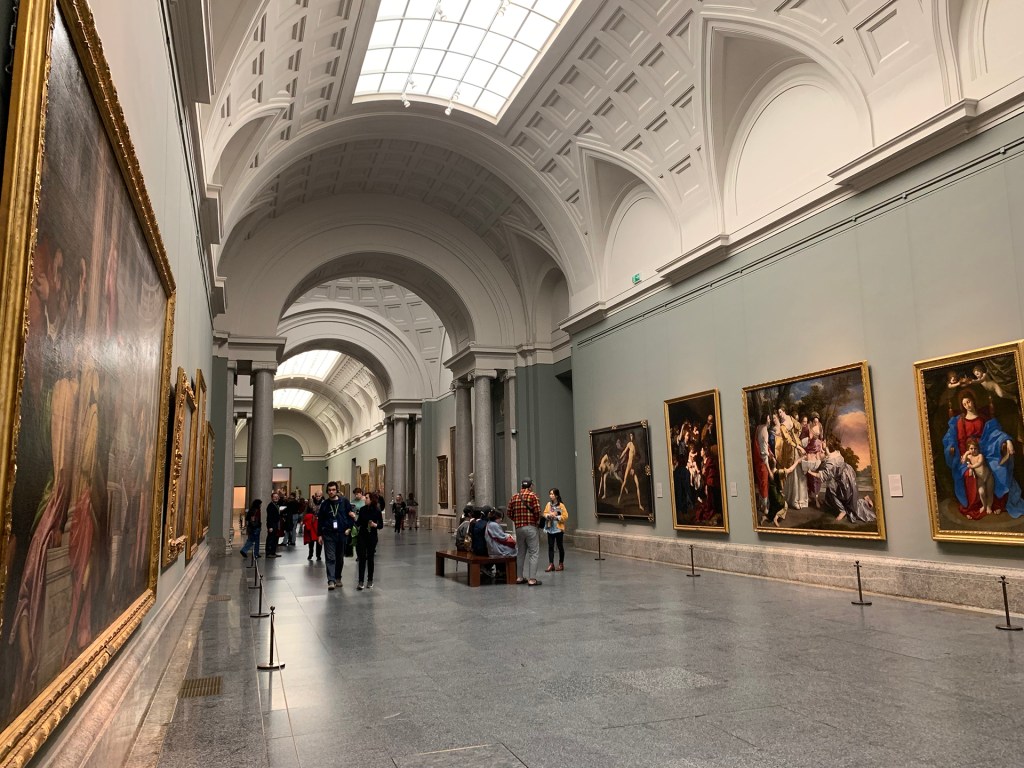
Main Hallway with Tintoretto Paintings – Chris Ototo 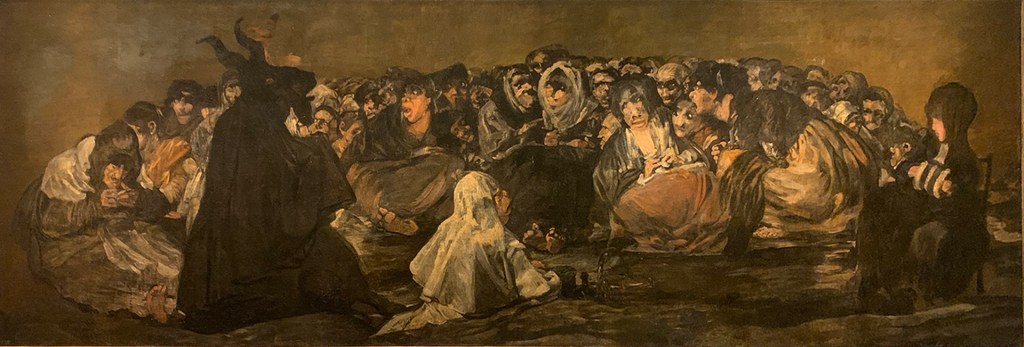
The Great He-Goat (Goya’s Black Paint done between 1820-1823) – Chris Ototo 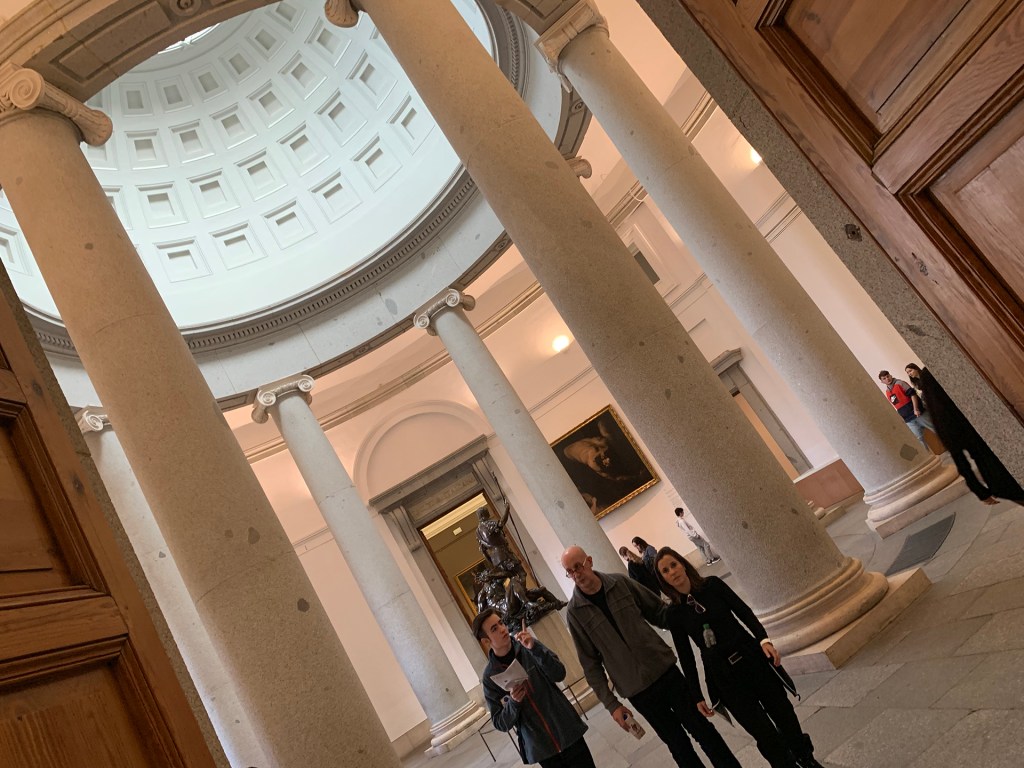
Museo Del Prado’s Iconic Gothic architecture interiors – Chris Ototo 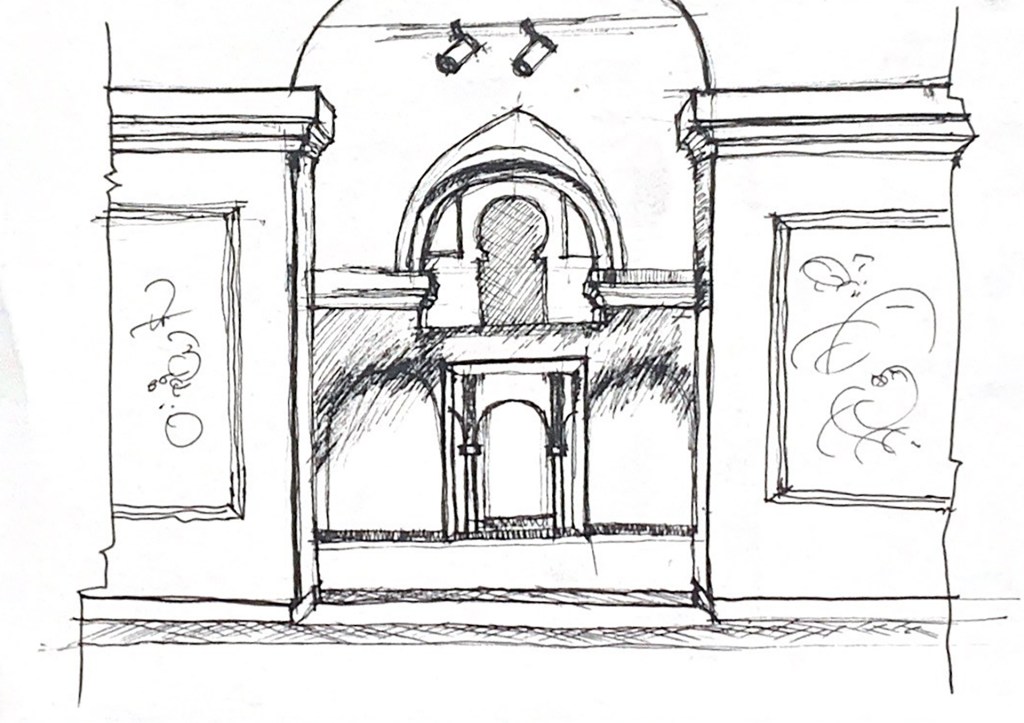
Gothic Architecture Interiors of Museo Del Prado – Chris Ototo 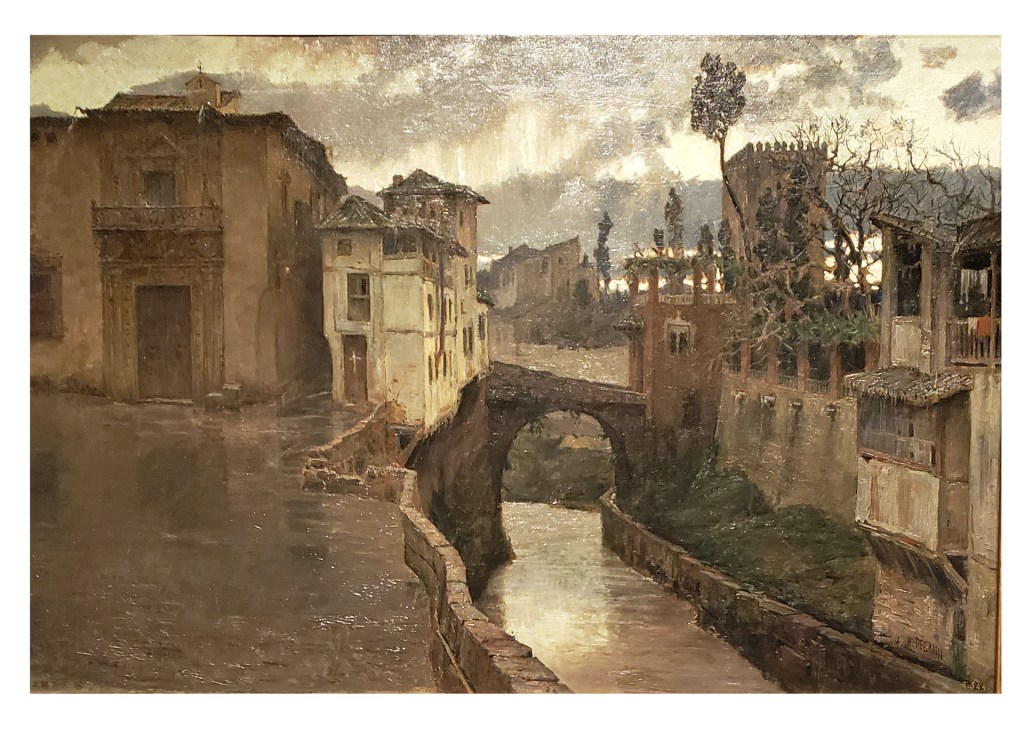
Image of “Memories of Granada” , Antonia Muno – Lauren Arndt 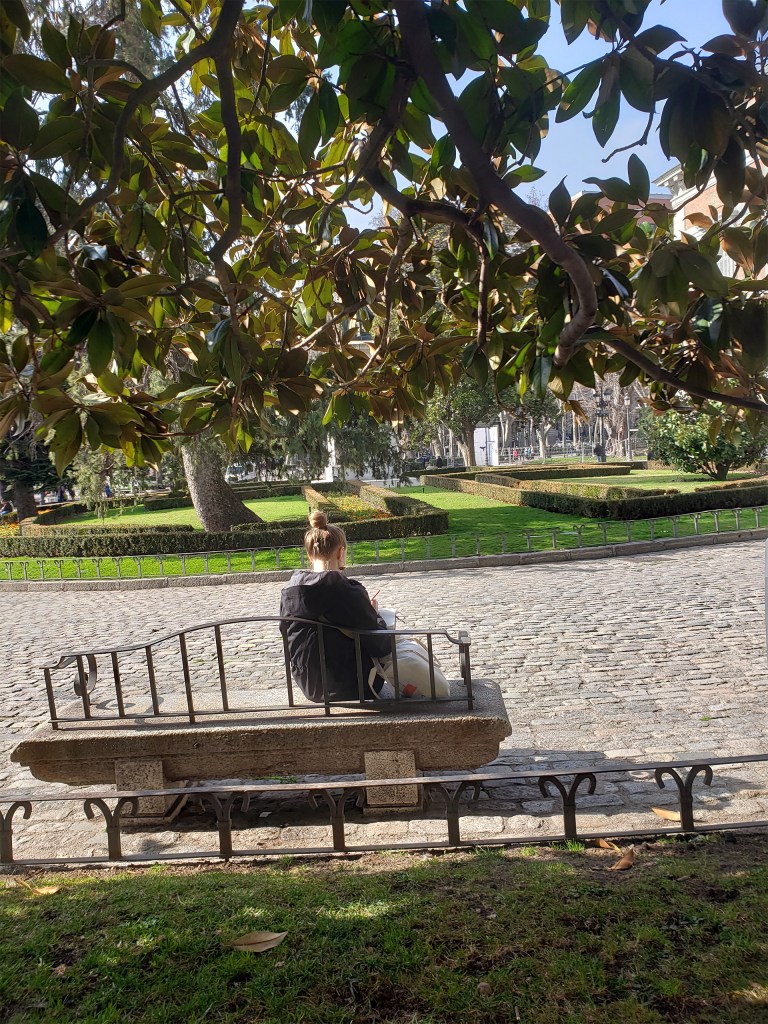
Image of Kendra sketching the formal garden outside the Prado Museum – Lauren Arndt 
Classmates pondering the works of Francisco de Goya – Lauren Arndt 
Illustrated representation of the reflected Infanta Margaret Theresa (Las Meninas, Diego Velazquez) – Lauren Arndt
 2020 Cities on Water