Up-down.
Gray morning in Madrid. We make our way onto a bus and leave the capital city behind. We leave the clouds behind and ride to Segovia. While we gain elevation, I witness the transition from gray to blue as we speed past car dealerships, trains stations and tracks, large grocery stores, office buildings, and some small farms with animals that exist despite. It reminds me of the development on the front range at home in Colorado.
We emerge from the inversion as the bus climbs. Clear skies in Segovia. Fresh air. Another city on a hill.
Segovia is a smaller city with landmarks near and far that command a view and orient you. One of these landmarks is the alcázar (English: alcázar, a type Moorish castle or fortress built on the Iberian Peninsula during Muslim rule). We all climbed to the top of the tower of the alcázar and looked out toward the countryside, the cathedral, and mountains from which the Roman-built Aqueduct of Segovia carries water to its point of arrival: where we are, the alcázar.
We climb down, and down, down to the river below the fortress and follow its path. We then cross the river and gain elevation again on the other side. From here we look straight over to see the alcázar with the mountains behind it. The confluence of the two rivers sits between us and the alcázar. We see the city wall and a gate. We stop and rest. The ground is covered with short green that is soft to the touch and the tiniest flowers that may be some aster…
My iPhone reports that I climbed 78 floors in Segovia.
On the ride back, we descend and reenter the clouds at the same time as I see the sign that tells us we are back in Comunidad de Madrid.
-Kendra Klenz
It was a beautiful day in Segovia! In front of our bus stop was the famous Segovia Aqueduct. A vast Roman aqueduct that supplied water to the cities and has its origin in the mountain ranges. After running underground for 13 kilometers, it rises on the first wall and then over granite arches. The aqueduct then penetrates the city wall, which has a distribution system. This famous and splendid piece of art and hydraulic engineering was declared a World Heritage Site after ceasing operation around the 1970s. What struck me most was the level of detail and technology that the Romans used to build this enormous structure. The structure stands strong today, even though they did not have the typical steel reinforcement to build like we do today. The process of carving the huge granite blocks to make the curves is impressive. I wonder how they were lifting the blocks that high during the construction phase.
We strolled, slowly but surely up the hill, meandering between a pretty old Neighborhood characterized by narrow streets, cars parked on one side, narrow sidewalks, and shops overlooking each other to the Segovia Cathedral. This cathedral was built between 1525 and 1568, and it was the tallest tower in Spain, reaching 108 meters. In 1614 a fire, caused by lightning during a thunderstorm destroyed the first wooden spire. This was rebuilt by stone, reaching a height of 88 meters. The cathedral’s style seemed to be three hundred years late because of the French gothic style used that is newer than the time the cathedral was built.
We rolled down the hill to the Alcazar, where we enjoyed the beautiful views and a unique piece of architecture of which security was vital when it was built before starting to wander the whole city of Segovia and then heading back to Madrid.
-Chris Ototo
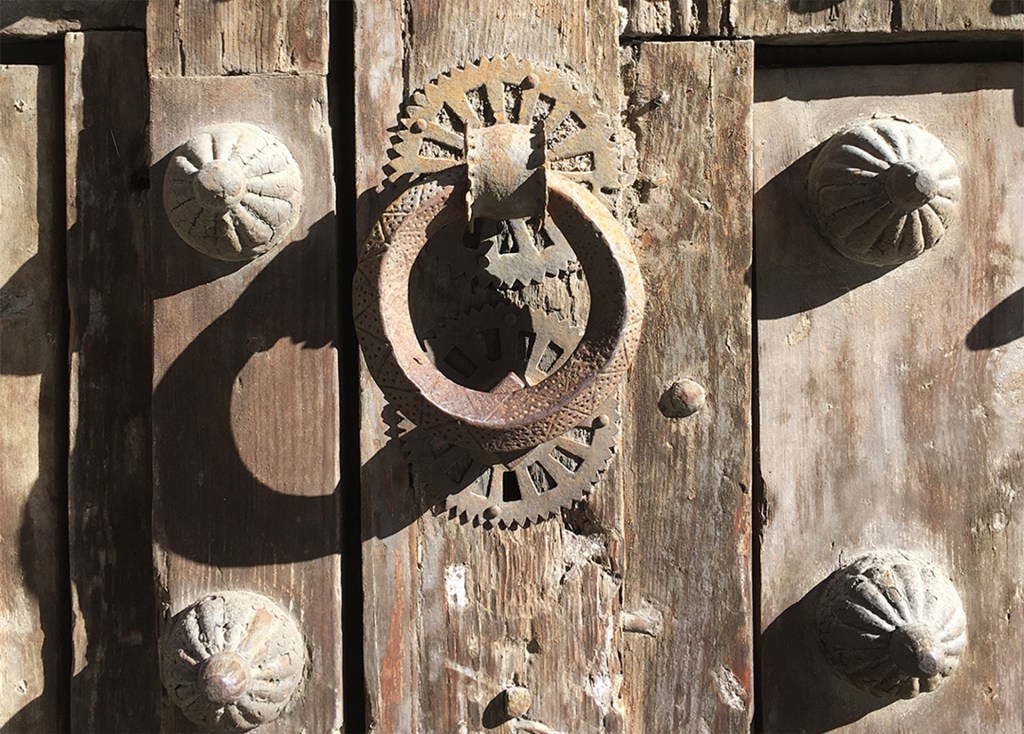
A tour of Segovia gives visitors the pleasure of exploring gridless streets with unique and irregular doorways – complete with various and distinct door knockers. While there are no longer any slaves tied to the entry of this home, this style of door knocker reflects the history of the Ancient Greek doors that gave rise to this method of announcing visitors. Wealthier Greeks kept slaves to announce visitors upon arrival, and this heavy ring-style knocker served a dual-purpose: to knock on the door and to keep the slaves securely tethered.
-Photo by Marla Brown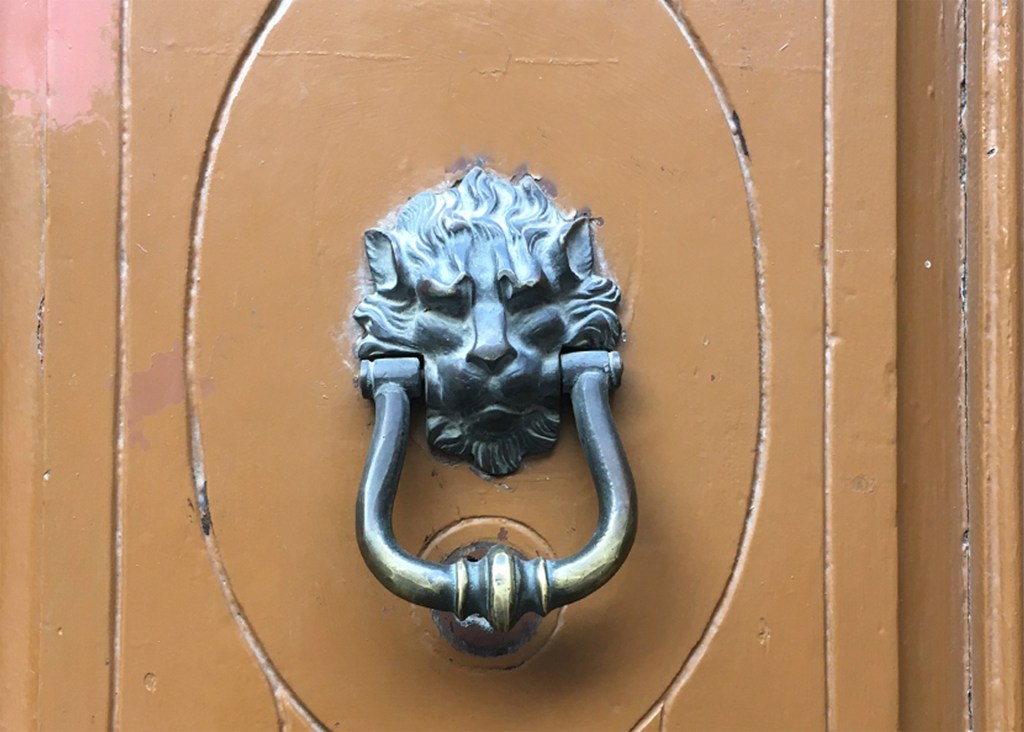
Long revered as the king of beasts, lions have symbolized strength, bravery, nobility, and power for centuries. This more intricate style of lions-head knocker grew in popularity after blacksmiths became more adept craftsmen. While Segovia is a small town outside of Madrid, it’s significance in the royal and political history of Spain make this knocker an appropriate choice.
-Photo by Marla Brown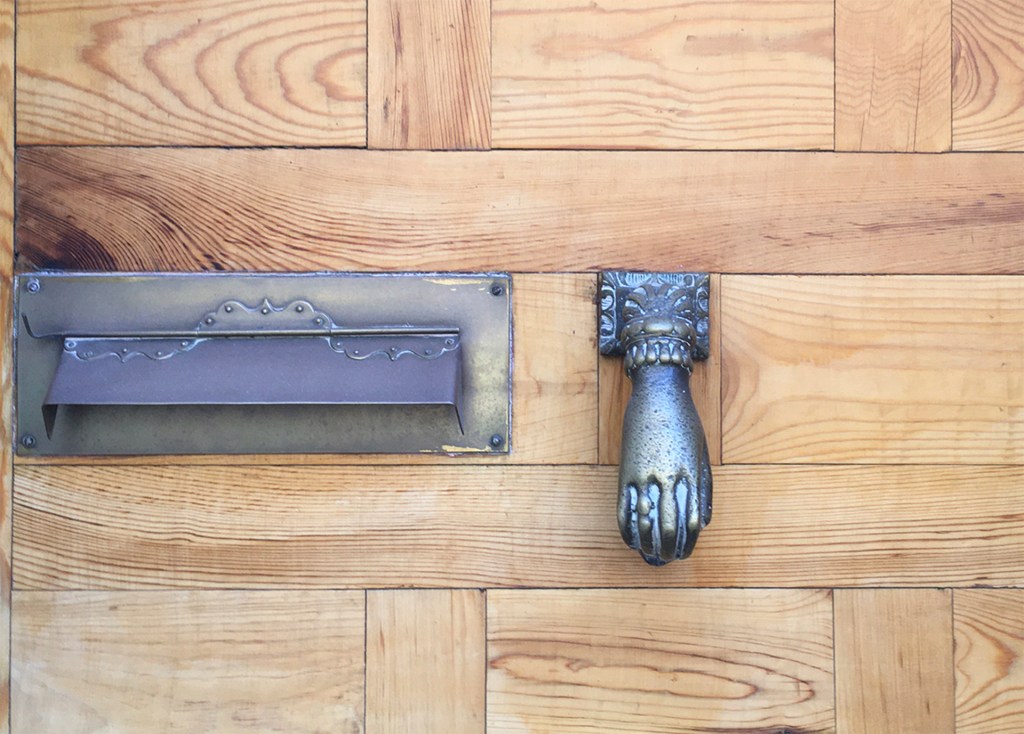
Commonly believed to have their origin in Muslim countries, hand-shaped knockers are thought to represent the Hand of Fatima which serves as a talisman to protect the home against evil. Since Spain has a significant and complicated Muslim history, these knockers might have also communicated to other Muslims that people who shared their faith lived inside.
-Photo by Marla Brown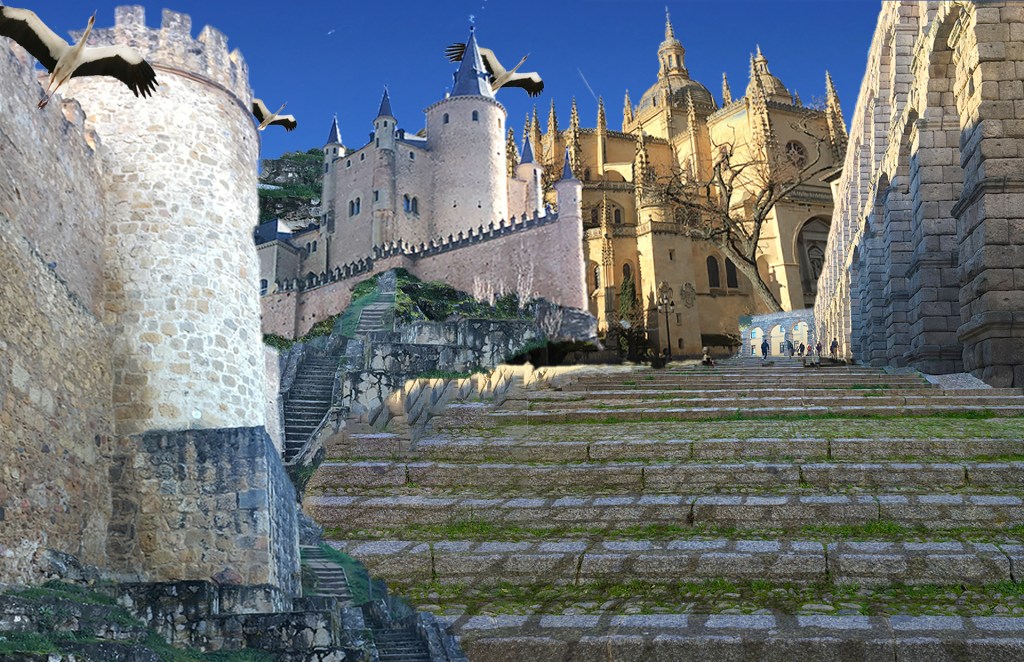
Exploring Segovia requires looking up and down. The old cobble walks are mottled with mossy growth and the stone stairways are smoothed by centuries of scuffling feet. The sky was full of spires and turrets, made complete by pairs of nesting storks.
-Illustrated by Marla Brown
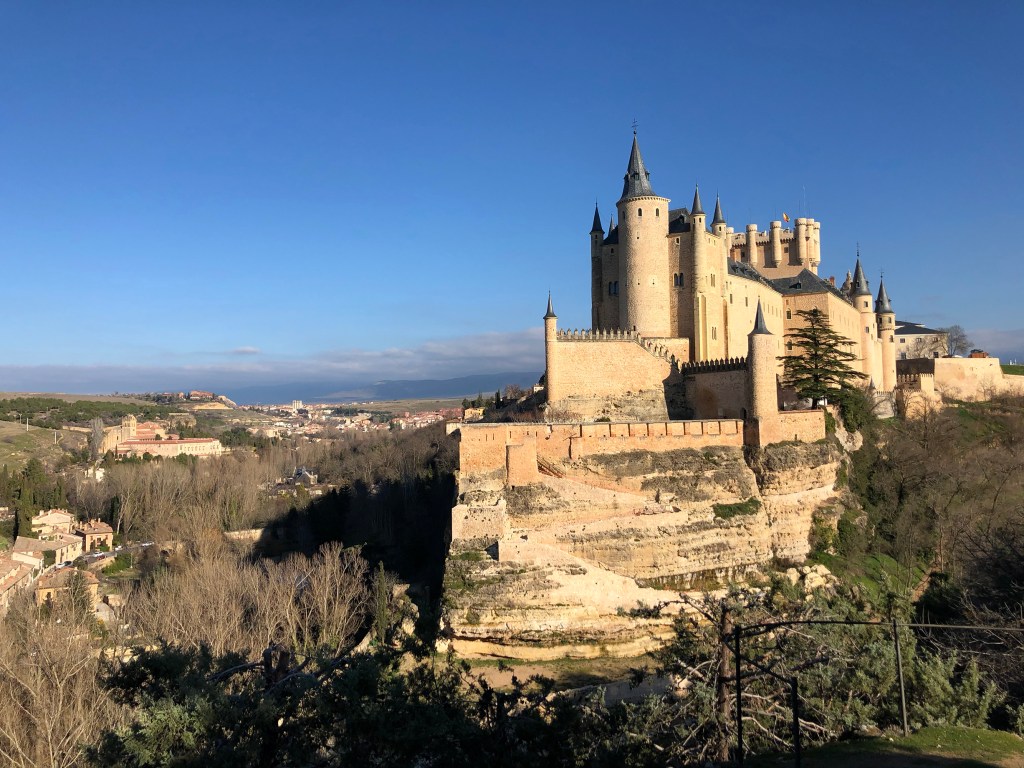
The Alcázar of Segovia viewed from a hiking path to the West of the city.
-Photo by Kyle Franta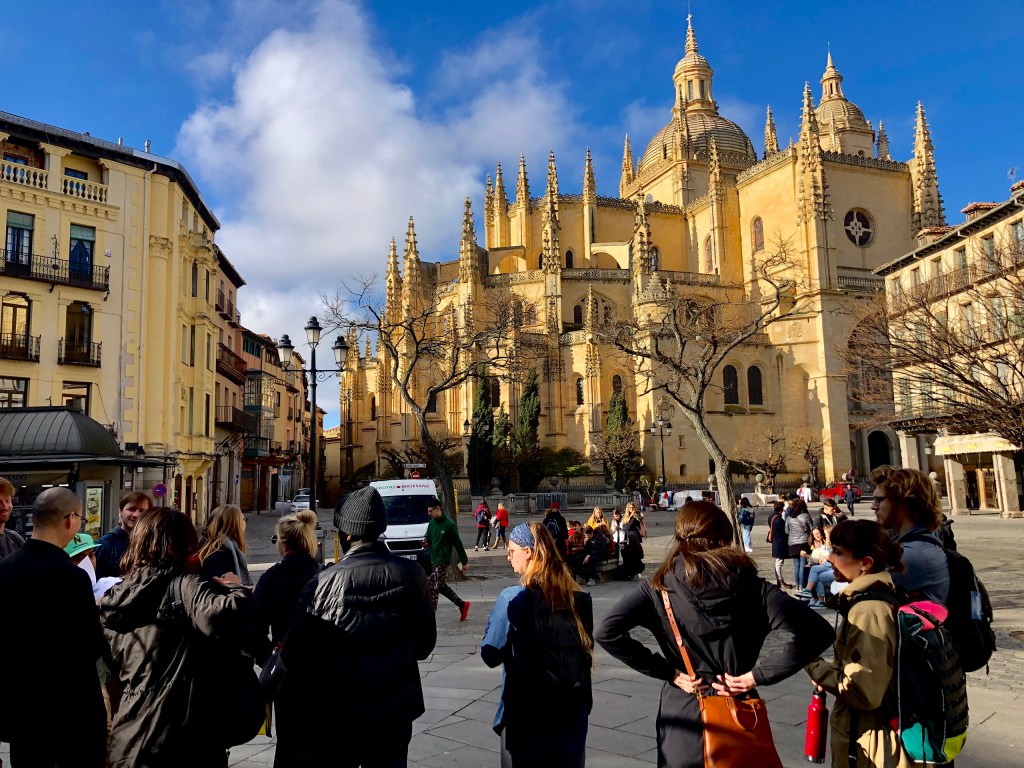
The class gazes at the Cathedral of Segovia for the first time.
-Photo by Kyle Franta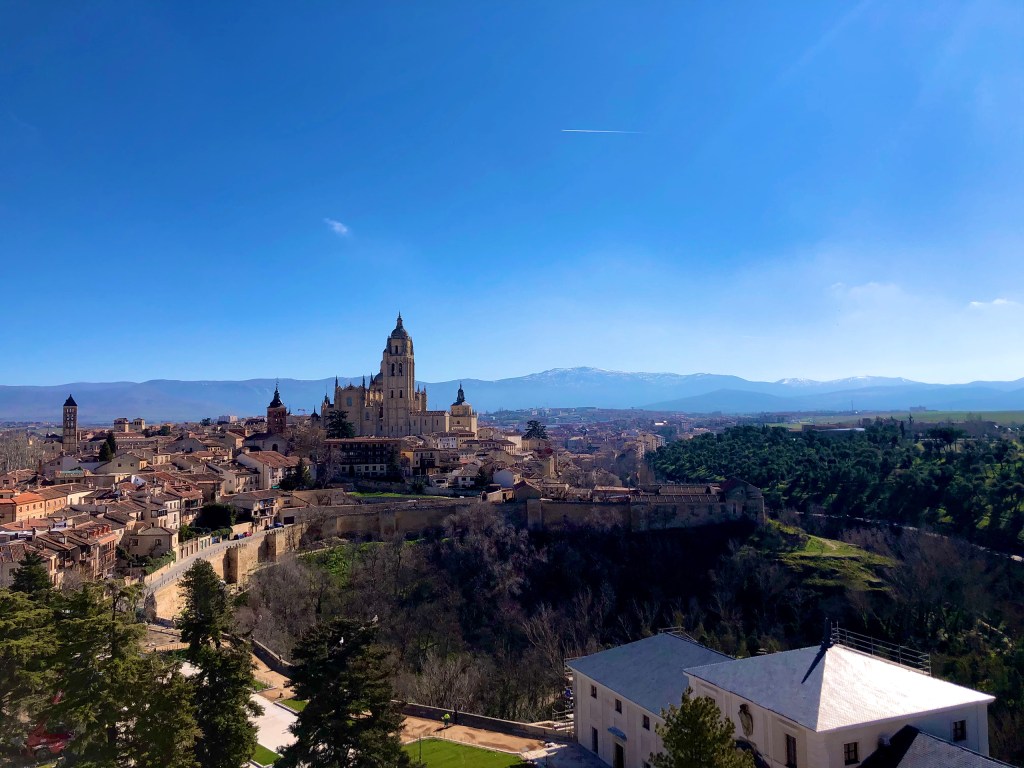
A view of Segovia from the top of the Alcázar tower.
-Photo by Kyle Franta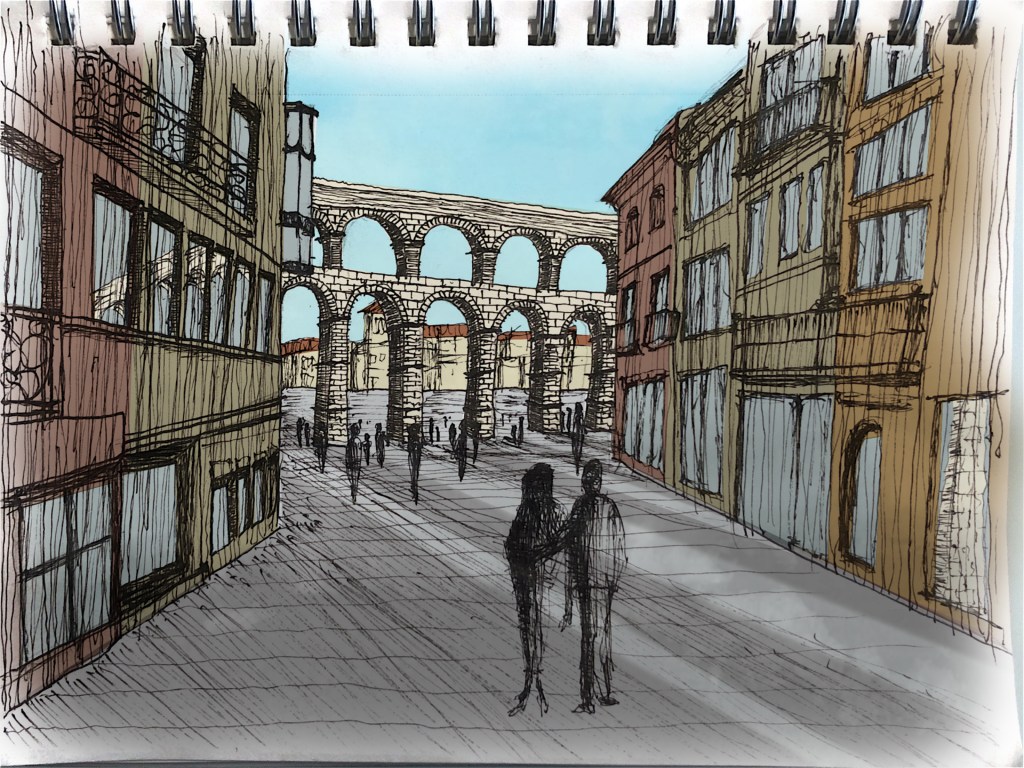
A drawing of Segovia’s Aqueduct.
-Drawn by Kyle Franta
 2020 Cities on Water
Nice knockers!
On Sun, Feb 16, 2020, 01:46 2020 Cities on Water wrote:
> kbfranta posted: ” Up-down. Gray morning in Madrid. We make our way onto a > bus and leave the capital city behind. We leave the clouds behind and ride > to Segovia. While we gain elevation, I witness the transition from gray to > blue as we speed past car dealerships, trains” >
LikeLike